


Promising applications of human-derived saliva biomarker testing in clinical diagnostics
- PMID: 36596771
- PMCID: PMC9810734
- DOI: 10.1038/s41368-022-00209-w
Promising applications of human-derived saliva biomarker testing in clinical diagnostics
Abstract
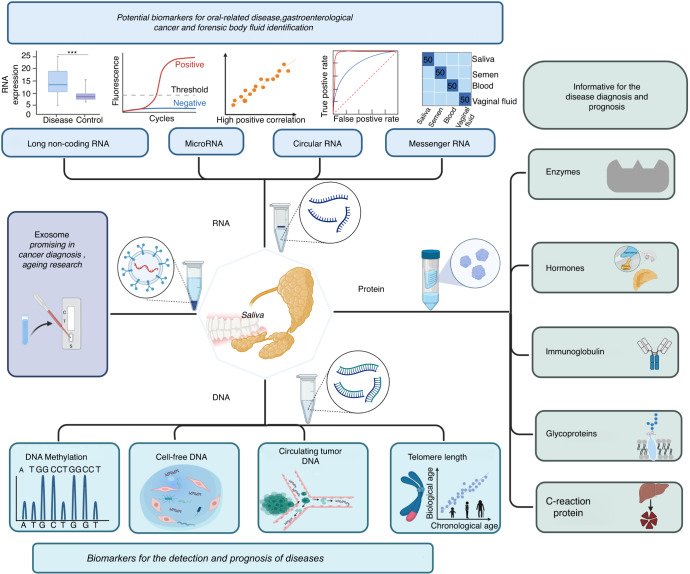
Saliva testing is a vital method for clinical applications, for its noninvasive features, richness in substances, and the huge amount. Due to its direct anatomical connection with oral, digestive, and endocrine systems, clinical usage of saliva testing for these diseases is promising. Furthermore, for other diseases that seeming to have no correlations with saliva, such as neurodegenerative diseases and psychological diseases, researchers also reckon saliva informative. Tremendous papers are being produced in this field. Updated summaries of recent literature give newcomers a shortcut to have a grasp of this topic. Here, we focused on recent research about saliva biomarkers that are derived from humans, not from other organisms. The review mostly addresses the proceedings from 2016 to 2022, to shed light on the promising usage of saliva testing in clinical diagnostics. We recap the recent advances following the category of different types of biomarkers, such as intracellular DNA, RNA, proteins and intercellular exosomes, cell-free DNA, to give a comprehensive impression of saliva biomarker testing.
© 2023. The Author(s).
Conflict of interest statement
: The authors declare no competing interests.
Figures
References
-
- Thomas AJ, Woo B, Nettle D, Spelke E, Saxe R. Early concepts of intimacy: young humans use saliva sharing to infer close relationships. Science (1979) 2022;375:311–315. - PubMed
Publication types
MeSH terms
Substances
LinkOut - more resources
Full Text Sources
