. 2022 Dec;19(4):978-993.
doi: 10.14245/ns.2244290.145. Epub 2022 Dec 31.

Spinal Metastases and the Evolving Role of Molecular Targeted Therapy, Chemotherapy, and Immunotherapy

Affiliations

Spinal Metastases and the Evolving Role of Molecular Targeted Therapy, Chemotherapy, and Immunotherapy

Elena I Fomchenko et al. Neurospine. 2022 Dec.

Abstract

Metastatic involvement of the spine is a common complication of systemic cancer progression. Surgery and external beam radiotherapy are palliative treatment modalities aiming to preserve neurological function, control pain and maintain functional status. More recently, with development of image guidance and stereotactic delivery of high doses of conformal radiation, local tumor control has improved; however recurrent or radiation refractory disease remains a significant clinical problem with limited treatment options. This manuscript represents a narrative overview of novel targeted molecular therapies, chemotherapies, and immunotherapy treatments for patients with breast, lung, melanoma, renal cell, prostate, and thyroid cancers, which resulted in improved responses compared to standard chemotherapy. We present clinical examples of excellent responses in spinal metastatic disease which have not been specifically documented in the literature, as most clinical trials evaluate treatment response based on visceral disease. This review is useful for the spine surgeons treating patients with metastatic disease as knowledge of these responses could help with timing and planning of surgical interventions, as well as promote multidisciplinary discussions, allowing development of an individualized treatment strategy to patients presenting with widespread multifocal progressive disease, where surgery could lead to suboptimal results.

Keywords: Chemotherapy; Immunotherapy; Metastatic cancer; Mutation; Spine metastases; Targeted therapy.


Conflict of interest statement

Conflict of Interest

The authors have nothing to disclose.

Figures
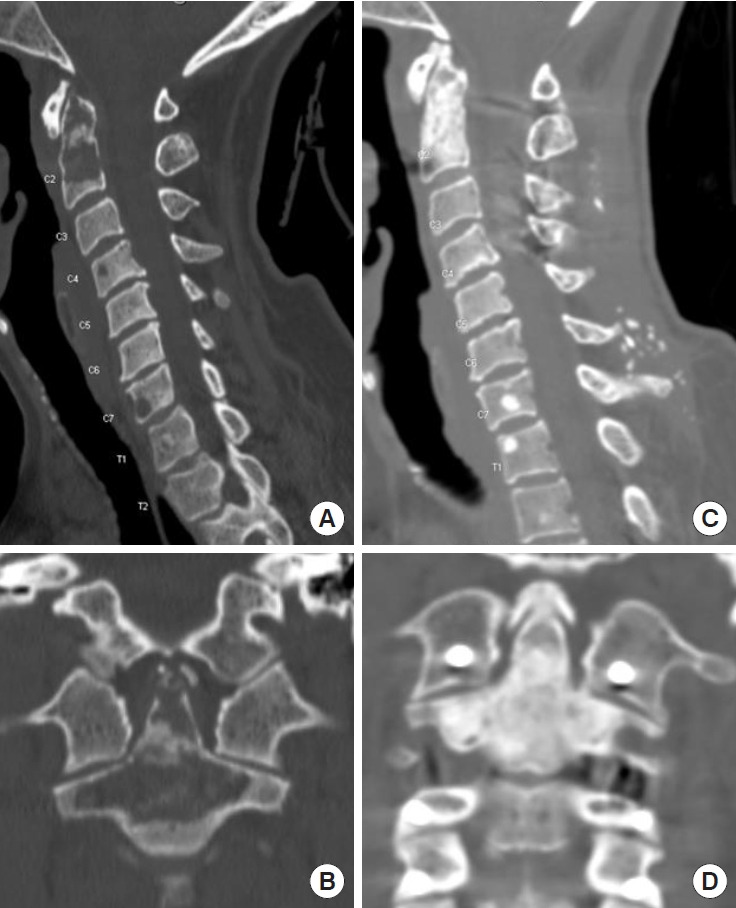
Fig. 1.
Fig. 1.
Successful use of CDK4/6 inhibitor palbociclib and letrozole in a patient with advanced breast cancer. Patient is a 61-year-old female who presented with 6/10 neck pain, found to have a non-surgical lytic C2 lesion. Per discussion with medical oncology team, the consensus was for systemic treatment and restaging. Sagittal and axial computed tomography cervical and thoracic spine views prior to initiation of treatment (A, B) and 3 months after treatment with letrozole and Palbociclib (C, D), showing resolution of the lesion.
Fig. 2.
Fig. 2.
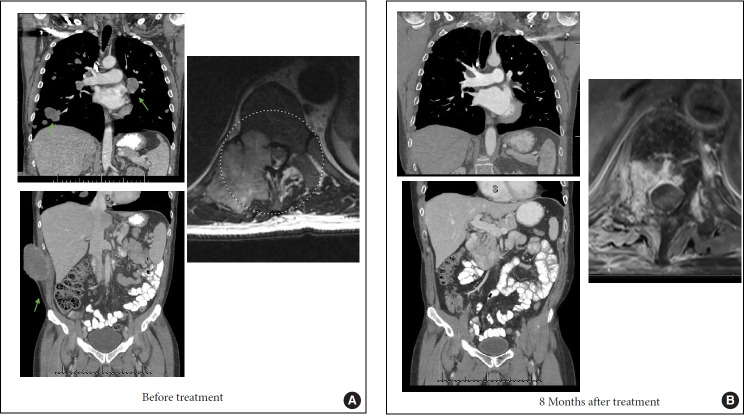
Successful use of pembrolizumab in a patient with widely metastatic melanoma. Patient is 61-year-old with widely metastatic melanoma refractory to several lines of systemic treatment. Per discussion with medical oncology team, the consensus was for systemic treatment. Panel A demonstrates several sites of bulky metastatic disease (arrows) and a large spinal metastasis at T11 (circle) treated with spinal stereotactic radiosurgery 3 months prior to starting anti-programmed-death 1 therapy. Panel B demonstrates complete resolution of the bulky metastatic disease including the epidural spinal cord compression 8 months after treatment with pembrolizumab. The patient currently remains disease free with a follow-up of 90 months.
Fig. 3.
Fig. 3.
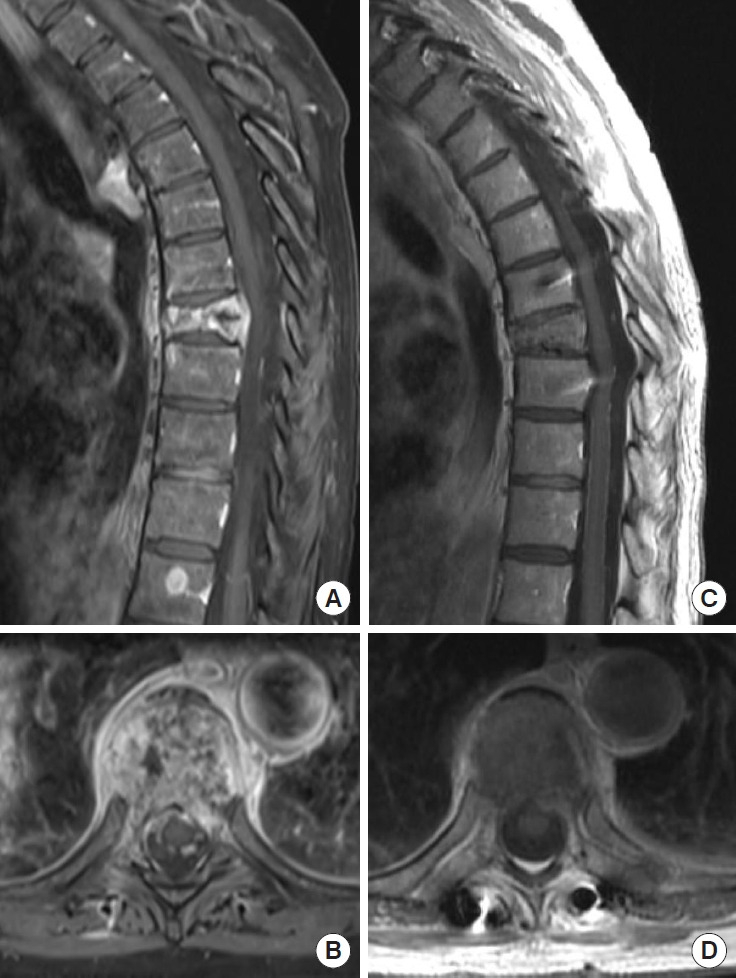
Successful use of epidermal growth factor receptor (EGFR) inhibitor osimertinib in a patient with advanced untreated EGFR mutated non-small cell lung cancer. Patient is a 60-yearold female who presented with thoracic pain, found to have a midthoracic pathologic compression fracture. Per discussion with medical oncology team, the consensus was for systemic treatment after a percutaneous spine fusion. Sagittal and axial magnetic resonance imaging cervical and thoracic spine prior to the initiation of treatment (A, B) and 4 months after treatment with osimertinib (C, D) showing resolution of the lesion.
Fig. 4.
Fig. 4.
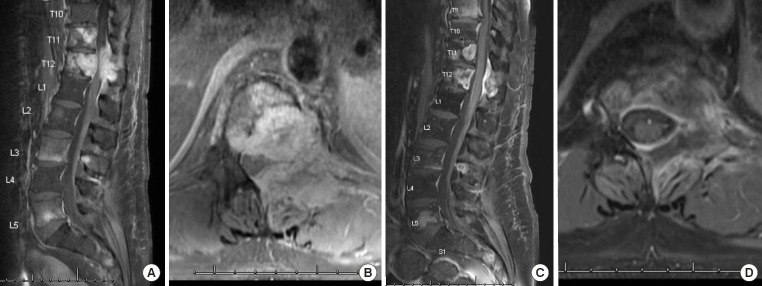
Successful use of a multitargeted tyrosine kinase inhibitor cabozantinib in a patient with advanced clear cell renal cell cancer. Patient is a 51-year-old male with progressive clear cell renal cell carcinoma. Per discussion with medical oncology team, the consensus was for systemic treatment and restaging, as patient was not a candidate for surgery. Sagittal and axial magnetic resonance imaging of thoracic and lumbar spine prior to initiation of treatment showing significant compression of the thecal sac (A,B) and 3 months after treatment with cabozantinib (C, D) showing resolution of the lesion and significant improvement in cord compression and disease burden.
Fig. 5.
Fig. 5.
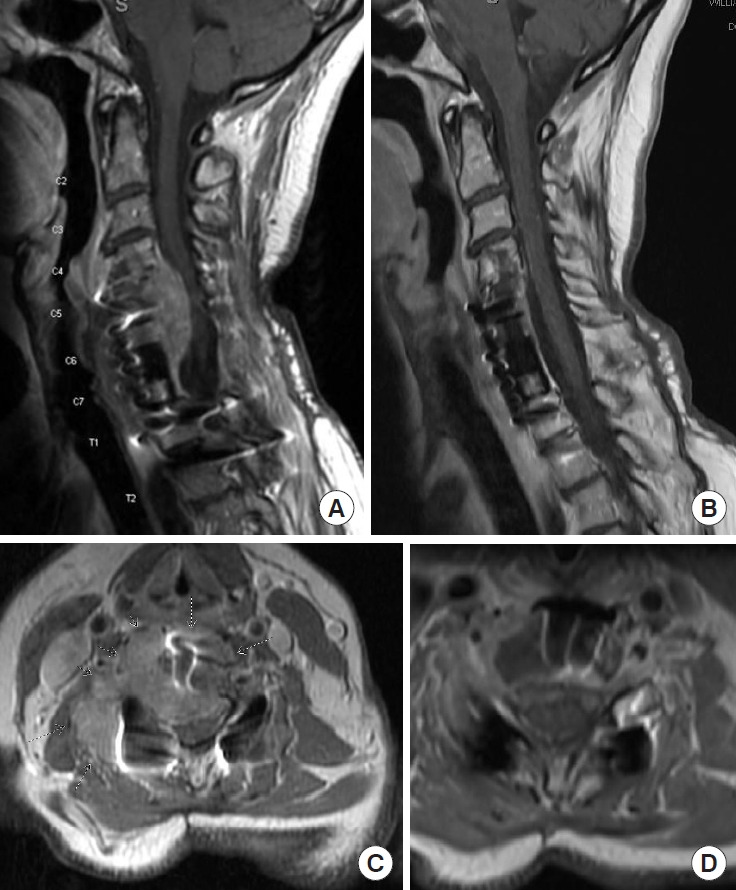
Successful use of multitargeted tyrosine kinase inhibitor Lenvatinib in a patient with recurrent follicular thyroid carcinoma. Patient is a 70-year-old female who had undergone prior corpectomy with cage placement and posterior spinal fusion, followed by treatment with iodine, external beam radiation therapy and spine stereotactic radiosurgery, with significant progression of her disease shortly thereafter. Sagittal and axial magnetic resonance imaging of cervical and thoracic spine prior to initiation of treatment showing significant anterior cord compression C4–7 (A, B) and 3 months after treatment with Lenvatinib (C, D), showing resolution of the lesion and significant improvement in cord compression.

References

    1. Perrin RG, Laxton AW. Metastatic spine disease: epidemiology, pathophysiology, and evaluation of patients. Neurosurg Clin N Am. 2004;15:365–73. - PubMed
    1. Siegel RL, Miller KD, Fuchs HE, et al. Cancer statistics, 2022. CA Cancer J Clin. 2022;72:7–33. - PubMed
    1. Hernandez RK, Adhia A, Wade SW, et al. Prevalence of bone metastases and bone-targeting agent use among solid tumor patients in the United States. Clin Epidemiol. 2015;7:335–45. - PMC - PubMed
    1. North RB, LaRocca VR, Schwartz J, et al. Surgical management of spinal metastases: analysis of prognostic factors during a 10-year experience. J Neurosurg Spine. 2005;2:564–73. - PubMed
    1. D’Oronzo S, Coleman R, Brown J, et al. Metastatic bone disease: pathogenesis and therapeutic options: up-date on bone metastasis management. J Bone Oncol. 2019;15:004. - PMC - PubMed

LinkOut - more resources