


Effects of virtual reality immersion on postural stability during a dynamic transition task
- PMID: 36597788
- PMCID: PMC10847845
- DOI: 10.1080/14763141.2022.2162434
Effects of virtual reality immersion on postural stability during a dynamic transition task
Abstract
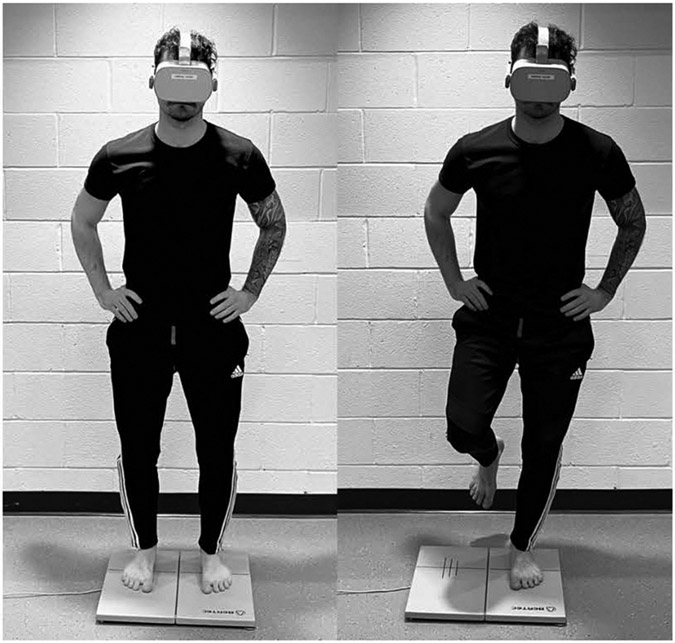
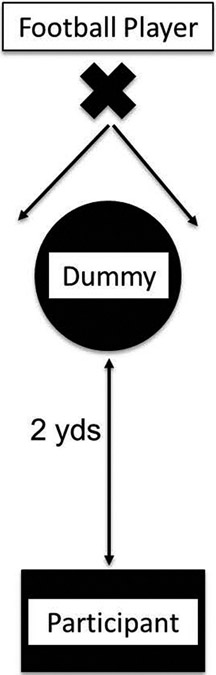
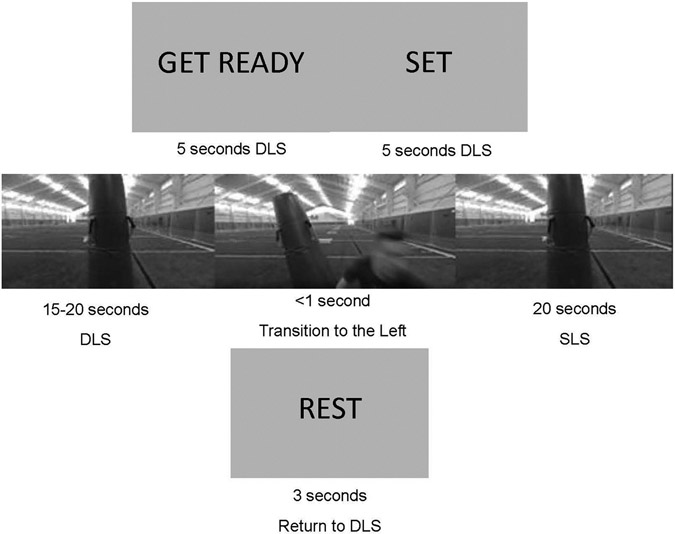
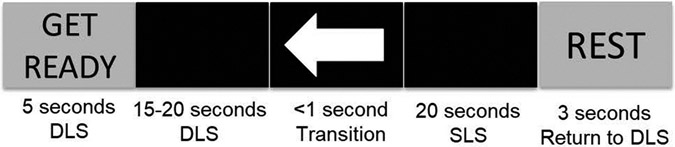
Dynamic postural stability paradigms with virtual reality (VR) provide a means to simulate real-world postural challenges and induce customised but controlled perturbations. The purpose of this study was to determine the effects of a VR unanticipated perceptual sport perturbation on postural stability compared to traditional methods. Sixteen individuals between the ages of 18-23 years (19.5 ± 1.4 years) with no history of injury within 12 months were recruited. A double-leg to single-leg transition task was performed on a force plate in one of the following conditions: eyes open (EO), eyes closed (EC), a sport video with a standard non-immersive computer monitor (SV), and VR. The VR and SV conditions used a pre-recorded tackle avoidance task video where participants shifted to a leg in the opposite direction of a simulated opponent, while EC and EO were completed with auditory prompts. Relative to the EO condition, EC and VR induced greater postural instability. The largest effect sizes were between VR and EO for path length (g = 3.57), mean velocity anterior-posterior centre of pressure (CoP) (g = 3.65), and mean velocity medial-lateral CoP (g = 3.27). By including VR, the difficulty of a clinically based postural stability task was increased to the level of EC while accounting for the sporting environment.
Keywords: Time to new stability point; peak centre of pressure; postural control; virtual environment.
Conflict of interest statement
Disclosure statement
No potential conflict of interest was reported by the author(s).
Figures
References
-
- Aharoni MMH, Lubetzky AV, Arie L, & Krasovsky T (2021). Factors associated with dynamic balance in people with persistent postural perceptual dizziness (PPPD): A cross-sectional study using a virtual-reality four square step test. Journal of Neuroengineering and Rehabilitation, 18(1), 55. 10.1186/s12984-021-00852-0 - DOI - PMC - PubMed
-
- Berg K, Wood Dauphine S, Williams JI, & Gayton D (1989). Measuring balance in the elderly: Preliminary development of an instrument. Physiotherapy Canada, 41(6), 304–311. 10.3138/ptc.41.6.304 - DOI
MeSH terms
Grants and funding
LinkOut - more resources
Full Text Sources