


Models of necrotizing enterocolitis
- PMID: 36599763
- PMCID: PMC10019037
- DOI: 10.1016/j.semperi.2022.151695
Models of necrotizing enterocolitis
Abstract
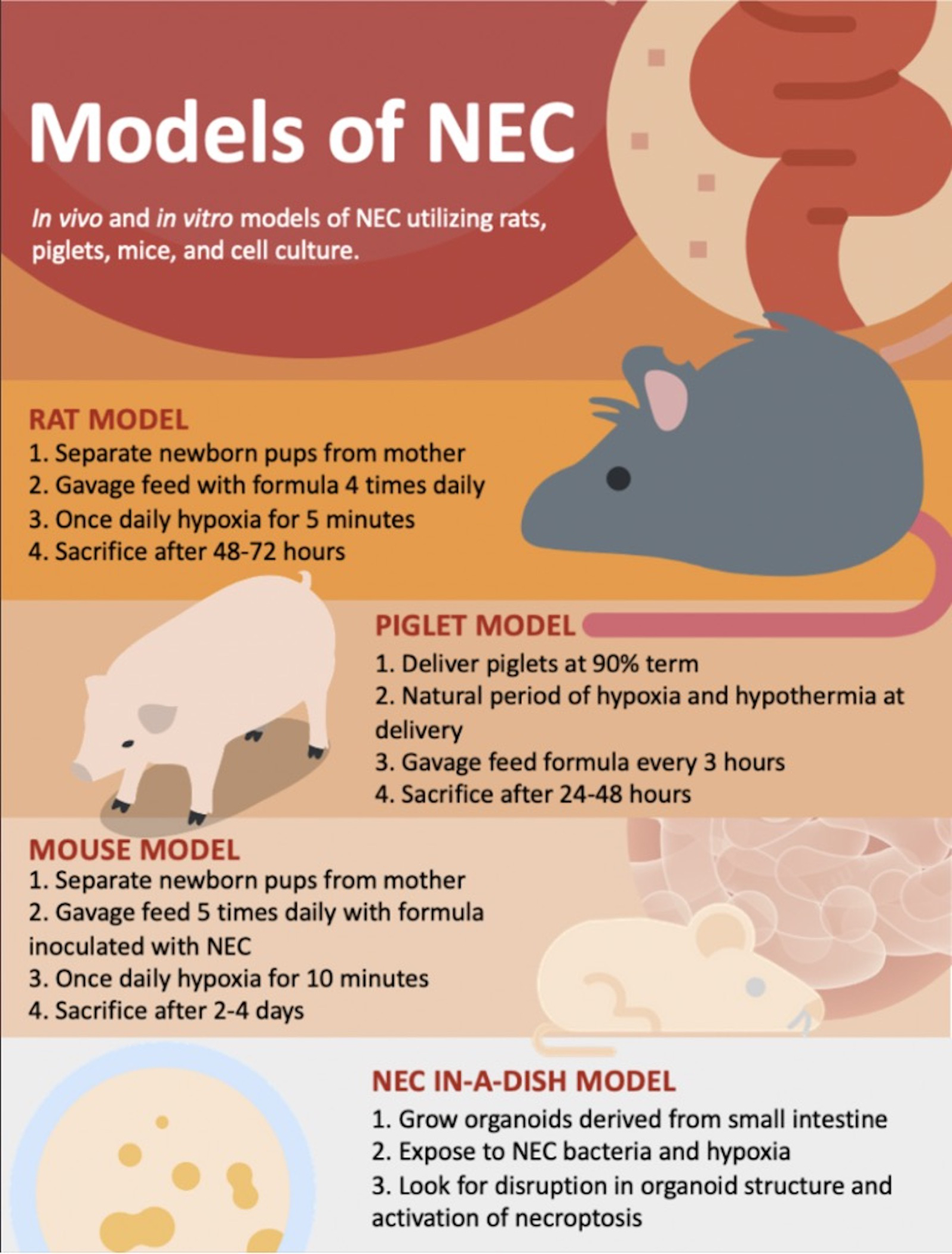
Necrotizing enterocolitis (NEC) is the leading cause of death and disability from gastrointestinal disease in premature infants. The mortality of patients with NEC is approximately 30%, a figure that has not changed in many decades, reflecting the need for a greater understanding of its pathogenesis. Progress towards understanding the cellular and molecular mechanisms underlying NEC requires the study of highly translational animal models. Such animal models must mimic the biology and physiology of premature infants, while still allowing for safe experimental manipulation of environmental and microbial factors thought to be associated with the risk and severity of NEC. Findings from animal models have yielded insights into the interactions between the host, the colonizing microbes, and the innate immune receptor Toll-like Receptor 4 (TLR4) in driving disease development. This review discusses the relative strengths and weaknesses of available in vivo, in vitro, and NEC-in-a-dish models of this disease. We also highlight the unique contributions that each model has made to our understanding of the complex interactions between enterocytes, microbiota, and immune cells in the pathogenesis of NEC. The overall purpose of this review is to provide a menu of options regarding currently available animal models of NEC, while in parallel hopefully reducing the potential uncertainty and confusion regarding NEC models to assist those who wish to enter this field from other disciplines.
Keywords: Models of necrotizing enterocolitis; NEC; Necrotizing enterocolitis.
Copyright © 2022 Elsevier Inc. All rights reserved.
Figures
References
-
- Lucas A, Cole TJ. Breast milk and neonatal necrotising enterocolitis. The Lancet 1990. - PubMed
