


Effect of remote patient monitoring for patients with chronic kidney disease who perform dialysis at home: a systematic review
- PMID: 36600376
- PMCID: PMC9730362
- DOI: 10.1136/bmjopen-2022-061772
Effect of remote patient monitoring for patients with chronic kidney disease who perform dialysis at home: a systematic review
Abstract
Objective: The purpose of the systematic review was to assess the effectiveness of remote patient monitoring (RPM) follow-up compared with standard care, for patients with chronic kidney disease (CKD) who perform dialysis at home.
Methods: We conducted a systematic review in accordance with international guidelines. We performed systematic searches for publications from 2015 to 2021 in five databases (eg, Medline, Cinahl, Embase) and a search for grey literature in reference lists. Included effect measures were quality of life, hospitalisation, technical failure as the cause for transfer to a different dialysis modality, infections and time patients use for travel. Screening of literature, data extraction, risk-of-bias assessment and certainty of evidence assessment (using the Grading of Recommendations Assessment, Development and Evaluation approach) were done by two researchers. We conducted meta-analyses when possible.
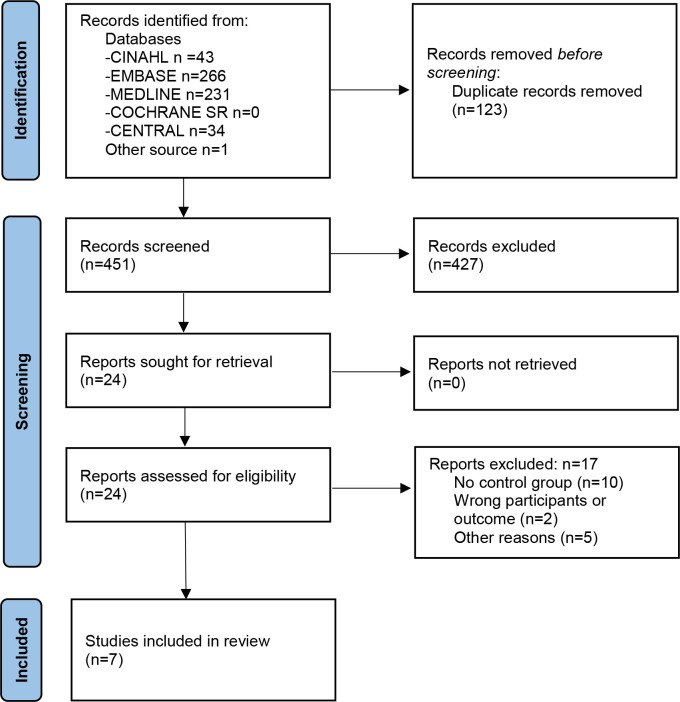
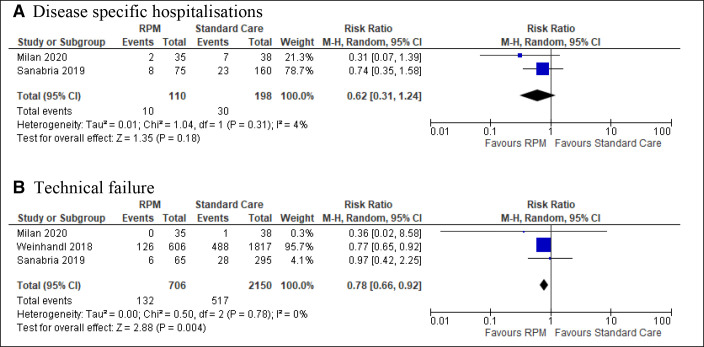
Results: Seven studies met the inclusion criteria, of which two were randomised controlled trials and five were retrospective cohort studies with control groups. The studies included 9975 participants from 5 countries, who were a good representation of dialysis patients in high-income and upper-middle-income countries. The patients were on peritoneal dialysis (six studies) or home haemodialysis (one study). There was very low certainty of evidence for the outcomes, except for hospitalisations: there was low certainty evidence from three cohort studies for fewer hospitalisation days in the RPM group. No studies included data for time patients used for travel.
Conclusion: We found low to very low certainty evidence that indicate there may be positive effects of RPM follow-up, in comparison to standard care only, for adult patients with CKD who perform dialysis at home. Offering RPM follow-up for home dialysis patients as an alternative or supplement to standard care appears to be safe and provide health benefits such as fewer hospitalisation days. Future implementation should be coupled with robust, high-quality evaluations.
Prospero registration number: CRD42021281779.
Keywords: Adult nephrology; Chronic renal failure; Dialysis; End stage renal failure; Health informatics; Telemedicine.
© Author(s) (or their employer(s)) 2022. Re-use permitted under CC BY-NC. No commercial re-use. See rights and permissions. Published by BMJ.
Conflict of interest statement
Competing interests: None declared.
Figures
References
-
- Meld. St. 7 (2019–2020) . Nasjonal helse- OG sykehusplan 2020–2023: Helse- OG omsorgsdepartementet. Available: https://www.regjeringen.no/no/dokumenter/meld.-st.-7-20192020/id2678667/ [Accessed 09 Dec 2021].
Publication types
MeSH terms
LinkOut - more resources
Full Text Sources
Medical
Miscellaneous
