


Suppression of Selective Voltage-Gated Calcium Channels Alleviates Neuronal Degeneration and Dysfunction through Glutathione S-Transferase-Mediated Oxidative Stress Resistance in a Caenorhabditis elegans Model of Alzheimer's Disease
- PMID: 36600949
- PMCID: PMC9806690
- DOI: 10.1155/2022/8287633
Suppression of Selective Voltage-Gated Calcium Channels Alleviates Neuronal Degeneration and Dysfunction through Glutathione S-Transferase-Mediated Oxidative Stress Resistance in a Caenorhabditis elegans Model of Alzheimer's Disease
Abstract
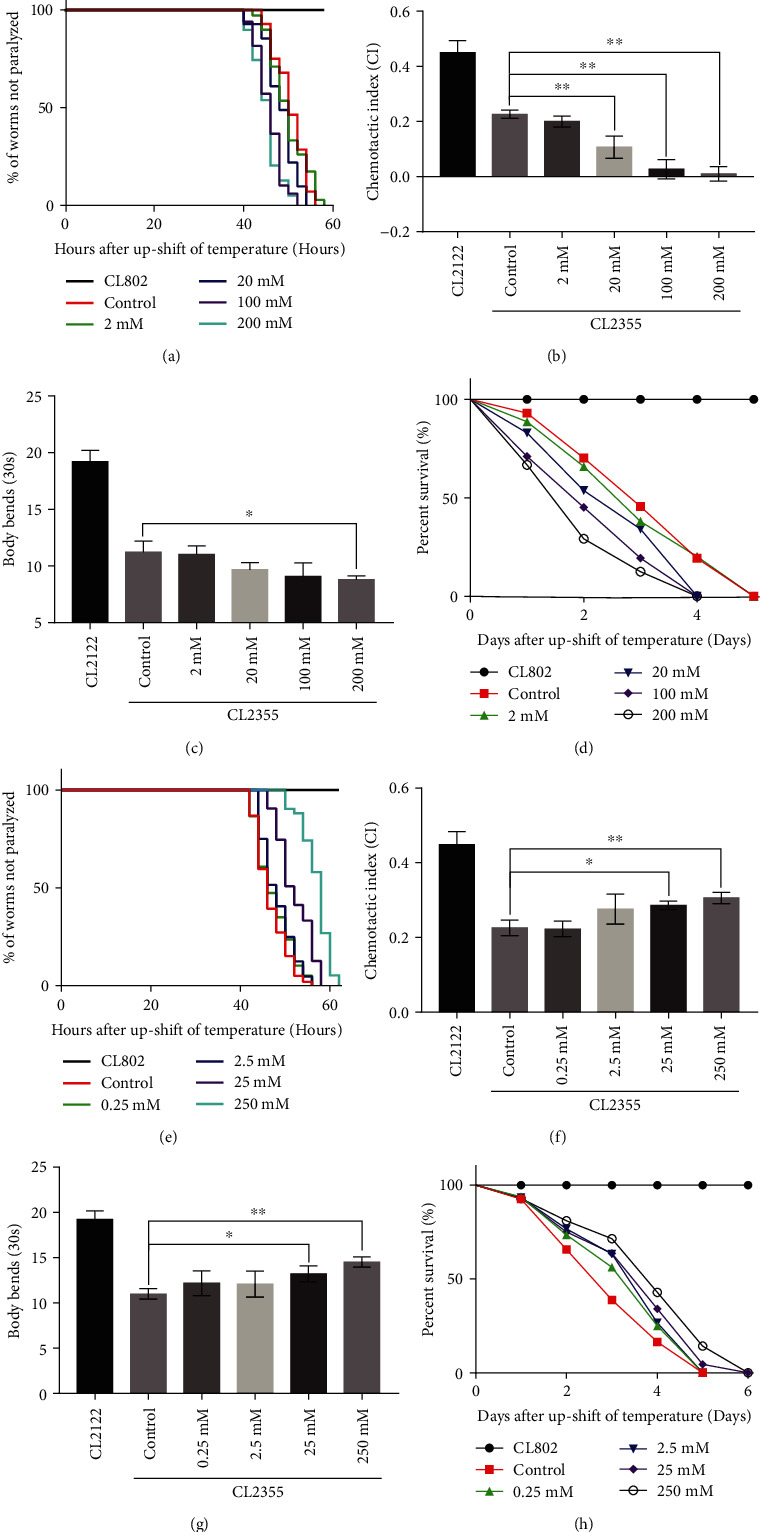
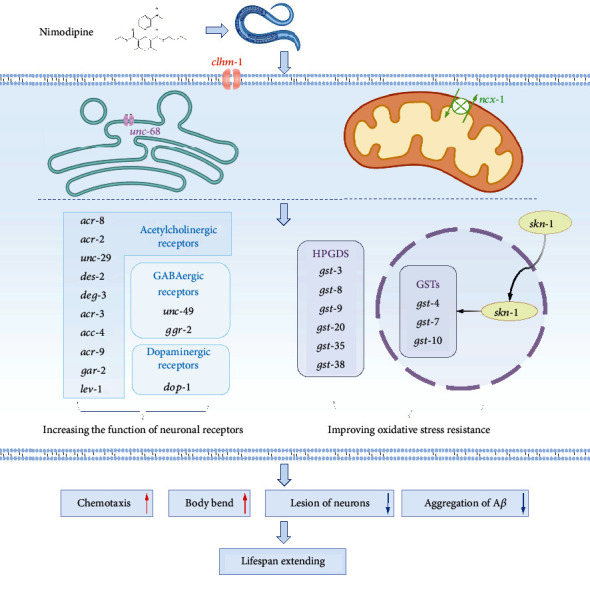
Calcium homeostasis plays a vital role in protecting against Alzheimer's disease (AD). In this study, amyloid-β (Aβ)-induced C. elegans models of AD were used to elucidate the mechanisms underlying calcium homeostasis in AD. Calcium acetate increased the intracellular calcium content, exacerbated Aβ 1-42 aggregation, which is closely associated with oxidative stress, aggravated neuronal degeneration and dysfunction, and shortened the lifespan of the C. elegans models. Ethylene glycol tetraacetic acid (EGTA) and nimodipine were used to decrease the intracellular calcium content. Both EGTA and nimodipine showed remarkable inhibitory effects on Aβ 1-42 aggregations by increasing oxidative stress resistance. Moreover, both compounds significantly delayed the onset of Aβ-induced paralysis, rescued memory deficits, ameliorated behavioral dysfunction, decreased the vulnerability of two major (GABAergic and dopaminergic) neurons and synapses, and extended the lifespan of the C. elegans AD models. Furthermore, RNA sequencing of nimodipine-treated worms revealed numerous downstream differentially expressed genes related to calcium signaling. Nimodipine-induced inhibition of selective voltage-gated calcium channels was shown to activate other calcium channels of the plasma membrane (clhm-1) and endoplasmic reticulum (unc-68), in addition to sodium-calcium exchanger channels (ncx-1). These channels collaborated to activate downstream events to resist oxidative stress through glutathione S-transferase activity mediated by HPGD and skn-1, as verified by RNA interference. These results may be applied for the treatment of Alzheimer's disease.
Copyright © 2022 Zihui Zheng et al.
Conflict of interest statement
The authors declare that this research was conducted with no commercial or financial relationships that could be construed as a potential conflict of interest.
Figures


References
MeSH terms
Substances
LinkOut - more resources
Full Text Sources
Medical
