


Assessment of nitrogen-fixing endophytic and mineral solubilizing rhizospheric bacteria as multifunctional microbial consortium for growth promotion of wheat and wild wheat relative Aegilops kotschyi
- PMID: 36601433
- PMCID: PMC9806681
- DOI: 10.1016/j.heliyon.2022.e12579
Assessment of nitrogen-fixing endophytic and mineral solubilizing rhizospheric bacteria as multifunctional microbial consortium for growth promotion of wheat and wild wheat relative Aegilops kotschyi
Abstract
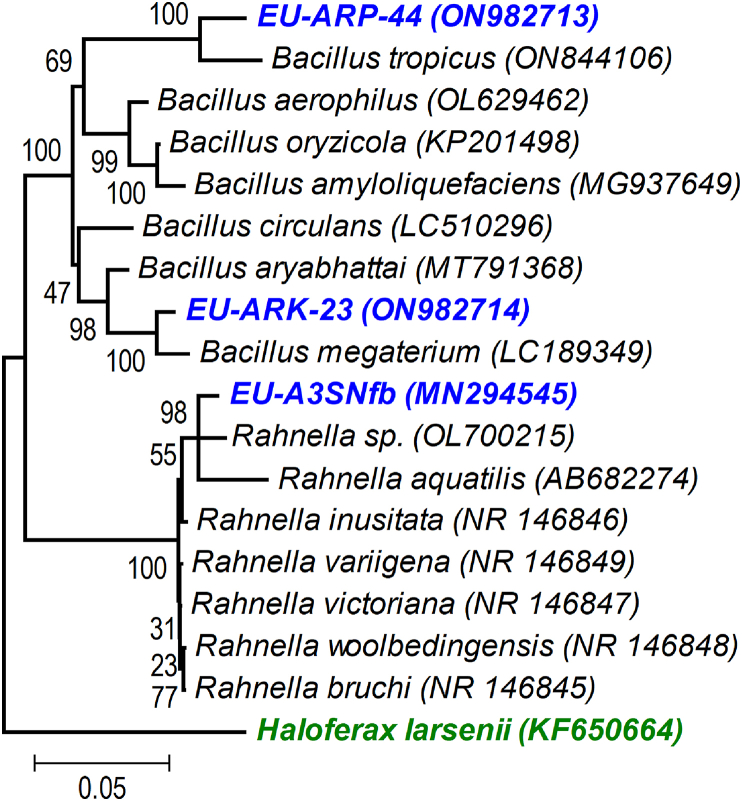
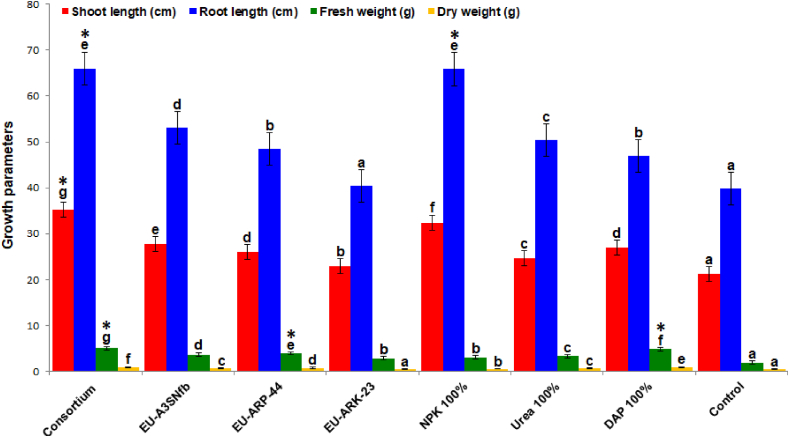
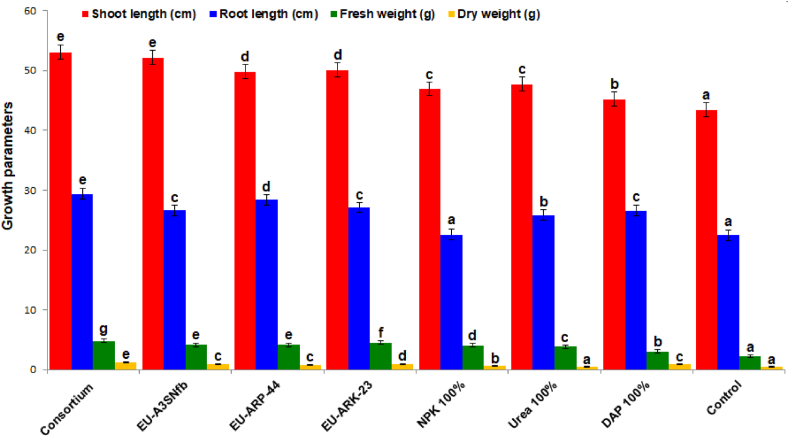
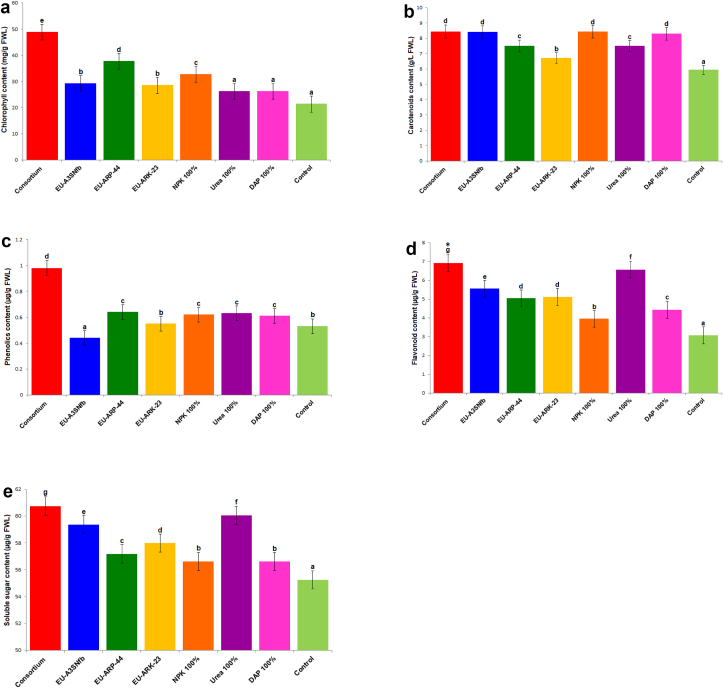
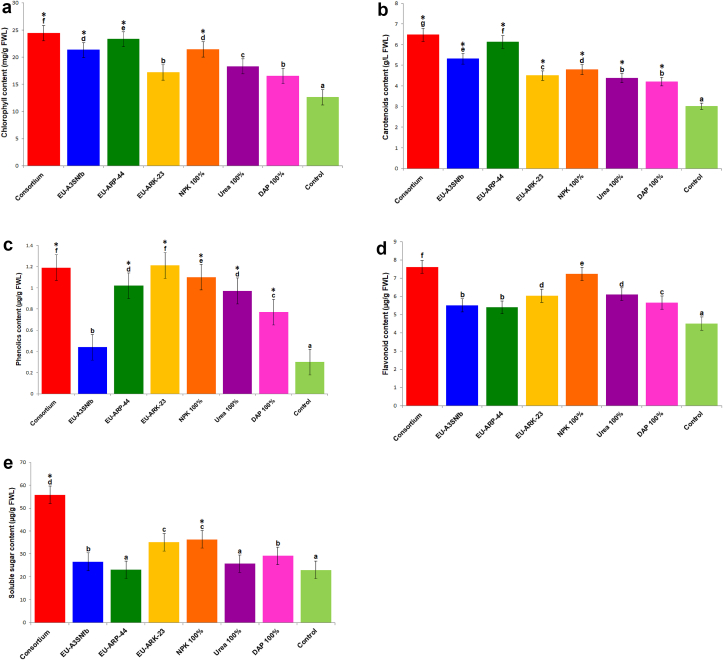
Microbes play crucial functions in maintaining the health and growth of the plants directly or indirectly by supplying nutrients. These microbes could be used as biofertilizers for the enhancement of soil health and growth of crops. In preset investigation, potential microbes from endophytic and rhizospheric region of Aegilops kotschyi growing in green slopes of Shivaliks, Himachal Pradesh were sorted out and screened for plant growth promoting attributes including phosphorus and potassium solubilization. The potential bacterial strains were identified through 16S rRNA gene sequencing and developed as microbial consortium for the plant growth of wheat and wild wheat relative Aegilops kotschyi. A total 125 isolates of bacteria were sorted out and among them 36 were found as P-solubilizers and 19 showed K-solubilization attribute and two highly potential bacterial strain were identified as Bacillus tropicus EU-ARP-44 (P-solubilizer; 270.5 ± 0.00 mg L-1) and B. megaterium EU-ARK-23 (K-Solubilizer; 51.3 ± 1.7 mg mL-1). The microbial consortium of Rahnella sp. strain EU-A3SNfb (N-fixer; MN294545), B. tropicus EU-ARP-44 (P-solubilizer) and B. megaterium EU-ARK-23 (K-solubilizer) evaluation in Aegilops kotschyi and wheat crop resulted in the enhancement of growth as well as physiological parameter including shoot/root length, fresh/dry weight and chlorophyll, carotenoid, total soluble sugar content, phenolic and flavonoid content as compared to un-inoculated control. Microbial consortium consisting of potential plant growth promoting (PGP) bacterial strains could be used as biofertilizer and bioinoculants in cereals crop growing in hilly region.
Keywords: Aegilops kotschyi; Agricultural sustainability; Bioinoculants; Endophytes; Plant growth promotion; Wheat.
© 2022 The Author(s).
Conflict of interest statement
The authors declare no competing interests.
Figures
References
-
- Chakraborty U., Chakraborty B., Basnet M. Plant growth promotion and induction of resistance in Camellia sinensis by Bacillus megaterium. J. Basic Microbiol. 2006;46:186–195. - PubMed
-
- Chandra P., Tripathi P., Chandra A. Isolation and molecular characterization of plant growth-promoting Bacillus spp. and their impact on sugarcane (Saccharum spp. hybrids) growth and tolerance towards drought stress. Acta Physiol. Plant. 2018;40:1–15.
-
- Choure K., Dubey R. Development of plant growth promoting microbial consortium based on interaction studies to reduce wilt incidence in Cajanus cajan L. var. Manak. World J. Agric. Sci. 2012;8:118–128.
-
- Devi R., Kaur T., Kour D., Yadav A., Yadav A.N., Suman A., et al. Minerals solubilizing and mobilizing microbiomes: a sustainable approaches for managing minerals deficiency in agricultural soil. J. Appl. Microbiol. 2022;133:1245–1272. - PubMed
LinkOut - more resources
Full Text Sources
Research Materials
Miscellaneous
