


Early contribution of germline and nevi genetic alterations to a rapidly-progressing cutaneous melanoma patient: a case report
- PMID: 36604730
- PMCID: PMC9814418
- DOI: 10.1186/s12920-022-01426-2
Early contribution of germline and nevi genetic alterations to a rapidly-progressing cutaneous melanoma patient: a case report
Abstract
Background: Cutaneous melanoma is the skin cancer with the highest mutational burden and metastatic rate. Early genetic alterations and biomarkers of distant progression are a point of interest. In addition to germline-susceptibility loci, almost 30% of melanomas arise from precursor benign nevi lesions, providing a source for malignant transformation.
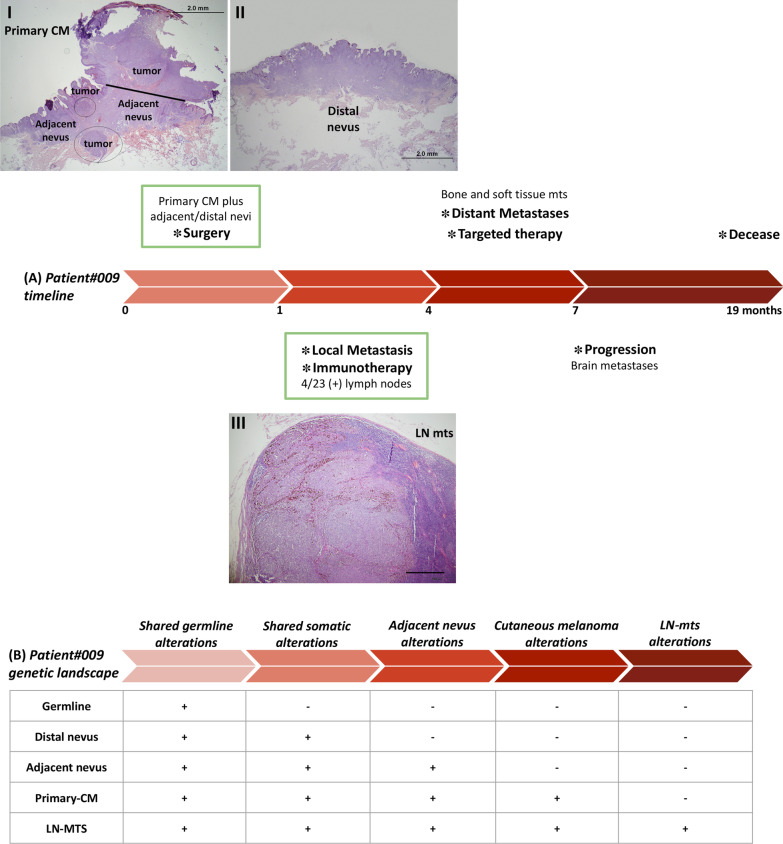
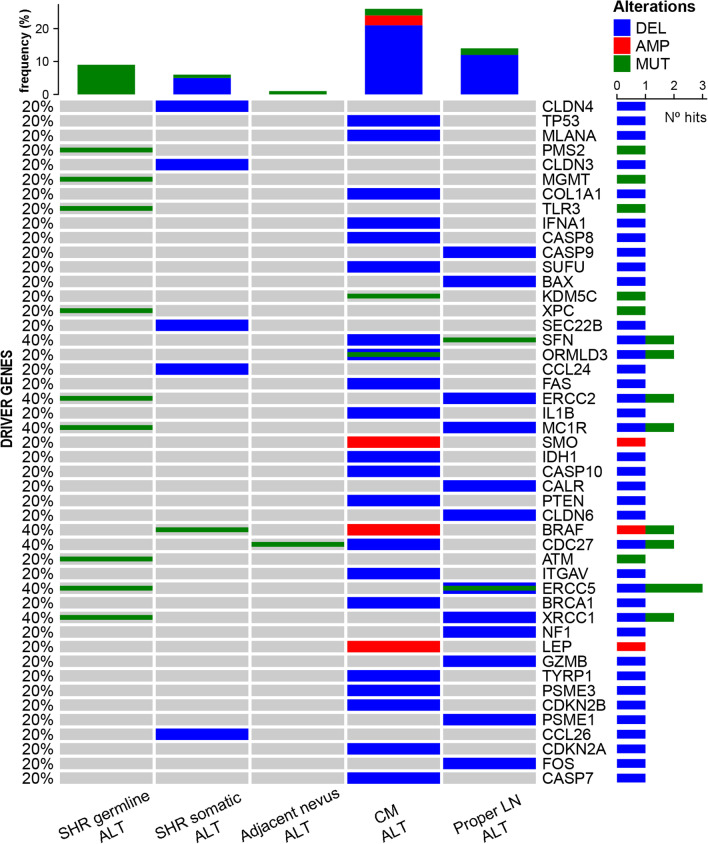
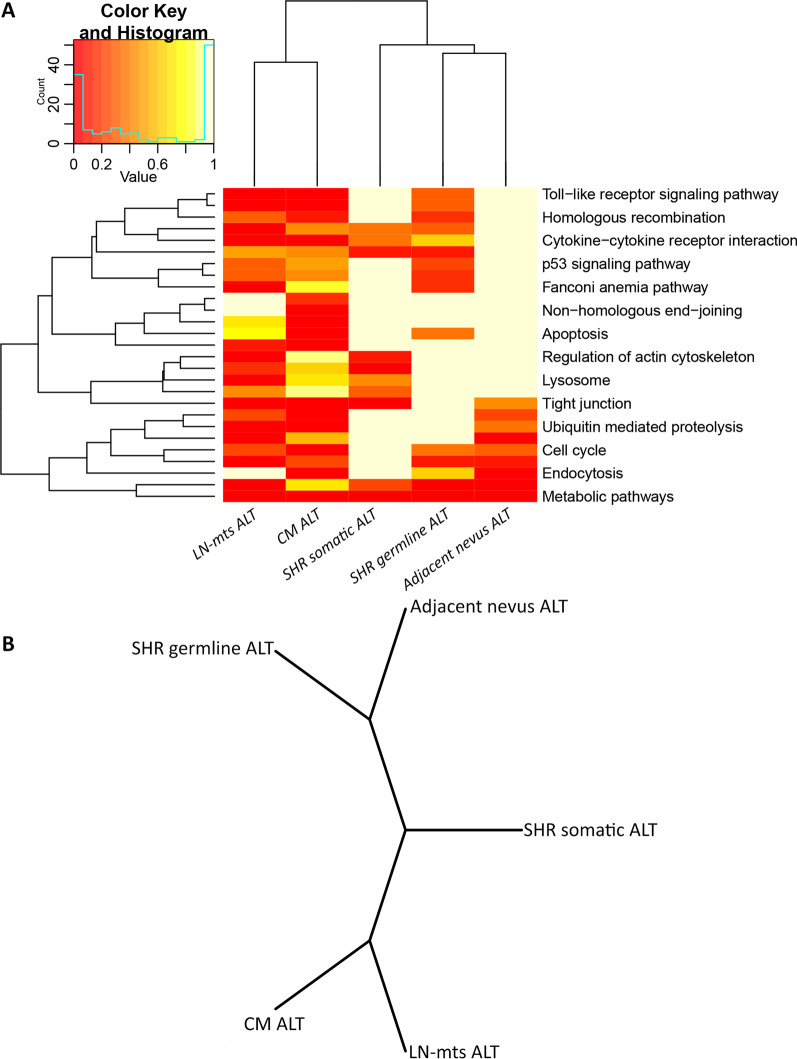
Case presentation: Patient#009 developed a cutaneous melanoma over a nevus, followed by progression to regional and distant metastases in months, unresponsive to targeted therapy. To search for the genetic contribution to this rapid progression, a longitudinal analysis was performed through WES of germline, nevi, primary tumor, and a metastatic lymph node. Differential SNP/INDEL and CNV gene alterations, with functional impact on key pathways and cancer hallmarks in each step of evolution, were discerned. Tumor-associated nevus was, for the first time, split into two sections, distant and adjacent to the primary tumor, to study its heterogeneity. Shared SNP alterations, with stable allele fraction from germline to metastasis were detected, mainly affecting DNA repair genes and promoting genome instability. Early somatic alterations, shared by nevi and primary and metastatic tumors, included BRAFV600E and focal copy-loss of several genes, acquiring additional cancer hallmarks. Phylogenetic analyses revealed that these common somatic alterations would provide a "bridge", allowing progression from a benign to a malignant state. Distant and adjacent nevi were rich in alterations, presenting differential SNP and CNV alterations. Upon tumor transformation, a marked increase in CNV over SNP alterations was determined. Both the number of SNP and CNV-affected genes, including known driver genes, increased throughout progression, although TMB levels remained lower than expected for melanoma. Typical alterations in BRAFV600E tumors related to intrinsic resistance to targeted therapy were found, including BRAF amplification and loss of PTEN, CDKN2A/B, and TP53 surveillance genes. Finally, numerous metastatic alterations were detected, further promoting tumor progression.
Conclusions: In this patient, longitudinal WES analysis revealed a sequential and cumulative pattern of genetic alterations, where germline and nevi somatic events contributed early to its rapid clinical progression. In this case report, we found tumor-associated nevi as genetically heterogeneous precursor entities, in which potential prognostic biomarkers should be studied prospectively.
Keywords: Cancer hallmarks; Cancer pathways; Case report; Cutaneous melanoma; Germline alterations; Nevi heterogeneity; Somatic alterations; Tumor progression; Whole-exome sequencing.
© 2023. The Author(s).
Conflict of interest statement
The authors declare that they have no competing interests.
Figures
References
Publication types
MeSH terms
Substances
Grants and funding
LinkOut - more resources
Full Text Sources
Medical
Research Materials
Miscellaneous
