


Phenotypic shift in copy number variants: Evidence in 16p11.2 duplication syndrome
- PMID: 36609147
- PMCID: PMC10068678
- DOI: 10.1016/j.gim.2022.09.011
Phenotypic shift in copy number variants: Evidence in 16p11.2 duplication syndrome
Abstract
Purpose: Recurrent 16p11.2 duplications produce a wide range of clinical outcomes with varying effects on cognition and social functioning. Family-based studies of copy number variants (CNVs) have revealed significant contributions of genomic background on variable expressivity. In this study, we measured the phenotypic effect of 16p11.2 duplications and quantified the modulating effect of familial background on cognitive and social outcomes.
Methods: Genomic and clinical data were ascertained from 41 probands with a 16p11.2 duplication and their first-degree relatives. Paired comparisons were completed to determine the duplication's effect on expected vs actual performance on standardized tests of intelligence (IQ) and social functioning (Social Responsiveness Scale-2). Intraclass correlations between relatives and probands were also calculated.
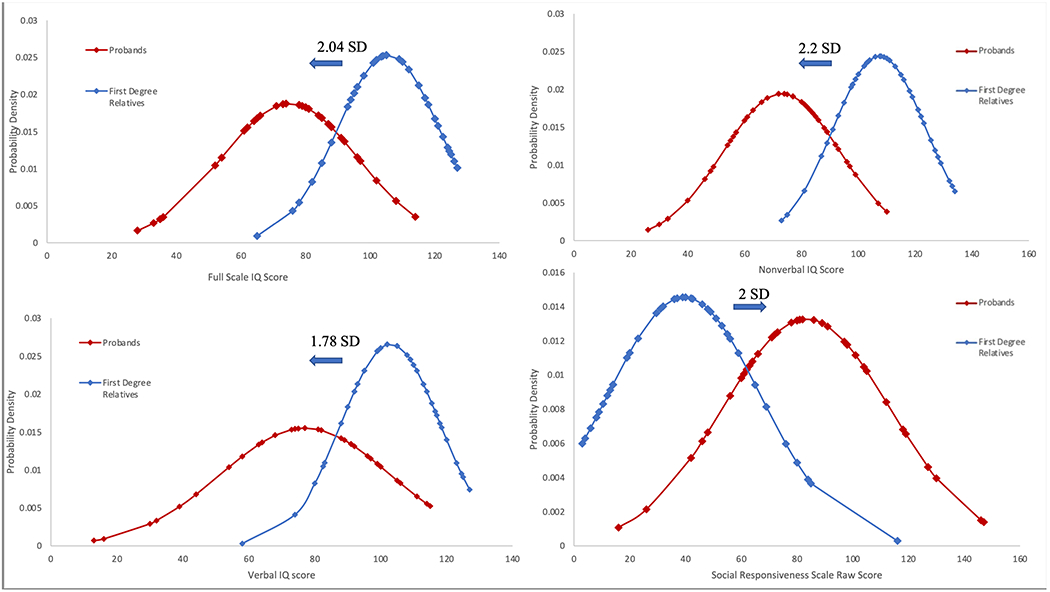
Results: Cognitive and social functioning were significantly lower among individuals with 16p11.2 duplications than their CNV-negative relatives, whereas intraclass correlations between the groups remained high for full-scale IQ and Social Responsiveness Scale-2 scores.
Conclusion: The 16p11.2 duplication confers deleterious effects on cognition and social functioning, whereas familial background significantly influences phenotypic expression of these traits. Understanding variable expressivity in CNV disorders has implications for anticipatory clinical care, particularly for individuals who receive a genetic diagnosis at an early age, long before the full scope of manifestations becomes evident.
Keywords: Neurodevelopment; Neuropsychiatric conditions.
Copyright © 2022 American College of Medical Genetics and Genomics. Published by Elsevier Inc. All rights reserved.
Conflict of interest statement
Conflict of Interest D.H.L. has received compensation as a consultant to Natera, Inc and owns stock in the company and is a consultant to MyOme, Inc and has received stock in the company. All other authors declare no conflicts of interest.
Figures
References
Publication types
MeSH terms
Grants and funding
LinkOut - more resources
Full Text Sources
