


The impact of social determinants of health on obesity and diabetes disparities among Latino communities in Southern California
- PMID: 36609302
- PMCID: PMC9817265
- DOI: 10.1186/s12889-022-14868-1
The impact of social determinants of health on obesity and diabetes disparities among Latino communities in Southern California
Abstract
Background: Social determinants of health (SDoH) describe the complex network of circumstances that impact an individual before birth and across the lifespan. SDoH contextualize factors in a community that are associated with chronic disease risk and certain health disparities. The main objective of this study was to explore the impact of SDoH on the prevalence of obesity and diabetes, and whether these factors explain disparities in these health outcomes among Latinos in Southern California.
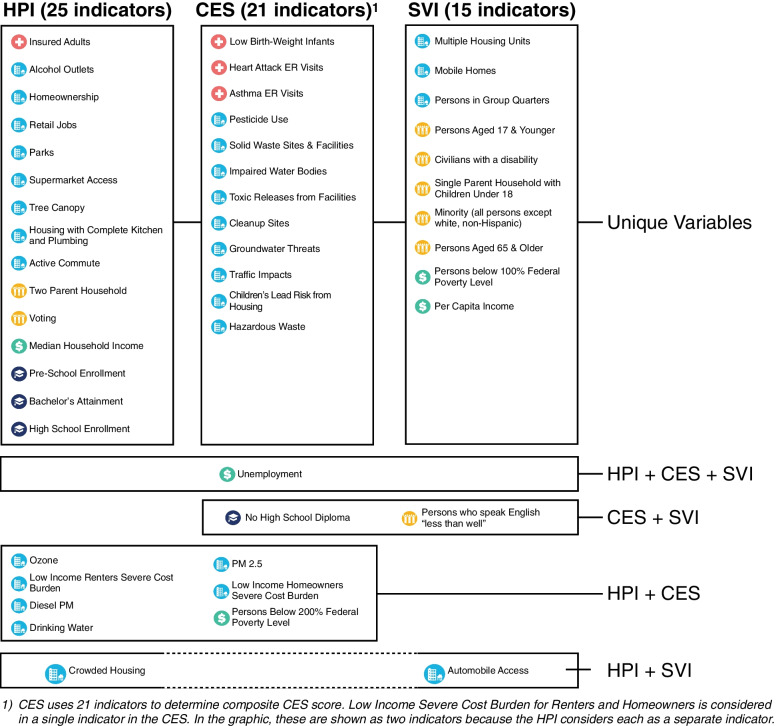
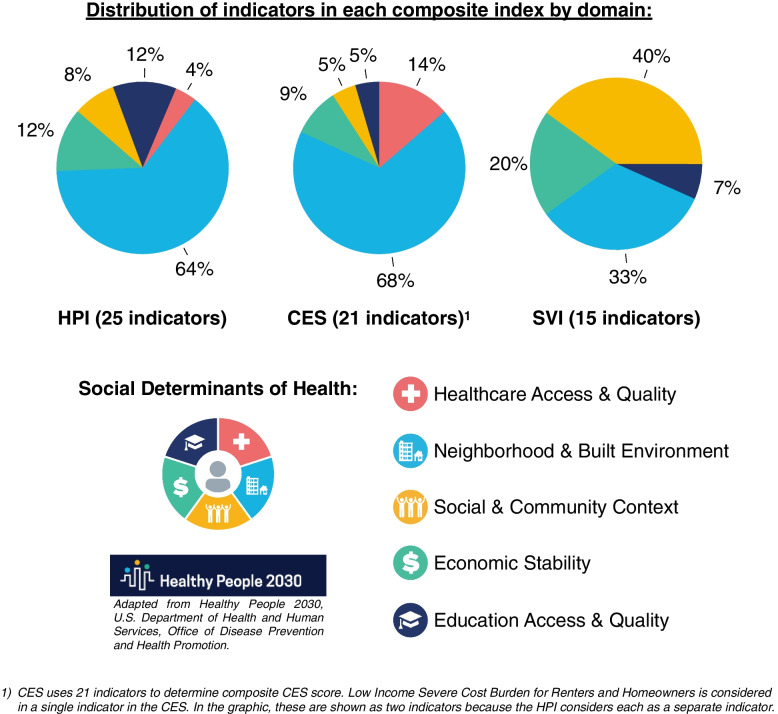
Methods: We utilized three composite indices that encompass different SDoH: the Healthy Places Index (HPI), Social Vulnerability Index (SVI), and CalEnviroScreen (CES). Univariate linear regression models explored the associations between index scores with adult obesity, adult diabetes, and childhood obesity.
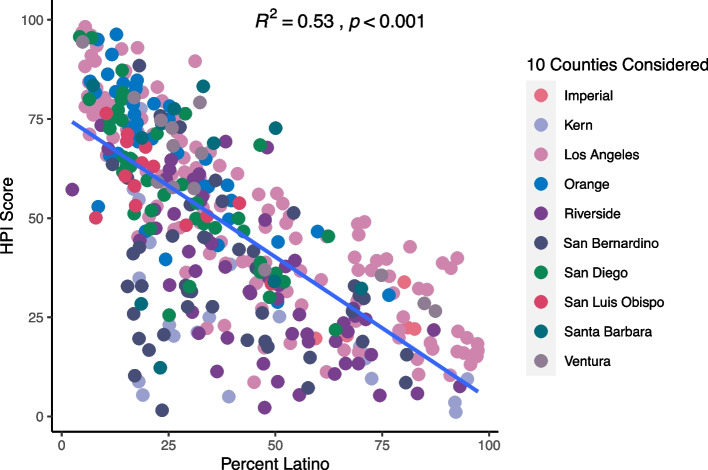
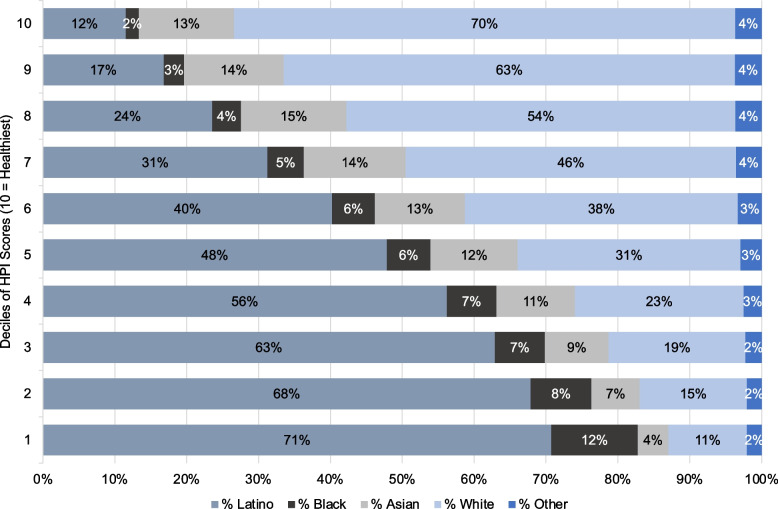
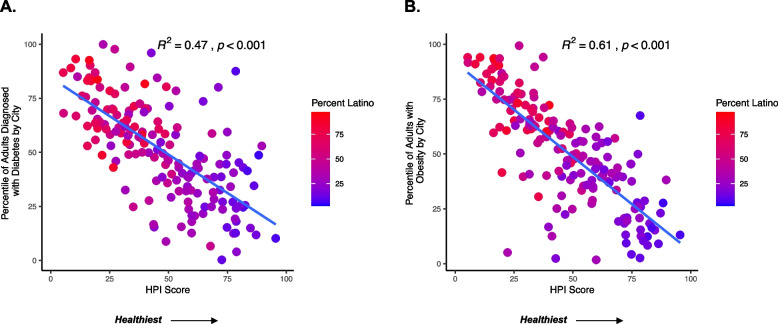
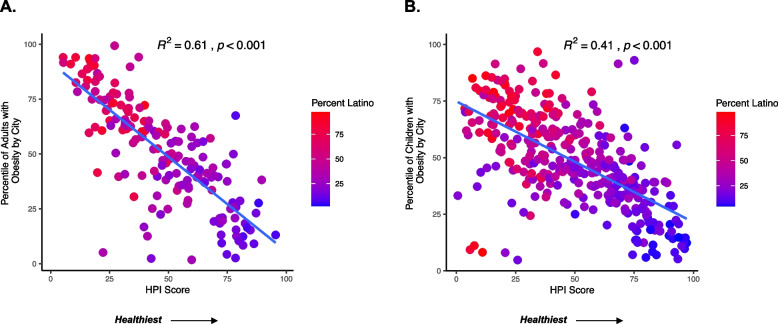
Results: Communities with lower HPI scores were associated with higher prevalence of metabolic disease and a greater proportion of Latino residents. Cities in the lowest decile of HPI scores had 71% of the population identifying as Latino compared to 12% in the highest decile. HPI scores explained 61% of the variability in adult obesity (p < 0.001), 41% of the variability in childhood obesity (p < 0.001), and 47% of the variability in adult diabetes (p < 0.001). Similar results were observed when examining SVI and CES with these health outcomes.
Conclusions: These results suggest that Latinos in Southern California live in communities with adverse SDoH and face a greater burden of adult obesity, diabetes, and childhood obesity.
Keywords: CalEnviroScreen; Childhood Obesity; Healthy Places Index; Latino; Obesity; Social Determinants of Health; Social Vulnerability Index; Type 2 Diabetes.
© 2022. The Author(s).
Conflict of interest statement
Michael I. Goran receives book royalties. Michael I. Goran is a scientific advisor for Yumi. Juan Espinoza is a paid consultant for AI Health. AI Health played no role in the design, execution, analysis, or write up of this work. AI Health did not play a role in the decision to publish this manuscript and had no editorial input. The authors declare no other competing interests.
Figures
References
-
- National Center for Health Statistics (U.S.) Gindi R, Franco S, Woodall A. Health, United States, 2019. 2021. - PubMed
-
- Center for Disease Control and Prevention. Racial and Ethnic Disparities in Heart Disease: Center for Disease Control and Prevention; 2019. https://www.cdc.gov/nchs/hus/spotlight/HeartDiseaseSpotlight_2019_0404.pdf. Accessed 22 June 2022.
-
- Centers for Disease Control and Prevention. National Center for Health Statistics. 2017 National Health and Nutrition Examination Survey Data. https://wwwn.cdc.gov/nchs/nhanes/continuousnhanes/default.aspx?BeginYear.... Accessed 22 June 2022.
Publication types
MeSH terms
Grants and funding
LinkOut - more resources
Full Text Sources
Medical
