


Rumba Dance Combined with Breathing Training as an Exercise Intervention in the Management of Stress Urinary Incontinence in Postmenopausal Women: A Randomized Controlled Trial
- PMID: 36612845
- PMCID: PMC9819238
- DOI: 10.3390/ijerph20010522
Rumba Dance Combined with Breathing Training as an Exercise Intervention in the Management of Stress Urinary Incontinence in Postmenopausal Women: A Randomized Controlled Trial
Abstract
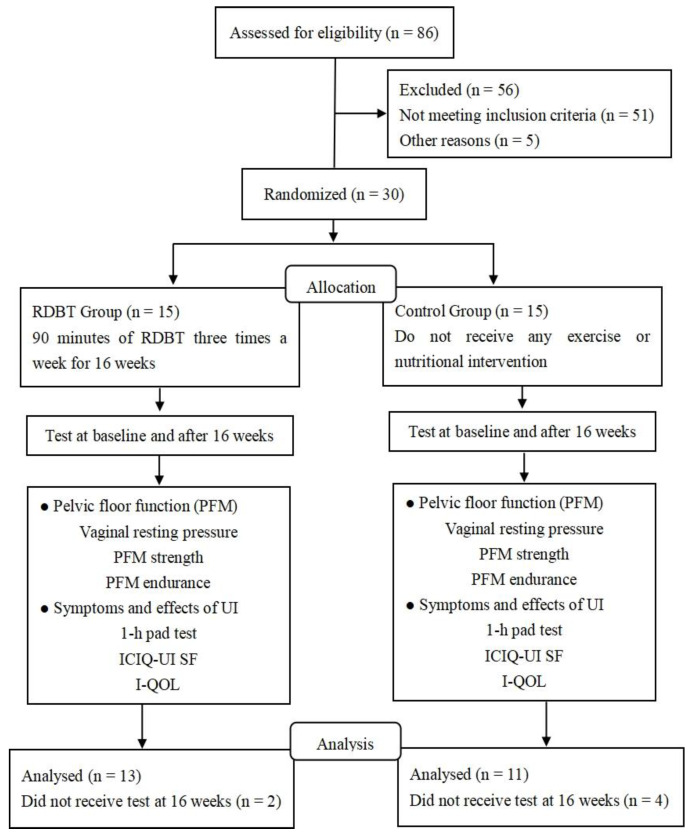
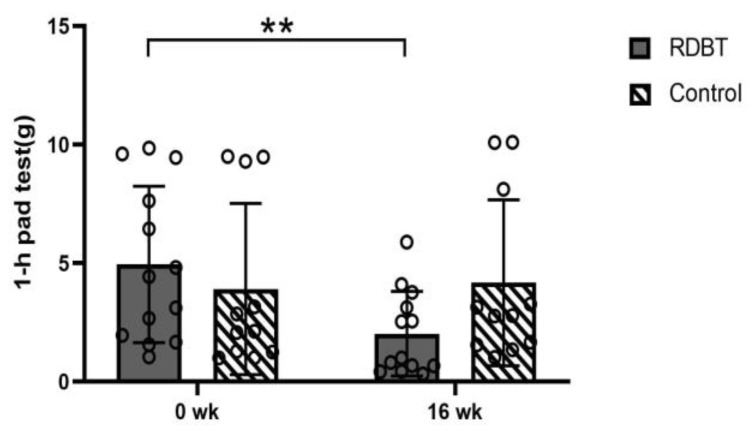
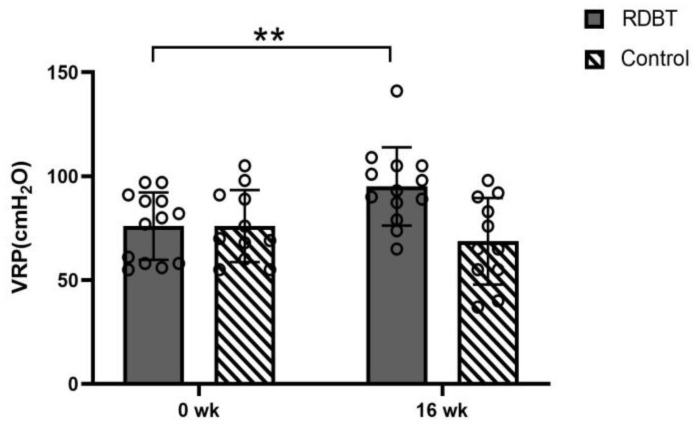
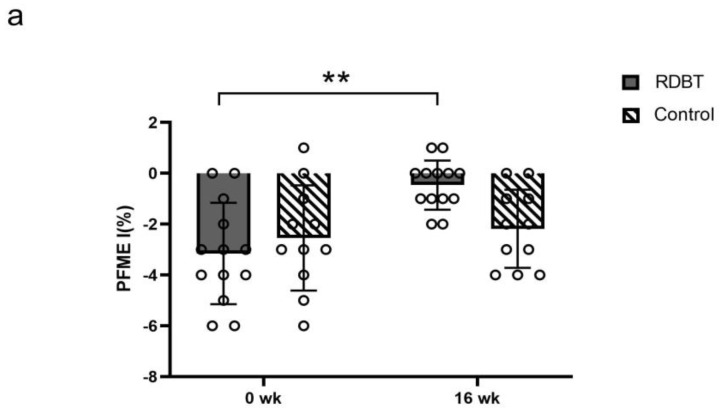
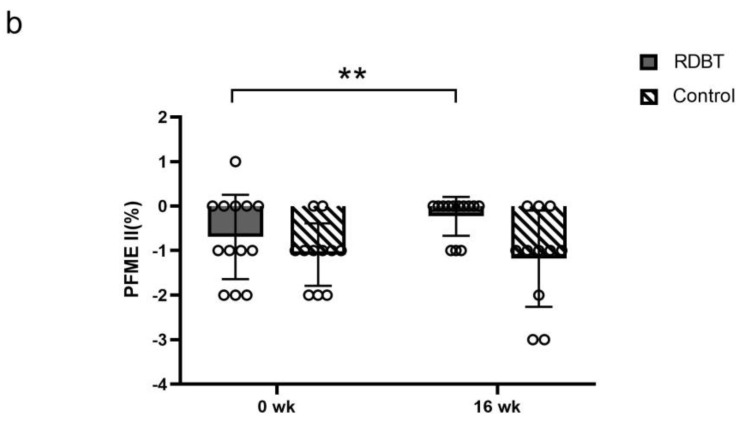
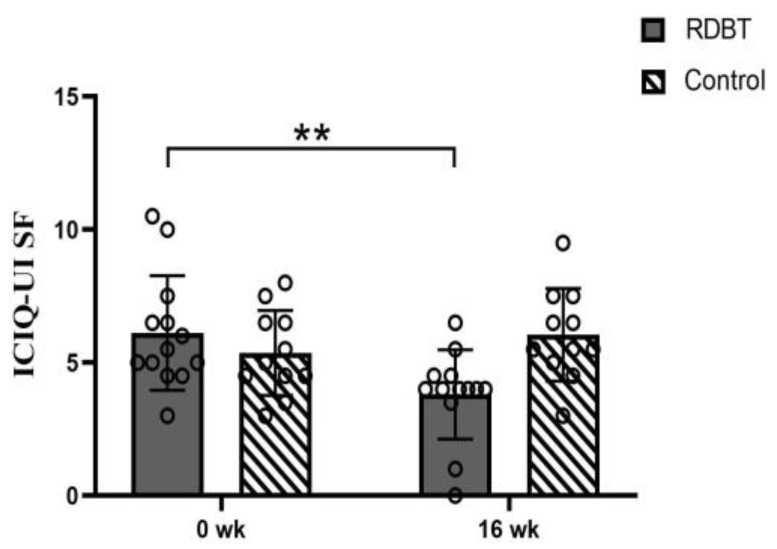
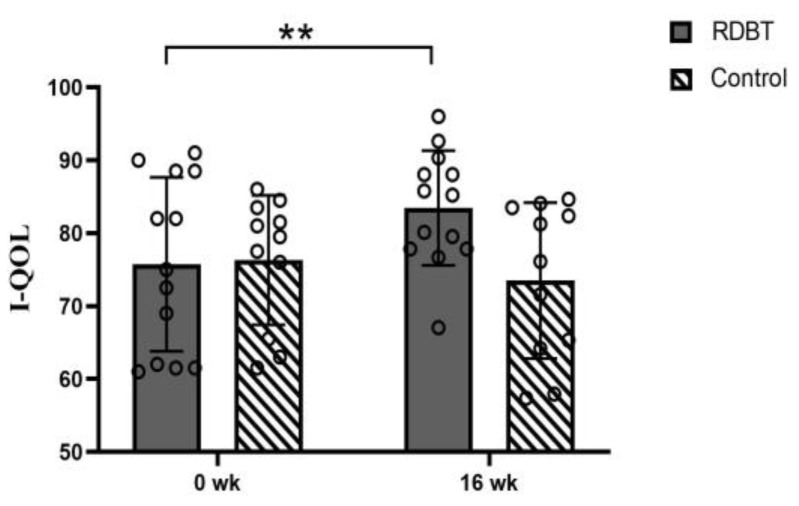
Purpose: Stress urinary incontinence (SUI) refers to involuntary leakage from the urethra, synchronous with exertion/effort, sneezing or coughing, which has a negative effect on quality of life. Studies have shown that mild-to-moderate physical activities reduce the risk of SUI by multiple mechanisms. The objective of this study was to determine whether the Rumba dance combined with breathing training (RDBT) can reduce the severity of incontinence and improve the quality of life of patients with SUI. Methods: A randomized clinical trial was conducted with women who were sedentary, were postmenopausal, reported mild-to-moderate SUI on a 1-h pad test, were not already engaged in Rumba dance and did not receive estrogen replacement therapy. The patients were randomly assigned to the RDBT group (n = 13) or the control group (n = 11). The intervention included 90 min of RDBT three times per week for 16 weeks, and the vaginal resting pressure (VRP), pelvic floor muscle (PFM) strength and endurance, 1-h pad test, International Consultation on Incontinence Questionnaire—Urinary Incontinence Short Form (ICIQ—UI SF), and the Incontinence Quality of Life Questionnaire (I—QOL) were measured or completed at baseline and 16 weeks. None of the participants reported adverse events. Results: The mean (±SD) age of the participants was 55.75 ± 5.58 years. After 16 weeks, in the RDBT group, the urine leakage on the 1-h pad test was significantly decreased −2.91 ± 0.49 from the baseline (p = 0.000). The VRP increased from 76.00 ± 16.23 cmH2O to 95.09 ± 18.90 cmH2O (p = 0.000), the PFM endurance of class I (−3.15 ± 1.99% vs. −0.46 ± 0.97%, p = 0.000) and class II (−0.69 ± 0.95% vs. −0.23 ± 0.44%, p = 0.065) increased, and the grades of PFM strength of class I and class II were significantly enhanced (p < 0.01). Finally, the severity of self-reported incontinence (ICIQ—UI SF) significantly decreased from 6.12 ± 2.15 to 3.81 ± 1.68 (p = 0.000), and quality of life (I—QOL) improved from 75.73 ± 11.93 to 83.48 ± 7.88 (p = 0.005). Conclusion: A 16-week RDBT program can increase PFM strength and endurance to reduce the severity of incontinence symptoms and improve the quality of life in patients with SUI, demonstrating the feasibility of recruiting and retaining postmenopausal women with SUI into a RDBT therapeutic program.
Keywords: dance; exercise; pelvic floor dysfunction; pelvic floor muscles; synergistic muscles.
Conflict of interest statement
The authors declare no conflict of interest.
Figures
References
-
- Agarwal A., Eryuzlu L.N., Cartwright R., Thorlund K., Tammela T.L., Guyatt G.H., Auvinen A., Tikkinen K.A. What is the most bothersome lower urinary tract symptom? Individual- and population-level perspectives for both men and women. Eur. Urol. 2014;65:1211–1217. doi: 10.1016/j.eururo.2014.01.019. - DOI - PMC - PubMed
-
- Abrams P., Cardozo L., Fall M., Griffiths D., Rosier P., Ulmsten U., van Kerrebroeck P., Victor A., Wein A. The standardisation of terminology of lower urinary tract function: Report from the Standardisation Sub-committee of the International Continence Society. Am. J. Obstet. Gynecol. 2002;187:116–126. doi: 10.1067/mob.2002.125704. - DOI - PubMed
-
- Chinese Medical Association Obstetrics and Gynecology Branch Gynecology Pelvic Floor Group Guidelines for the diagnosis and treatment of female stress urinary incontinence. Chin. J. Obstet. Gynecol. 2017;52:289–293.
-
- Pang H., Lv J., Xu T., Li Z., Gong J., Liu Q., Wang Y., Wang J., Xia Z., Li Z., et al. Incidence and risk factors of female urinary incontinence: A 4-year longitudinal study among 24 985 adult women in China. BJOG Int. J. Obstet. Gynaecol. 2022;129:580–589. doi: 10.1111/1471-0528.16936. - DOI - PMC - PubMed
Publication types
MeSH terms
LinkOut - more resources
Full Text Sources
Medical
Miscellaneous
