


Barriers to mesenchymal stromal cells for low back pain
- PMID: 36619693
- PMCID: PMC9813839
- DOI: 10.4252/wjsc.v14.i12.815
Barriers to mesenchymal stromal cells for low back pain
Abstract
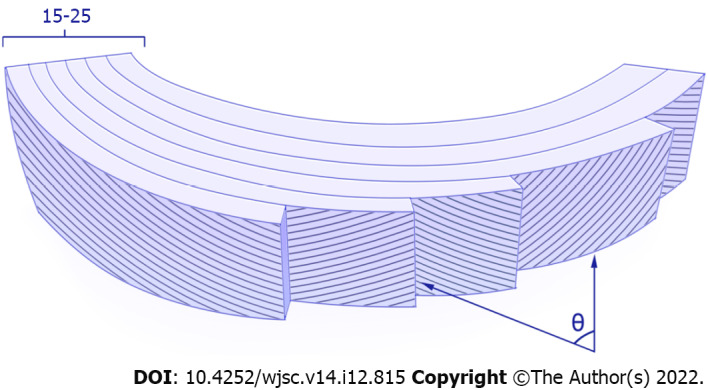
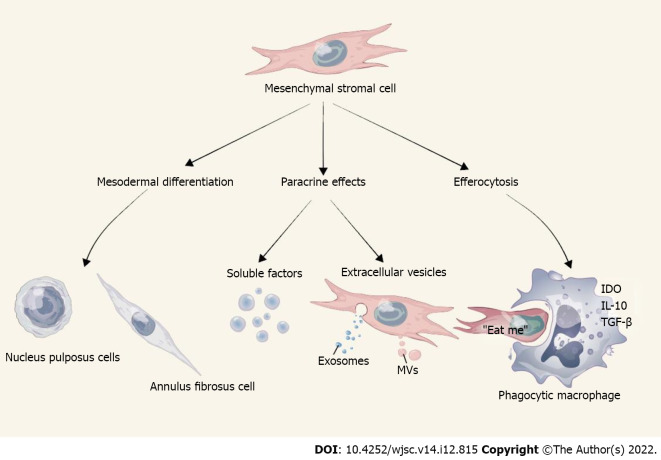
Intervertebral disc degeneration is the main cause of low back pain. In the past 20 years, the injection of mesenchymal stromal cells (MSCs) into the nucleus pulposus of the degenerative disc has become the main approach for the treatment of low back pain. Despite the progress made in this field, there are still many barriers to overcome. First, intervertebral disc is a highly complex load-bearing composite tissue composed of annulus fibrosus, nucleus pulposus and cartilaginous endplates. Any structural damage will change its overall biomechanical function, thereby causing progressive degeneration of the entire intervertebral disc. Therefore, MSC-based treatment strategies should not only target the degenerated nucleus pulposus but also include degenerated annulus fibrosus or cartilaginous endplates. Second, to date, there has been relatively little research on the basic biology of annulus fibrosus and cartilaginous endplates, although their pathological changes such as annular tears or fissures, Modic changes, or Schmorl's nodes are more commonly associated with low back pain. Given the high complexity of the structure and composition of the annulus fibrosus and cartilaginous endplates, it remains an open question whether any regeneration techniques are available to achieve their restorative regeneration. Finally, due to the harsh microenvironment of the degenerated intervertebral disc, the delivered MSCs die quickly. Taken together, current MSC-based regenerative medicine therapies to regenerate the entire disc complex by targeting the degenerated nucleus pulposus alone are unlikely to be successful.
Keywords: Editorial; Intervertebral disc degeneration; Low back pain; Mesenchymal stromal cells; Nucleus pulposus; Regenerative medicine.
©The Author(s) 2022. Published by Baishideng Publishing Group Inc. All rights reserved.
Conflict of interest statement
Conflict-of-interest statement: All the authors report having no relevant conflicts of interest for this article.
Figures
References
-
- Vlaeyen JWS, Maher CG, Wiech K, Van Zundert J, Meloto CB, Diatchenko L, Battié MC, Goossens M, Koes B, Linton SJ. Low back pain. Nat Rev Dis Primers. 2018;4:52. - PubMed
-
- Binch ALA, Fitzgerald JC, Growney EA, Barry F. Cell-based strategies for IVD repair: clinical progress and translational obstacles. Nat Rev Rheumatol. 2021;17:158–175. - PubMed
-
- Bach FC, Tellegen AR, Beukers M, Miranda-Bedate A, Teunissen M, de Jong WAM, de Vries SAH, Creemers LB, Benz K, Meij BP, Ito K, Tryfonidou MA. Biologic canine and human intervertebral disc repair by notochordal cell-derived matrix: from bench towards bedside. Oncotarget. 2018;9:26507–26526. - PMC - PubMed
-
- Huang B, Zhuang Y, Li CQ, Liu LT, Zhou Y. Regeneration of the intervertebral disc with nucleus pulposus cell-seeded collagen II/hyaluronan/chondroitin-6-sulfate tri-copolymer constructs in a rabbit disc degeneration model. Spine (Phila Pa 1976) 2011;36:2252–2259. - PubMed
Publication types
LinkOut - more resources
Full Text Sources
Miscellaneous
