. 2022 Dec 22:12:1025594.
doi: 10.3389/fonc.2022.1025594. eCollection 2022.

Genome-wide association studies identify miRNA-194 as a prognostic biomarker for gastrointestinal cancer by targeting ATP6V1F, PPP1R14B, BTF3L4 and SLC7A5

Affiliations

Genome-wide association studies identify miRNA-194 as a prognostic biomarker for gastrointestinal cancer by targeting ATP6V1F, PPP1R14B, BTF3L4 and SLC7A5

Pan Huang et al. Front Oncol. .

Abstract

Background: The dysregulated genes and miRNAs in tumor progression can be used as biomarkers for tumor diagnosis and prognosis. However, the biomarkers for predicting the clinical outcome of gastrointestinal cancer (GIC) are still scarce.

Methods: Genome-wide association studies were performed to screen optimal prognostic miRNA biomarkers. RNA-seq, Ago-HITS-CLIP-seq, western blotting and qRT-PCR assays were conducted to identify target genes of miR-194. Genome-wide CRISPR-cas9 proliferation screening analysis were conducted to distinguish passenger gene and driver gene.

Results: A total of 9 prognostic miRNAs for GIC were identified by global microRNA expression analysis. Among them, miR-194 was the only one miRNA that significantly associated with overall survival, disease-specific survival and progress-free interval in both gastric, colorectal and liver cancers, indicating miR-194 was an optimal prognostic biomarker for GIC. RNA-seq analysis confirmed 18 conservative target genes of miR-194. Four of them, including ATP6V1F, PPP1R14B, BTF3L4 and SLC7A5, were directly targeted by miR-194 and required for cell proliferation. Cell proliferation assay validated that miR-194 inhibits cell proliferation by targeting ATP6V1F, PPP1R14B, BTF3L4 and SLC7A5 in GIC.

Conclusion: In summary, miR-194 is an optimal biomarker for predicting the outcome of GIC. Our finding highlights that miR-194 exerts a tumor-suppressive role in digestive system cancers by targeting ATP6V1F, PPP1R14B, BTF3L4 and SLC7A5.

Keywords: biomarker; gastrointestinal cancer; genome-wide CRISPR-cas9 proliferation screening; miR-194; oncogene; passenger gene.


Conflict of interest statement

The authors declare that the research was conducted in the absence of any commercial or financial relationships that could be construed as a potential conflict of interest.

Figures
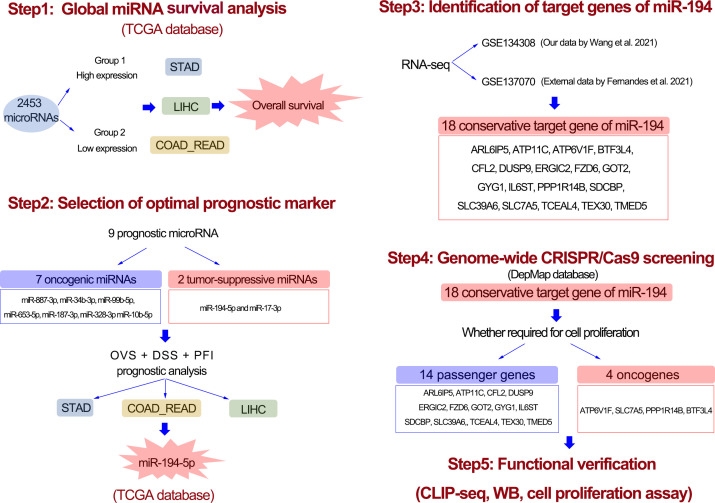
Figure 1
Figure 1
The workflow of entire study. First, with the aid of global microRNA expression analysis, a total of 9 prognostic miRNAs for GIC were identified. Second, after analysis of disease-specific survival and progress-free interval, miR-194 turn out to be an optimal prognostic biomarker for GIC. Third, 18 potential target genes greatly downregulated by miR-194 were screened using transcriptome sequencing. Forth, genome-wide CRISPR-CAS9 knockout screening identified 4 miR-194 target genes required for cell proliferation. Fifth, the Ago-HITS-CLIP-seq, qRT-PCR, immunoblotting and cell proliferation assays together confirmed miR-194 inhibited GIC proliferation by targeting ATP6V1F, BTF3L4, PPP1R14B and SLC7A5.
Figure 2
Figure 2
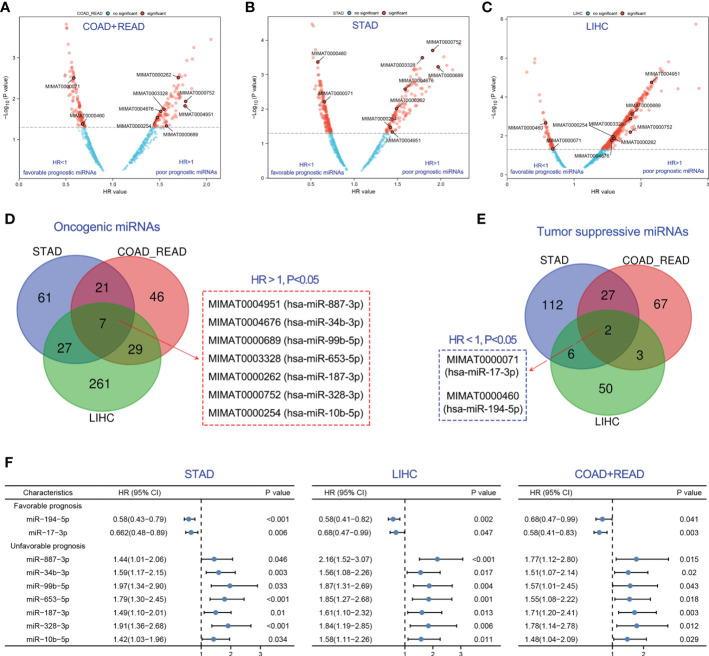
Identification of optimal prognostic miRNAs for GIC. (A-C) Exploration of prognostic miRNAs for predicting the overall survival of colorectal, gastric and liver cancer. (D) 7 prognostic miRNAs were associated with poor prognosis of GIC. (E) 2 prognostic miRNAs were associated with poor prognosis of GIC. (F) Forest plot showing the association of the 9 prognostic miRNAs of GIC with overall survival prognosis in gastric cancer (STAD), colorectal cancer (COADREAD) and liver cancer (LIHC).
Figure 3
Figure 3
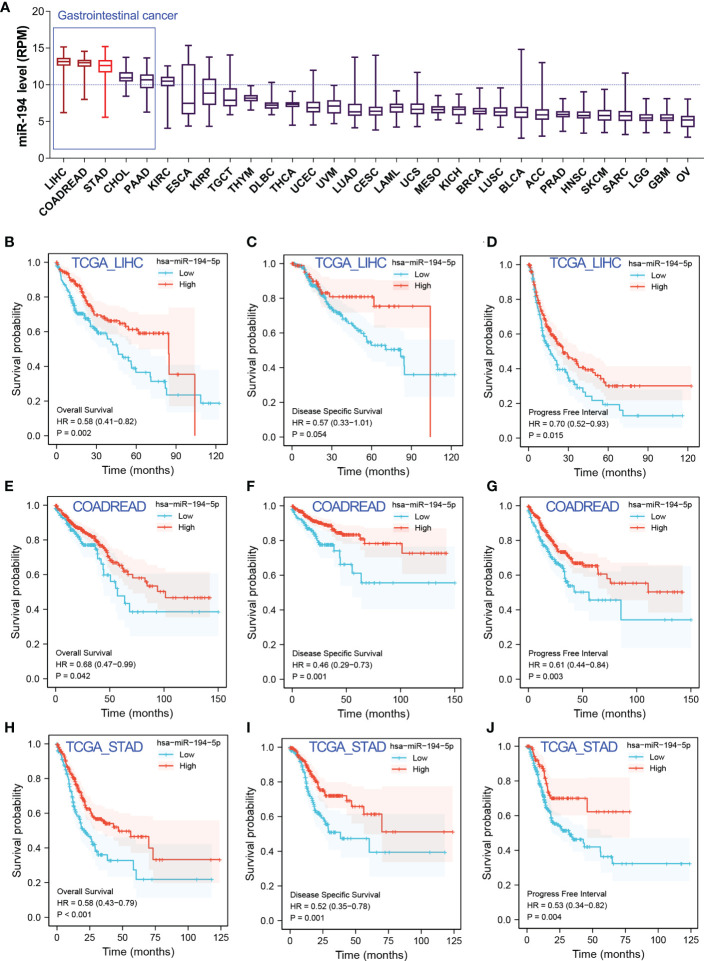
MiR-194 was identified to be an optimal prognostic biomarker miRNA for GIC. (A) The expression pattern of miR-194 in pan-cancer showed that miR-194 was highly expressed in GIC. (B-D) Low expression of miR-194 was associated with shorter time of overall survival (OVS), disease-specific survival (DSS) and progress-free interval (PFI) in patients with liver cancer (LIHC). (E-G) Low expression of miR-194 was associated with shorter time of OVS, DSS and PFI survival in patients with colorectal cancer (COADREAD). (H-J) Low expression of miR-194 predicted poor OVS, DSS and PFI survival in patients with stomach cancer (STAD).
Figure 4
Figure 4
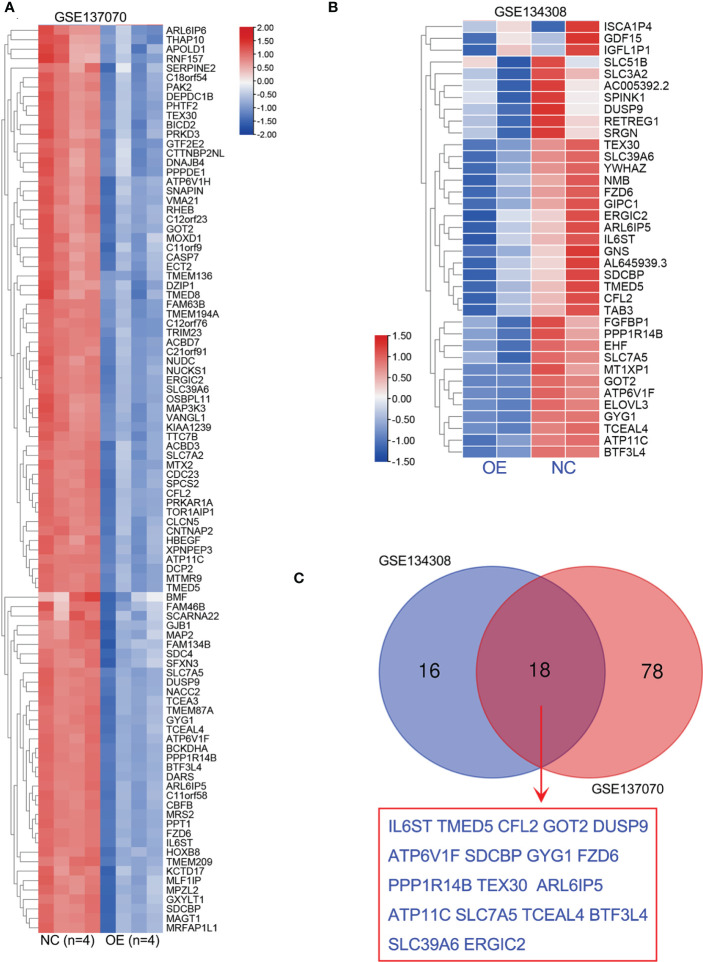
Identification of potential target genes of miR-194 by RNA sequencing. (A) A total of 96 genes greatly downregulated by miR-194 in GSE137070 dataset were screened (log2FC<-1). (B) After transfection with miR-194 mimics in GC cell lines SGC7901 and AGS, RNA-seq studies were conducted to explore target genes of miR-194 (GSE134308). A total of 34 genes greatly downregulated by miR-194 (log2FC<-0.8) were screened according to RNA-seq analysis. (C) A total of 18 genes greatly downregulated by miR-194 in both GSE137070 and GSE134308 datasets were screened. **P < 0.01.
Figure 5
Figure 5
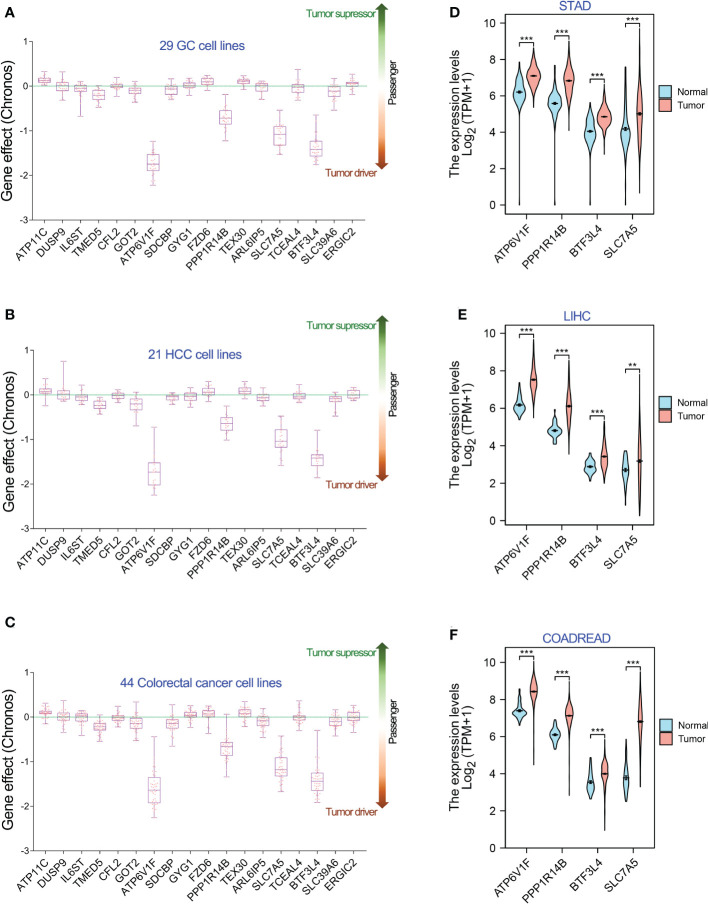
Genome-wide CRISPR-cas9 knockout screening identifies 4 genes required for cell proliferation of GIC cell lines. (A-C) In 18 genes greatly downregulated by miR-194, 4 genes, including ATP6V1F, PPP1R14B, SLC7A5 and BTF3L4, were required for cell proliferation in 26 gastric cancer cell lines, 21 hepatology cancer cell lines and 44 colorectal cancer cell lines. (D-F) Gene expression analysis showed that ATP6V1F, PPP1R14B, SLC7A5 and BTF3L4 were overexpressed in gastric cancer (STAD), colorectal cancer (COADREAD) and liver cancer (LIHC). **P < 0.01. ***P < 0.001.
Figure 6
Figure 6
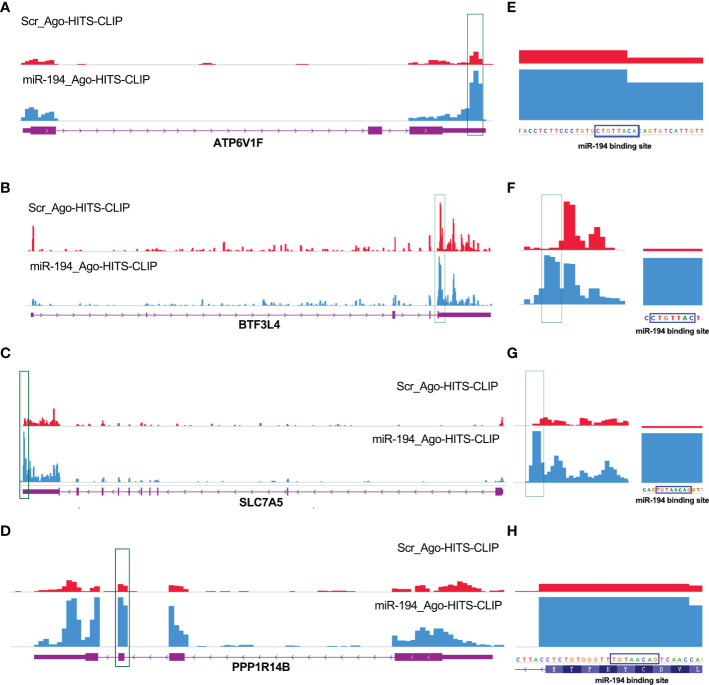
Ago-HITS-CLIP-seq analysis identified ATP6V1F, PPP1R14B, SLC7A5 and BTF3L4 as target genes of miR-194. (A-D) An obvious binding peak of miR-194 was present within the mRNA of ATP6V1F, PPP1R14B, SLC7A5 and BTF3L4, respectively. The statistical results were shown on the right panel. The binding site of miR-194 and PPP1R14B gene is located in in the coding region. While the binding site of miR-194 and other three genes is located in the 3’ untranslated region. (E-H) There was an obvious miR-194 seed sequence binding site inside the miR-194 binding peaks identified by Ago-HITS-CLIP-seq analysis. The binding sites of miR-194 in 4 genes identified by Ago-HITS-CLIP-seq analysis are highly consistent with the predicted results of bioinformatics analysis.
Figure 7
Figure 7
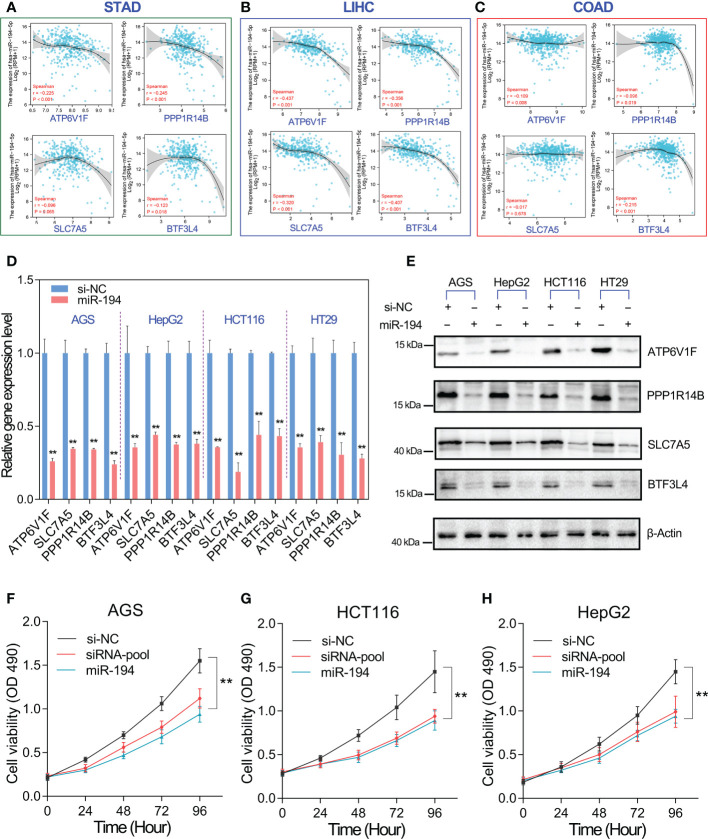
MiR-194 inhibited GIC cell proliferation by targeting ATP6V1F, PPP1R14B, SLC7A5 and BTF3L4. (A-C) The expression of miR-194 was negatively associated with the expression of ATP6V1F, PPP1R14B, SLC7A5 and BTF3L4 in gastric cancer (STAD), colorectal cancer (COADREAD) and liver cancer (LIHC). (D) The expression of ATP6V1F, PPP1R14B, SLC7A5 and BTF3L4 were determined after overexpression of miR-194 in GIC cell lines. (E) Overexpression of miR-194 greatly downregulated the protein level of ATP6V1F, PPP1R14B, SLC7A5 and BTF3L4. (F-H) Cell proliferation assays showed that overexpression of miR-194 had similar effects on cell proliferation as siRNA pools containing siRNAs targeting ATP6V1F, PPP1R14B, SLC7A5, and BTF3L4. **P < 0.01.

References

    1. Dumic I, Nordin T, Jecmenica M, Stojkovic Lalosevic M, Milosavljevic T, Milovanovic T, et al. . Gastrointestinal tract disorders in older age. JCJoG (2019) 2019. doi: 10.1155/2019/6757524 - DOI - PMC - PubMed
    1. Arnold M, Abnet CC, Neale RE, Vignat J, Giovannucci EL, McGlynn KA, et al. . Global burden of 5 major types of gastrointestinal cancer. Gastroenterology (2020) 159(1):335–49.e15. doi: 10.1053/j.gastro.2020.02.068 - DOI - PMC - PubMed
    1. Levonyak NS, Hodges MP, Haaf N, Brown TJ, Hardy S, Mhoon V, et al. . Importance of addressing malnutrition in cancer and implementation of a quality improvement project in a gastrointestinal cancer clinic. Nutrition in Clinical Practice (2022) 37(1):215–23. doi: 10.1002/ncp.10753 - DOI - PubMed
    1. Wang J, Zhang M, Hu X, She J, Sun R, Qin S, et al. . miRNA-194 predicts favorable prognosis in gastric cancer and inhibits gastric cancer cell growth by targeting CCND1. FEBS Open Bio (2021) 11(7):1814–26. doi: 10.1002/2211-5463.13125 - DOI - PMC - PubMed
    1. Li D, Wang J, Zhang M, Hu X, She J, Qiu X, et al. . LncRNA MAGI2-AS3 is regulated by BRD4 and promotes gastric cancer progression via maintaining ZEB1 overexpression by sponging miR-141/200a. Molecular Therapy-Nucleic Acids (2019) 19:109–23. doi: 10.1016/j.omtn.2019.11.003 - DOI - PMC - PubMed