


Fatigue after COVID-19 in non-hospitalized patients according to sex
- PMID: 36620918
- PMCID: PMC9927850
- DOI: 10.1002/brb3.2849
Fatigue after COVID-19 in non-hospitalized patients according to sex
Abstract
Background: Limited evidence exists on sex differences in post-COVID fatigue among non-hospitalized patients. Therefore, aim of the study was to evaluate the course of chronic fatigue symptoms in non-hospitalized subjects with the SARS-CoV-2 infection, according to sex.
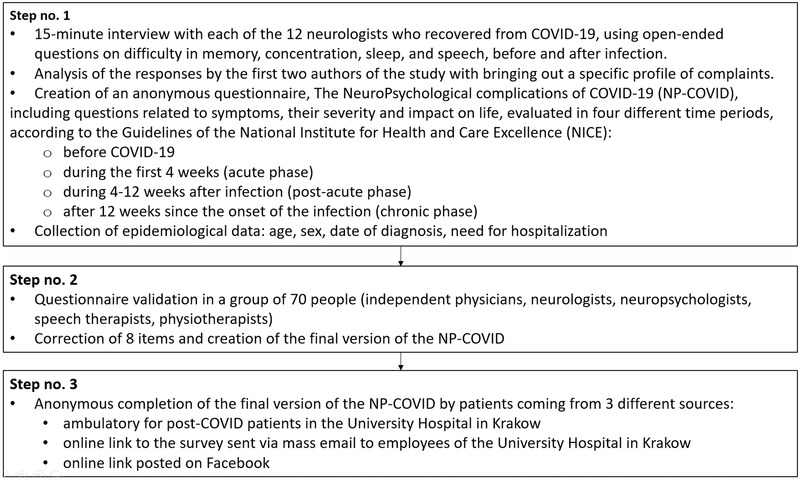
Methods: Patients and staff from the University Hospital in Krakow anonymously and retrospectively completed neuropsychological questionnaire that included eight symptoms of chronic fatigue syndrome. The presence of these symptoms was assessed before COVID-19 and 0-4, 4-12, and >12 weeks postinfection. The inclusion criteria were as follows: age 18 or more years, >12 weeks since the onset of the SARS-CoV-2 infection, and diagnosis confirmed by the RT-PCR from anasopharyngeal swab.
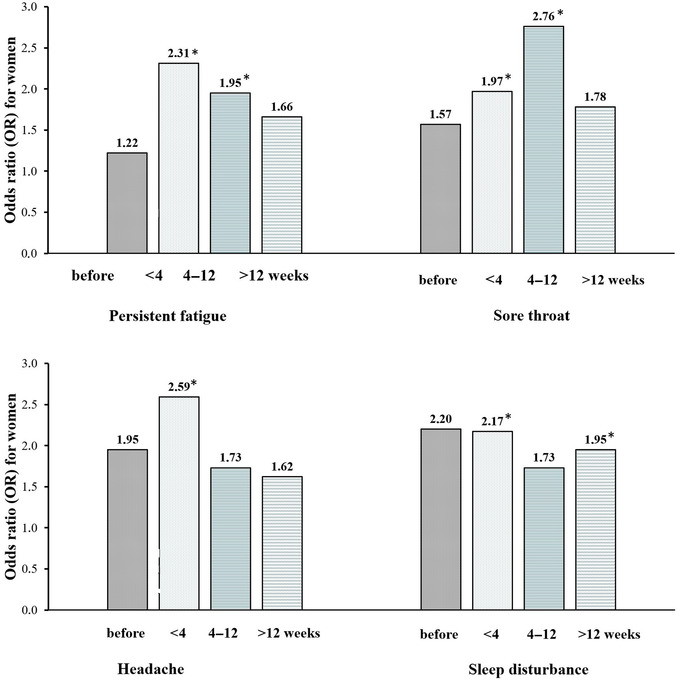
Results: We included 303 patients (79.53% women, 47.52% medical personnel) assessed retrospectively after a median of 30 (interquartile range: 23-35) weeks since the onset of symptoms. A higher prevalence of at least one chronic fatigue symptom was found in females in all time intervals after the onset of COVID-19 compared to males (p < .036). Women, compared to men, more often experienced persistent fatigue, not caused by effort and persisting after rest (for <4 weeks, odds ratio [OR] = 2.31, 95% confidence interval [CI]: 1.13-4.73; for 4-12 weeks, OR = 1.95, 95% CI: 1.06-3.61), non-restorative sleep (for <4 weeks, OR = 2.17, 95% CI: 1.23-3.81; for >12 weeks, OR = 1.95, 95% CI: 1.03-3.71), and sore throat (for <4 weeks, OR = 1.97, 95% CI: 1.03-3.78; for 4-12 weeks, OR = 2.76, 95% CI: 1.05-7.27). Sex differences in headache, arthralgia, and prolonged postexercise fatigue were observed only during the first 4 weeks (OR = 2.59, 95% CI: 1.45-4.60, OR = 2.97, 95% CI: 1.02-8.64, and OR = 1.87, 95% CI: 1.01-3.51, respectively). There were no differences between women and men in myalgia and self-reported lymph node enlargement.
Conclusions: The course of post-COVID fatigue differs significantly between sexes in non-hospitalized individuals with COVID-19, with women more often suffering from persistent fatigue, not caused by effort and persisting after rest, non-restorative sleep, and sore throat.
Keywords: COVID-19; fatigue; long covid; sex.
© 2022 The Authors. Brain and Behavior published by Wiley Periodicals LLC.
Conflict of interest statement
The authors declare no conflict of interest.
Figures
References
-
- Alkodaymi, M. S. , Omrani, O. A. , Fawzy, N. A. , Shaar, B. A. , Almamlouk, R. , Riaz, M. , Obeidat, M. , Obeidat, Y. , Gerberi, D. , Taha, R. M. , Kashour, Z. , Kashour, T. , Berbari, E. F. , Alkattan, K. , & Tleyjeh, I. M. (2022). Prevalence of post‐acute COVID‐19 syndrome symptoms at different follow‐up periods: A systematic review and meta‐analysis. Clinical Microbiology and Infection, 28, 657–666. - PMC - PubMed
-
- Bliddal, S. , Banasik, K. , Pedersen, O. B. , Nissen, J. , Cantwell, L. , Schwinn, M. , Tulstrup, M. , Westergaard, D. , Ullum, H. , Brunak, S. , Tommerup, N. , Feenstra, B. , Geller, F. , Ostrowski, S. R. , Grønbæk, K. , Nielsen, C. H. , Nielsen, S. D. , & Feldt‐Rasmussen, U. (2021). Acute and persistent symptoms in non‐hospitalized PCR‐confirmed COVID‐19 patients. Scientific Reports, 11, 13153. - PMC - PubMed
-
- Busatto, G. F. , de Araujo, A. L. , Castaldelli‐Maia, J. M. , Damiano, R. F. , Imamura, M. , Guedes, B. F. , de Rezende Pinna, F. , Sawamura, M. V. Y. , Mancini, M. C. , da Silva, K. R. , Garcia, M. L. , Sumita, N. , Brunoni, A. R. , da Silva Duarte, A. J. , Burdmann, E. A. , Kallas, E. G. , Cerri, G. G. , Nitrini, R. , Bento, R. F. , … HCFMUSP Covid‐19 Study Group . (2022). Post‐acute sequelae of SARS‐CoV‐2 infection: Relationship of central nervous system manifestations with physical disability and systemic inflammation. Psychological Medicine, 52(12), 2387–2398. - PMC - PubMed
-
- Calabria, M. , García, C. , Nicholas, S. , Pons, C. , Antonio, J. , Anson, B. G. , Estévez García, M. , Belvís, R. , Morollón, N. , Vera Igual, J. , Mur, I. , Pomar, V. , & Domingo, P. (2022). Post‐COVID‐19 fatigue : The contribution of cognitive and neuropsychiatric symptoms. Journal of Neurology, 269(8), 3990–3999. - PMC - PubMed
Publication types
MeSH terms
LinkOut - more resources
Full Text Sources
Medical
Miscellaneous
