The perioperative utility of 3D printed models in complex surgical care: feedback from 106 cases
- PMID: 36622212
- PMCID: PMC10618040
- DOI: 10.1308/rcsann.2022.0127
The perioperative utility of 3D printed models in complex surgical care: feedback from 106 cases
Abstract
Introduction: 3D models are an emerging tool for surgical planning, providing an augmented method for the visualisation of a patient's anatomy. As their use increases, more data about the utility of these models is critical to inform budget allocation. This study provides the most comprehensive analysis to date for the use of 3D models in perioperative management.
Methods: 3D models for complex surgical cases in NHS hospitals were delivered alongside a surgeon feedback survey. The survey on the model's utility had been designed alongside the university data analytical team and focused on five areas: surgical planning and diagnosis, economic impact, impact on intraoperative and preoperative time, effect on communication and direct impact on the patient.
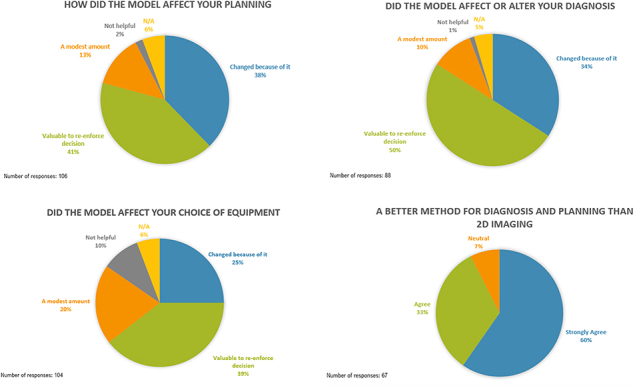
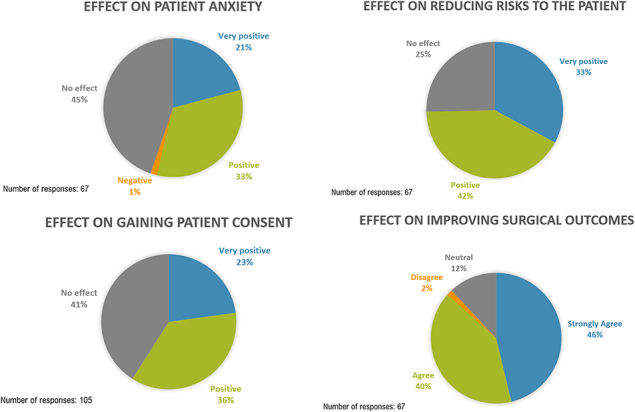
Results: There were 106 models used by 63 surgeons for complex surgical cases between May 2020 and March 2021, across multiple surgical specialties. The models were reported to have benefits in all perioperative areas, with 92.5% of responses agreeing that the 3D model was a better method for diagnosis and planning than traditional 2D techniques. Benefits were reported on preoperative planning (92.4%), economic savings due to equipment selection (54.4%), reduction in surgical time (41.5%) and surgeon-to-surgeon communication (92.6%).
Conclusion: 3D models were shown to have a wide range of benefits in a surgical setting. The reduction in surgical time could have the potential to help alleviate surgical backlogs. With more widespread use and optimisation of costs the use of 3D models could become the standard for unusual and complex surgical cases.
Keywords: 3D printed models; Complex surgery; Imaging modalities; Preoperative planning; Surgical planning.
Figures



References
-
- Ganguli A, Pagan-Diaz G, Grant Let al. . 3D printing for preoperative planning and surgical training: a review. Biomed Microdevices 2018; 20: 65. - PubMed
MeSH terms
LinkOut - more resources
Full Text Sources
Research Materials