


Developing a sampling methodology for timely reporting of population-based COVID-19-associated hospitalization surveillance in the United States, COVID-NET 2020-2021
- PMID: 36625234
- PMCID: PMC9835436
- DOI: 10.1111/irv.13089
Developing a sampling methodology for timely reporting of population-based COVID-19-associated hospitalization surveillance in the United States, COVID-NET 2020-2021
Abstract
Background: The COVID-19-Associated Hospitalization Surveillance Network (COVID-NET) required a sampling methodology that allowed for production of timely population-based clinical estimates to inform the ongoing US COVID-19 pandemic response.
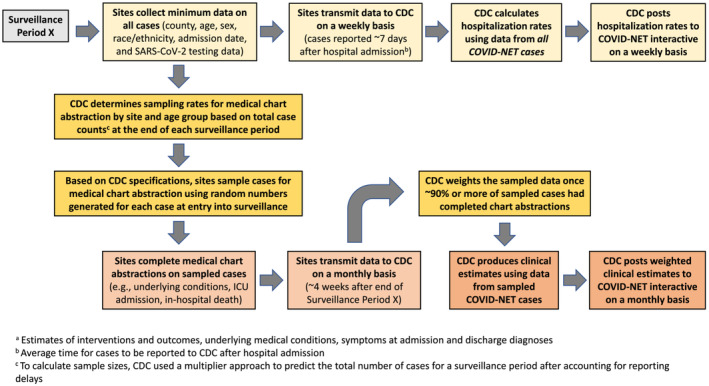
Methods: We developed a flexible sampling approach that considered reporting delays, differential hospitalized case burden across surveillance sites, and changing geographic and demographic trends over time. We incorporated weighting methods to adjust for the probability of selection and non-response, and to calibrate the sampled case distribution to the population distribution on demographics. We additionally developed procedures for variance estimation.
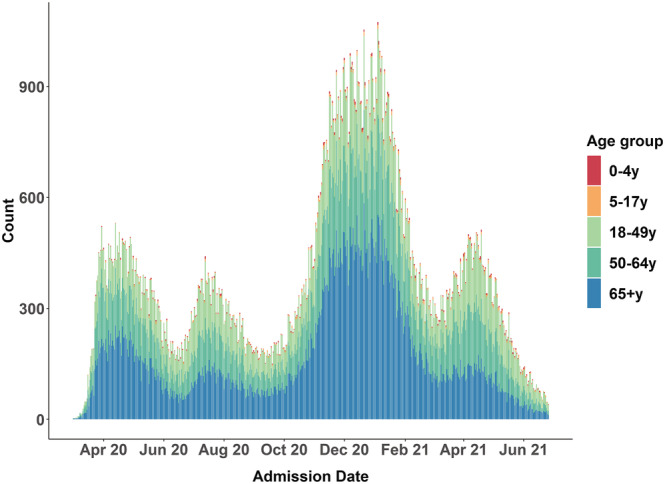
Results: Between March 2020 and June 2021, 19,293 (10.4%) of all adult hospitalized cases were sampled for chart abstraction. Variance estimates for select variables of interest were within desired ranges.
Conclusions: COVID-NET's sampling methodology allowed for reporting of robust and timely, population-based data on the clinical epidemiology of COVID-19-associated hospitalizations and evolving trends over time, while attempting to reduce data collection burden on surveillance sites. Such methods may provide a general framework for other surveillance systems needing to quickly and efficiently collect and disseminate data for public health action.
Keywords: COVID-19; hospitalizations; population-based surveillance; sampling; survey methods.
© 2023 The Authors. Influenza and Other Respiratory Viruses published by John Wiley & Sons Ltd. This article has been contributed to by U.S. Government employees and their work is in the public domain in the USA.
Conflict of interest statement
Kirk Wolter and Kennon A. Copeland disclosed personal fees from the Centers for Disease Control and Prevention as payment through a T&M contract.
Figures
References
-
- CDC . Estimated disease burden of COVID‐19. https://www.cdc.gov/coronavirus/2019-ncov/cases-updates/burden.html. (Accessed May 4, 2021).
-
- Centers for Disease Control and Prevention (CDC) . COVID Data Tracker. https://covid.cdc.gov/covid-data-tracker/#datatracker-home. (Accessed May 4, 2021).
-
- CDC . National Health Interview Survey. https://www.cdc.gov/nchs/nhis/index.htm. (Accessed May 4, 2021).
-
- CDC . National Health and Nutrition Examination Survey. https://www.cdc.gov/nchs/nhanes/index.htm. (Accessed May 4, 2021).
-
- CDC . National Immunization Survey. https://www.cdc.gov/vaccines/imz-managers/nis/index.html. (Accessed May 4, 2021).
Publication types
MeSH terms
LinkOut - more resources
Full Text Sources
Medical
