. 2023 Jan 10;12(1):22072.
doi: 10.1038/s41598-022-24410-3.

Cancer incidence amongst UK firefighters

Affiliations

Cancer incidence amongst UK firefighters

Taylor A M Wolffe et al. Sci Rep. .

Abstract

Firefighters suffer an increased risk of cancer from exposures to chemicals released from fires. Our earlier research has found that fire toxicants not only remain on firefighters' PPE, but are also tracked back to fire stations. The UK Firefighter Contamination Survey assesses firefighters' risk of developing cancer due to occupational exposure to fire toxins. Over 4% of surveyed firefighters were found to have a cancer diagnosis, with the age-specific cancer rate up to 323% higher (35-39 year olds) than that of the general population. Firefighters who had served ≥ 15 years were 1.7 times more likely to develop cancer than those who had served less time. Firefighters were at least twice as likely to be diagnosed with cancer if they noticed soot in their nose/throat (odds ratio (OR) = 2.0, 1.1-3.5), or remained in their PPE for more than four hours after attending a fire incident (OR = 2.3, 1.1-5.2). Also associated with an increased likelihood of cancer was: eating while wearing PPE (OR = 1.8, 1.2-2.7); failing to store clean/dirty PPE separately (OR = 1.3, 1.0-1.7); working in a station that smells of fire (OR = 1.3, 1.0-1.8) or not having designated (separated) clean and dirty areas (OR = 1.4, 1.1-1.7); using an on-site washing machine to launder fire hoods (OR = 1.3, 1.0-1.7); feeling that cleaning is not taken seriously at work (OR = 1.5, 1.2-2.0).


Conflict of interest statement

The authors declare no competing interests.

Figures
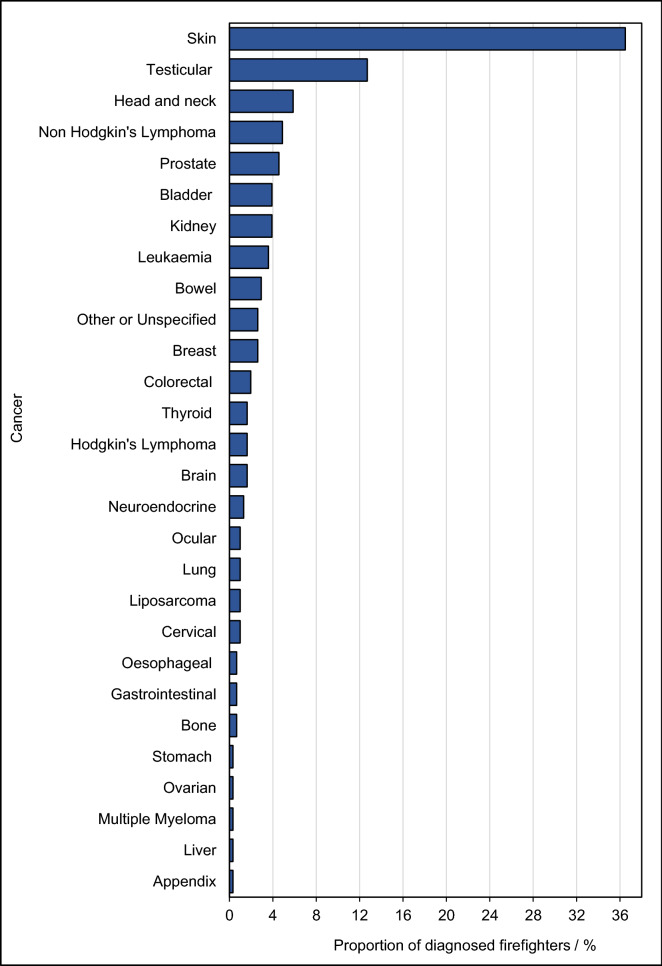
Figure 1
Figure 1
Range and frequency of cancers among diagnosed firefighters in the UK Fire and Rescue Service. Prevalence of specific cancers among firefighters who received a diagnosis after joining the Fire and Rescue Service (i.e. a % of 307). Cancers were reported as free text and manually coded for analysis.
Figure 2
Figure 2
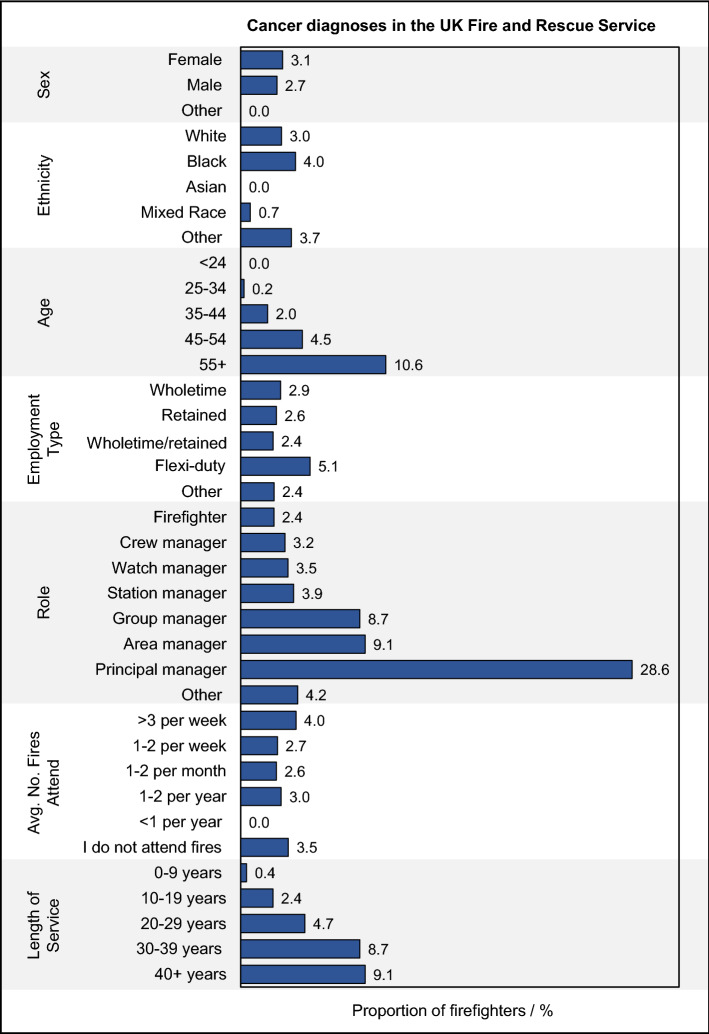
Demographics and Cancer Prevalence in the UK Fire and Rescue Service. The proportion of firefighters with a cancer diagnosis in each demographic category is presented (i.e. a percentage of the total number of female firefighters in the survey, male firefighters in the survey, etc.). Note that the relatively small sample size of certain demographic groups (e.g. female firefighters) mean the above results should be interpreted cautiously (see Wolffe et al., 2023 for demographic proportions). Also note that wholetime firefighters work full-time contracted hours/shift patterns. Retained firefighters do not have contracted hours, but are kept on a paid “retainer” contract, remaining on-call for emergencies. Wholetime/ retained firefighters represent wholetime firefighters who work a second retained contract outside of wholetime hours. Flexi-duty firefighters work full-time contracted hours in a more flexible shift pattern.
Figure 3
Figure 3
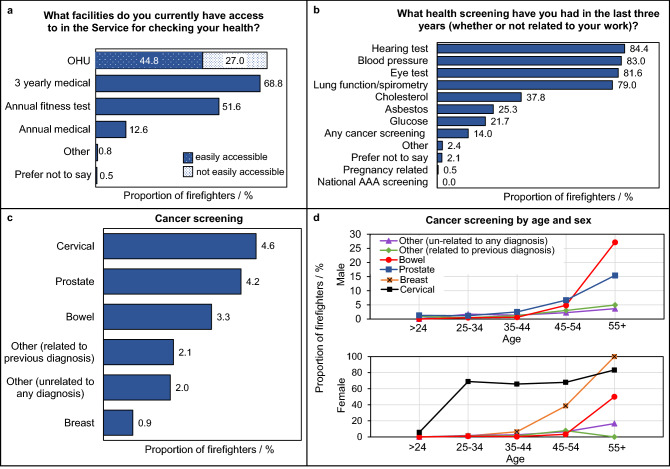
Health Screening in UK Fire and Rescue Services. The proportion of total surveyed firefighters who (a) have access to health screening facilities within their Service, (b) received specific health screening/tests over the last three years, and (c) received specific cancer screening over the last three years. Note firefighters can choose more than one type of screening and screening facility. (d) The proportion of male or female firefighters in each age bracket who received specific cancer screenings. AAA = Abdominal Aortic Aneurysm, OHU = Occupational Health Unit.
Figure 4
Figure 4
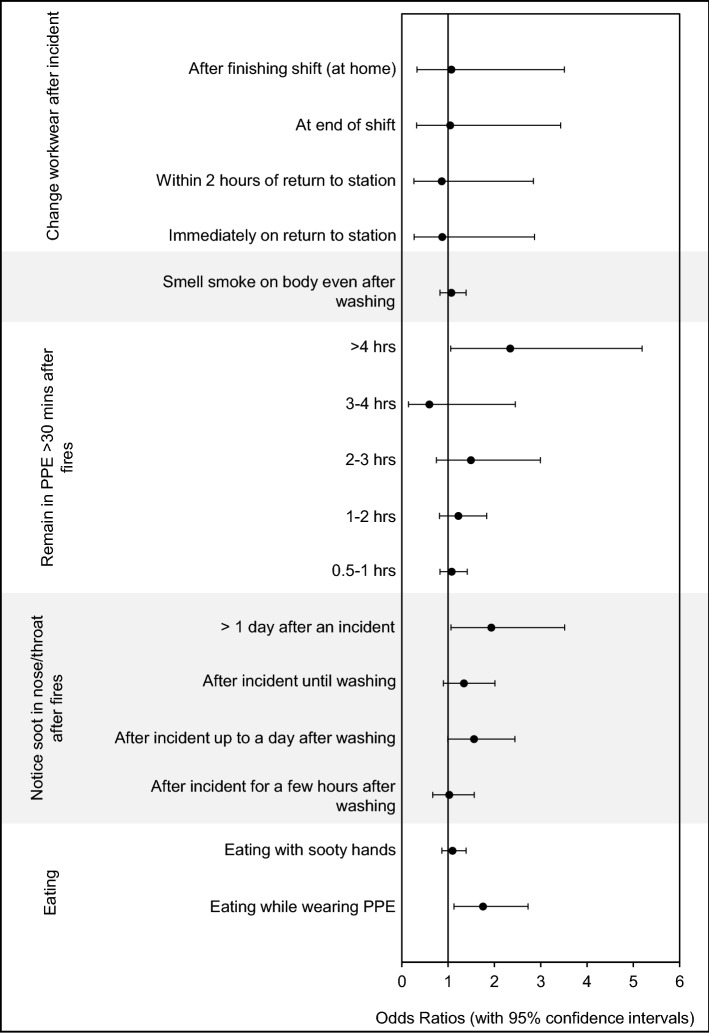
Personal contamination and cancer odds ratios for UK Firefighters. Odds ratios (with 95% confidence intervals) were adjusted for age.
Figure 5
Figure 5
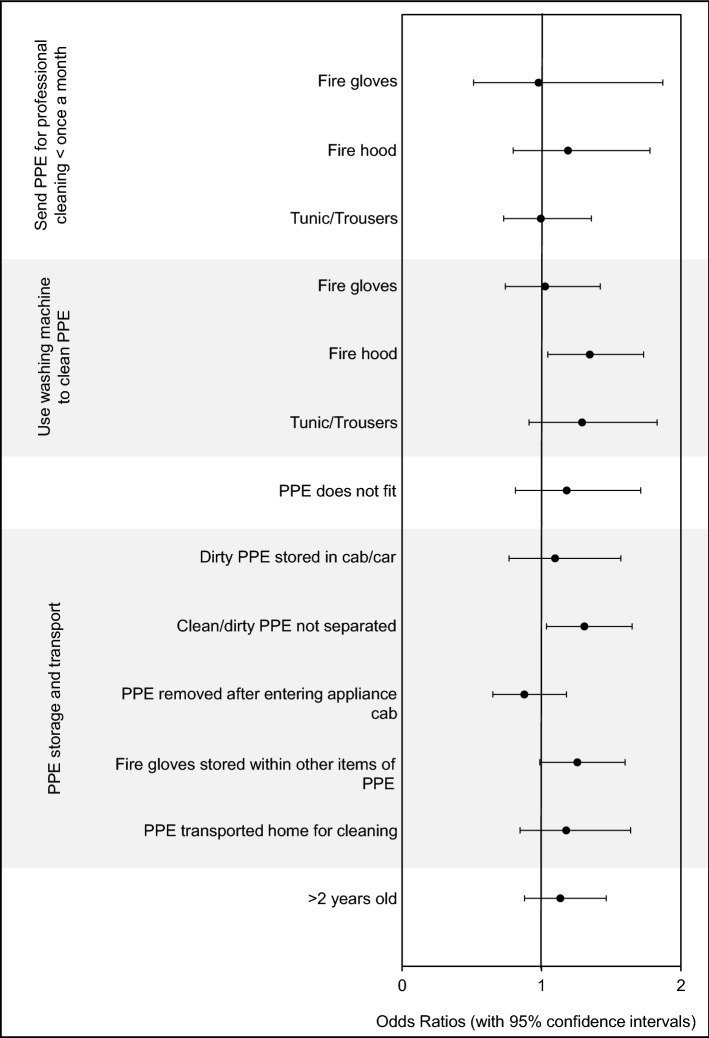
PPE contamination and cancer odds ratios for UK firefighters. Odds ratios (with 95% confidence intervals) were adjusted for age.
Figure 6
Figure 6
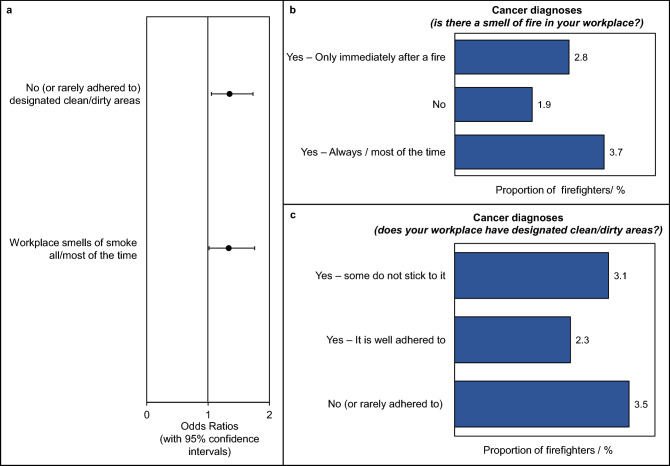
Workplace contamination and cancer diagnosis in the UK Fire and Rescue Service. (a) Cancer odds ratios for measures of workplace contamination. (b), (c) The proportion of firefighters in each workplace contamination category who received a cancer diagnosis. Odds ratios (with 95% confidence intervals) were adjusted for age.
Figure 7
Figure 7
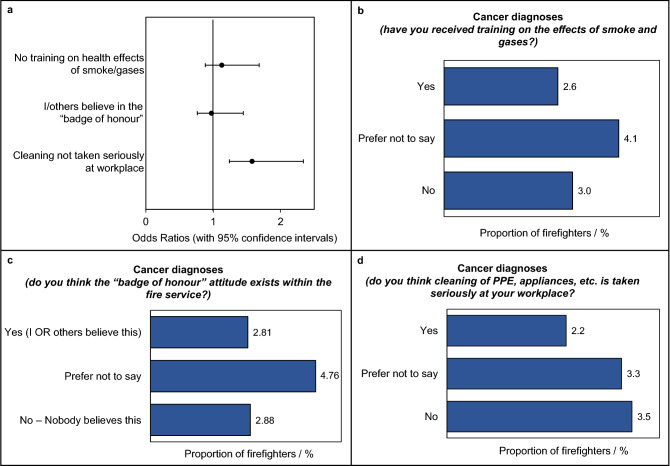
Attitudes, awareness and training and cancer diagnosis in the UK Fire and Rescue Service. (a) Cancer odds ratios for measures of contaminant exposure due to attitudes/training. (b), (c), (d) The proportion of firefighters in each training/attitude category who have received a cancer diagnosis. Odds ratios (with 95% confidence intervals) were adjusted for age.

References

    1. International Agency for Research on Cancer. IARC monographs on the evaluation of carcinogenic risks to humans Vol. 98 Painting, Firefighting, and Shiftwork. (2010). - PMC - PubMed
    1. LeMasters GK, et al. Cancer risk among firefighters: A review and meta-analysis of 32 studies. J. Occup. Environ. Med. 2006;48:1189–1202. doi: 10.1097/01.jom.0000246229.68697.90. - DOI - PubMed
    1. Stec AA, et al. Occupational exposure to polycyclic aromatic hydrocarbons and elevated cancer incidence in firefighters. Sci. Rep. 2018;8(1):8. doi: 10.1038/s41598-018-20616-6. - DOI - PMC - PubMed
    1. Fent KW, et al. Systemic exposure to pahs and benzene in firefighters suppressing controlled structure fires. Ann. Occup. Hyg. 2014;58:830–845. - PMC - PubMed
    1. Laitinen J, Mäkelä M, Mikkola J, Huttu I. Firefighters’ multiple exposure assessments in practice. Toxicol. Lett. 2012;213:129–133. doi: 10.1016/j.toxlet.2012.06.005. - DOI - PubMed