


Predicting the systemic exposure and lung concentration of nafamostat using physiologically-based pharmacokinetic modeling
- PMID: 36632076
- PMCID: PMC9810492
- DOI: 10.12793/tcp.2022.30.e20
Predicting the systemic exposure and lung concentration of nafamostat using physiologically-based pharmacokinetic modeling
Abstract
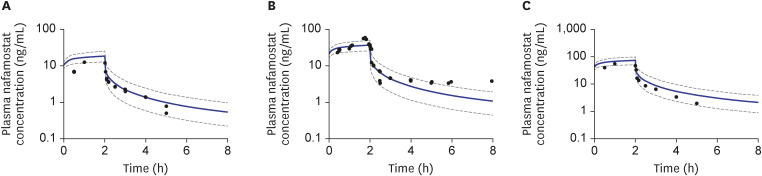
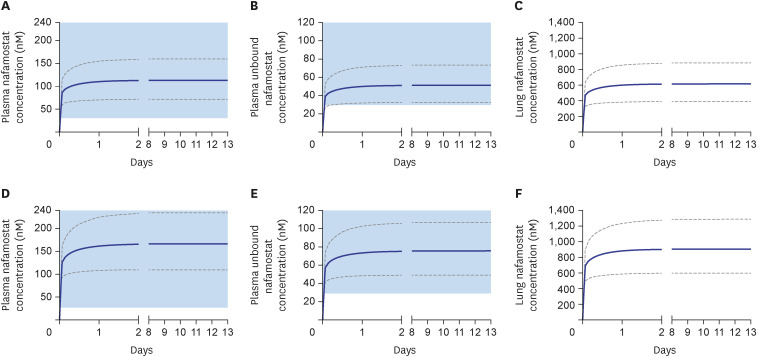
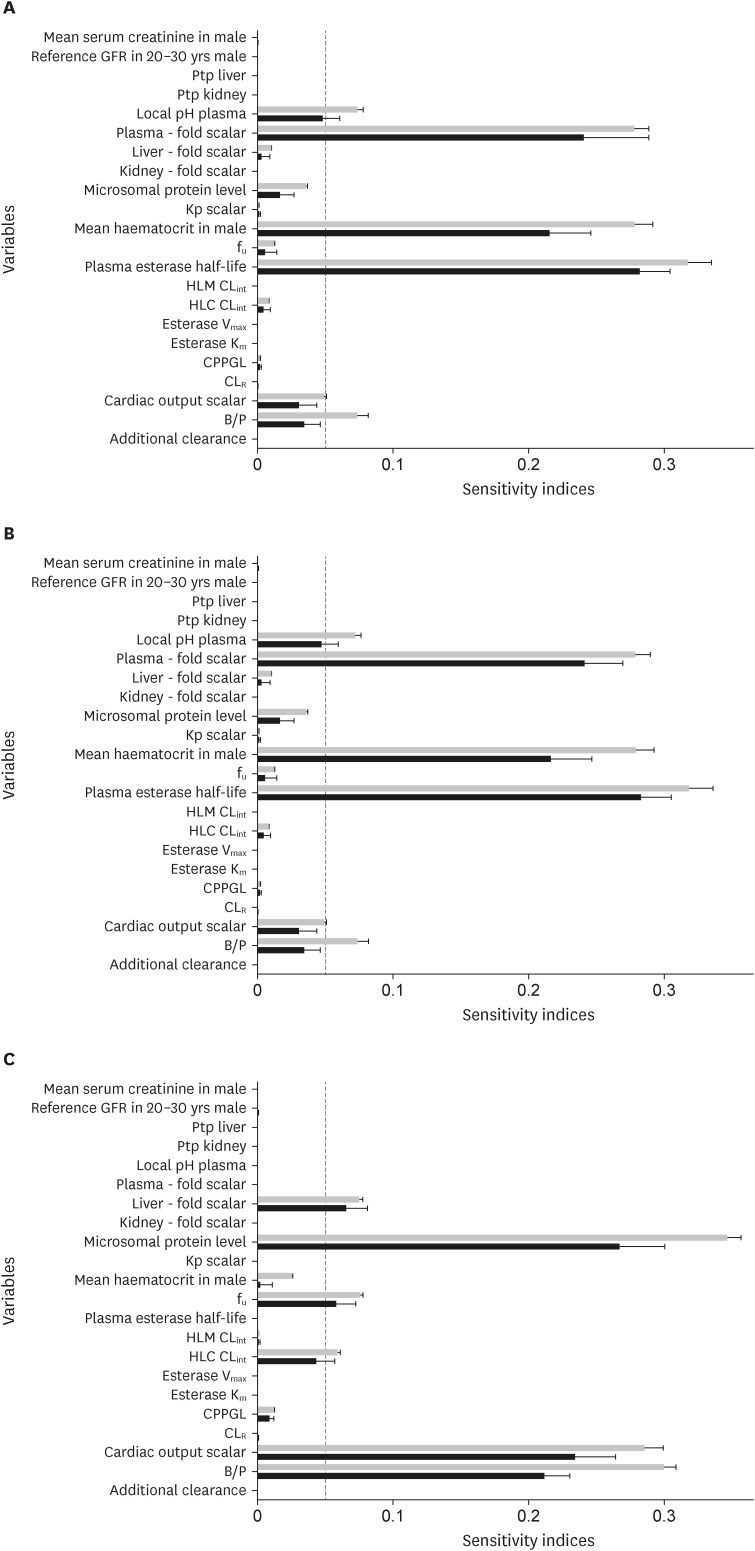
Nafamostat has been actively studied for its neuroprotective activity and effect on various indications, such as coronavirus disease 2019 (COVID-19). Nafamostat has low water solubility at a specific pH and is rapidly metabolized in the blood. Therefore, it is administered only intravenously, and its distribution is not well known. The main purposes of this study are to predict and evaluate the pharmacokinetic (PK) profiles of nafamostat in a virtual healthy population under various dosing regimens. The most important parameters were assessed using a physiologically based pharmacokinetic (PBPK) approach and global sensitivity analysis with the Sobol sensitivity analysis. A PBPK model was constructed using the SimCYP® simulator. Data regarding the in vitro metabolism and clinical studies were extracted from the literature to assess the predicted results. The model was verified using the arithmetic mean maximum concentration (Cmax), the area under the curve from 0 to the last time point (AUC0-t), and AUC from 0 to infinity (AUC0-∞) ratio (predicted/observed), which were included in the 2-fold range. The simulation results suggested that the 2 dosing regimens for the treatment of COVID-19 used in the case reports could maintain the proposed effective concentration for inhibiting severe acute respiratory syndrome coronavirus 2 entry into the plasma and lung tissue. Global sensitivity analysis indicated that hematocrit, plasma half-life, and microsomal protein levels significantly influenced the systematic exposure prediction of nafamostat. Therefore, the PBPK modeling approach is valuable in predicting the PK profile and designing an appropriate dosage regimen.
Keywords: COVID-19; Nafamostat; Pharmacokinetics; SimCYP.
Copyright © 2022 Translational and Clinical Pharmacology.
Conflict of interest statement
Conflict of Interest: - Authors: Nothing to declare - Reviewers: Nothing to declare - Editors: Nothing to declare
Figures
References
-
- Hirota M, Shimosegawa T, Kitamura K, Takeda K, Takeyama Y, Mayumi T, et al. Continuous regional arterial infusion versus intravenous administration of the protease inhibitor nafamostat mesilate for predicted severe acute pancreatitis: a multicenter, randomized, open-label, phase 2 trial. J Gastroenterol. 2020;55:342–352. - PMC - PubMed
-
- Cao YG, Chen YC, Hao K, Zhang M, Liu XQ. An in vivo approach for globally estimating the drug flow between blood and tissue for nafamostat mesilate: the main hydrolysis site determination in human. Biol Pharm Bull. 2008;31:1985–1989. - PubMed
-
- Aoyama T, Okutome T, Nakayama T, Yaegashi T, Matsui R, Nunomura S, et al. Synthesis and structure-activity study of protease inhibitors. IV. Amidinonaphthols and related acyl derivatives. Chem Pharm Bull (Tokyo) 1985;33:1458–1471. - PubMed
-
- Yamaori S, Fujiyama N, Kushihara M, Funahashi T, Kimura T, Yamamoto I, et al. Involvement of human blood arylesterases and liver microsomal carboxylesterases in nafamostat hydrolysis. Drug Metab Pharmacokinet. 2006;21:147–155. - PubMed
LinkOut - more resources
Full Text Sources