


Breathing Techniques During Labor: A Multinational Narrative Review of Efficacy
- PMID: 36632511
- PMCID: PMC9822559
- DOI: 10.1891/JPE-2021-0029
Breathing Techniques During Labor: A Multinational Narrative Review of Efficacy
Abstract
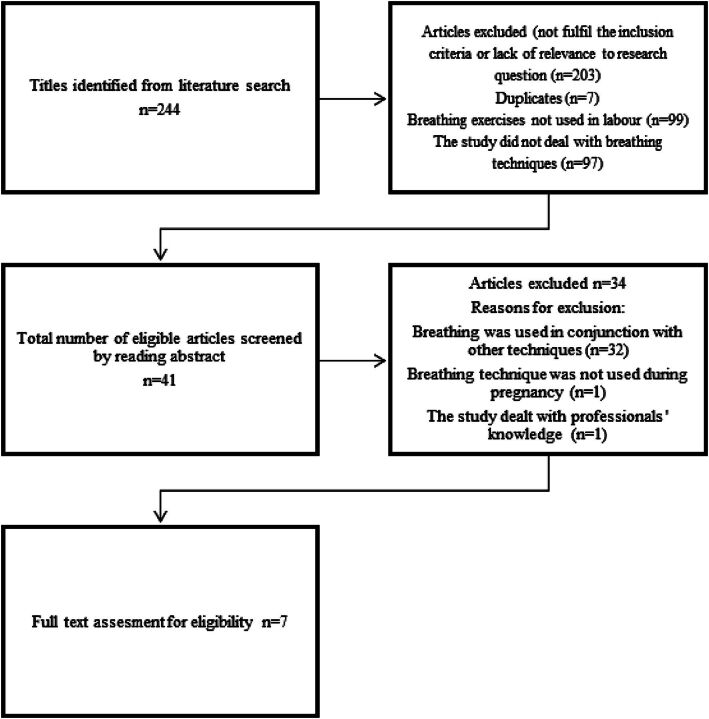
We conducted a narrative review to assess the use and effectiveness of breathing techniques for pain control as the only non-pharmacological resource during labor and childbirth. A search was conducted using PubMed, PEDro, SciELO, and Scopus with publications between January 2005 and September 2021 in English, Portuguese, or Spanish. Seven publications were selected. Most of the articles reported on the use of slow and deep breathing during contractions in the first stage of labor and breathing associated with pushing-down efforts in the second stage. The information regarding the moment when guidance on the use of the techniques was provided varied across studies. According to the reviewed papers, breathing techniques offer benefits for women in labor without adverse effects on newborns.
Keywords: antenatal education; breathing exercises; childbirth; labor; pain.
© Copyright 2023 Lamaze International.
Figures
References
-
- Ahmadi, Z., Shanaz, T., Roosta, F., Shaker, N., & Mhmoodi, N. (2017). Effect of breathing technique of blowing on the extent of damage to the perineum at the moment of delivery: A randomized clinical trial. Iranian Journal of Nursing and Midwifery Research, 22(1), 62–66. 10.4103/1735-9066.202071 - DOI - PMC - PubMed
LinkOut - more resources
Full Text Sources