


Association of severity of malocclusion with socioeconomic status in the South Indian population
- PMID: 36643107
- PMCID: PMC9836133
- DOI: 10.4103/japtr.japtr_120_22
Association of severity of malocclusion with socioeconomic status in the South Indian population
Abstract
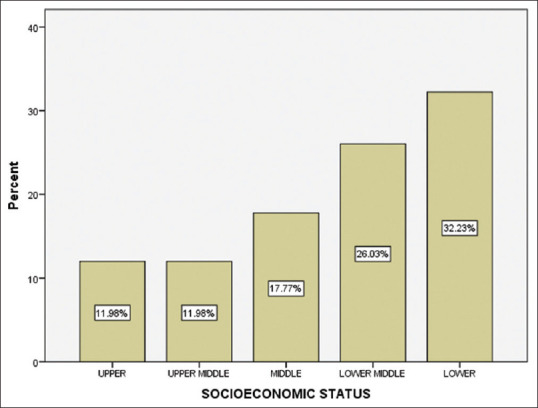
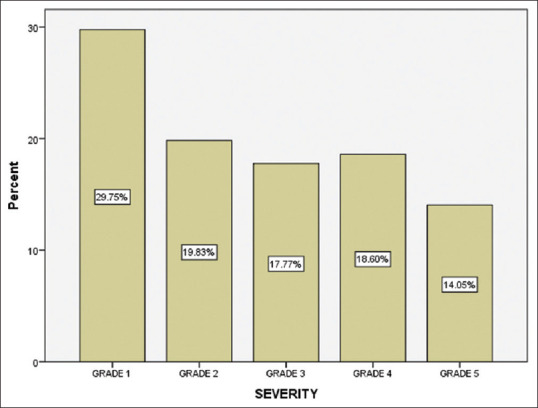
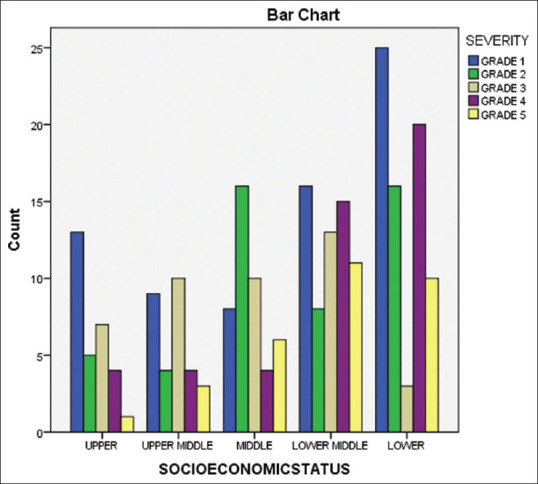
Malocclusion has been linked to various factors out of which certain dietary patterns and unhealthy habits are the most overlooked. The dietary patterns and unhealthy habits vary according to socioeconomic status. The present research was aimed to perform an association of malocclusion severity with socioeconomic status. This study was done in a retrospective manner and was conducted at Saveetha Dental College. A total of 241 clinical case records of the participants with malocclusion reporting for orthodontic therapy were selected and enrolled for the study. Data on the socioeconomic status and the severity of malocclusion as assessed with the Index of Orthodontic Treatment Needs (IOTNs) index were noted. All these records were collected and entered into Excel and then analyzed through statistics. Descriptive statistics and nonparametric Chi-square tests were performed. From the analysis, the proportion of IOTN Grade 1 malocclusion (30%) was found to be the highest. The highest number of patients with Grade 1 malocclusion belonged to the lower socioeconomic class. Socioeconomic status and the severity of malocclusion were significantly associated with each other. Malocclusion prevalence and severity were more among participants belonging to lower socioeconomic groups.
Keywords: Dental aesthetic index; Index of orthodontic treatment needs; Innovative; Malocclusion; Social status.
Copyright: © 2022 Journal of Advanced Pharmaceutical Technology & Research.
Conflict of interest statement
There are no conflicts of interest.
Figures
References
-
- Kharbanda OP. Elsevier Health Sciences; 2019. Orthodontics: Diagnosis of & Management of Malocclusion & Dentofacial Deformities –E Book ISBN: 978-81-312-4281-2, e-ISBN 978-81-312-4236-9.
-
- Brook PH, Shaw WC. The development of an index of orthodontic treatment priority. Eur J Orthod. 1989;11:309–20. - PubMed
-
- Katz MI. Angle classification revisited 2: A modified Angle classification. Am J Orthod Dentofacial Orthop. 1992;102:277–84. - PubMed
-
- Borzabadi-Farahani A. An insight into four orthodontic treatment need indices. Prog Orthod. 2011;12:132–42. - PubMed
-
- Burden DJ. Oral health-related benefits of orthodontic treatment. Semin Orthod. 2007;13(2):76–80. doi: 10.1053/j.sodo2007.03.002.
LinkOut - more resources
Full Text Sources
