Review
. 2022 Oct 13;7(1):10-26.
doi: 10.1002/ags3.12621. eCollection 2023 Jan.

Perioperative optimization of Crohn's disease

Affiliations
Review

Perioperative optimization of Crohn's disease

Chun-Chi Lin et al. Ann Gastroenterol Surg. .

Abstract

Crohn's disease (CD) is a chronic inflammatory disease mainly affecting the gastrointestinal tract. With the increased availability of modalities in the last two decades, the treatment of CD has advanced remarkably. Although medical treatment is the mainstay of therapy, most patients require surgery during the course of their illness, especially those who experience complications. Nutritional optimization and ERAS implementation are crucial for patients with CD who require surgical intervention to reduce postoperative complications. The increased surgical risk was found to be associated with the use of corticosteroids, but the association of surgical risk with immunomodulators, biologic therapy, such as anti-TNF mediations, anti-integrin medications, and anti-IL 12/23 was low in certainty. Decisions about preoperative medication must be made on an individual case-dependent basis. Preoperative imaging studies can assist in the planning of appropriate surgical strategies and approaches. However, patients must be informed of any alterations to their treatment. In summary, the management of perioperative medications and surgery-related decision-making should be individualized and patient-centered based on a multidisciplinary approach.

Keywords: Crohn's disease; enhanced recovery after surgery; nutritional support; perioperative care.


Figures

FIGURE 1
FIGURE 1
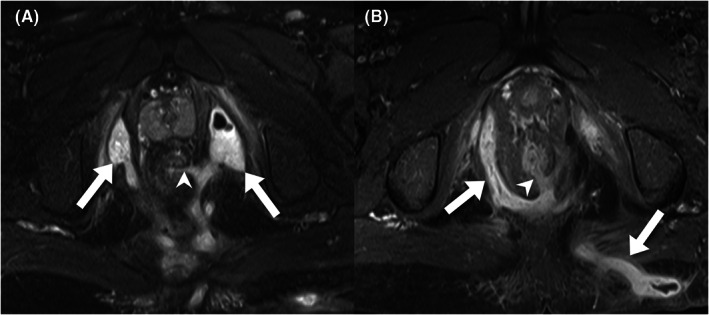
Pelvic MRI of a 20‐year‐old man with CD for preoperative evaluation of the perianal fistula. (A) An axial T2‐weighted image with fat saturation presents a suprasphincteric fistula tract at the 3 o'clock position (arrowhead), with branching and abscess formation at bilateral ischioanal fossae (arrows). (B) a postcontrast axial T1‐weighted image of another fistula tract (arrowhead), with branching fistulae extending to the right ischioanal fossa and left gluteal region (arrows)
FIGURE 2
FIGURE 2
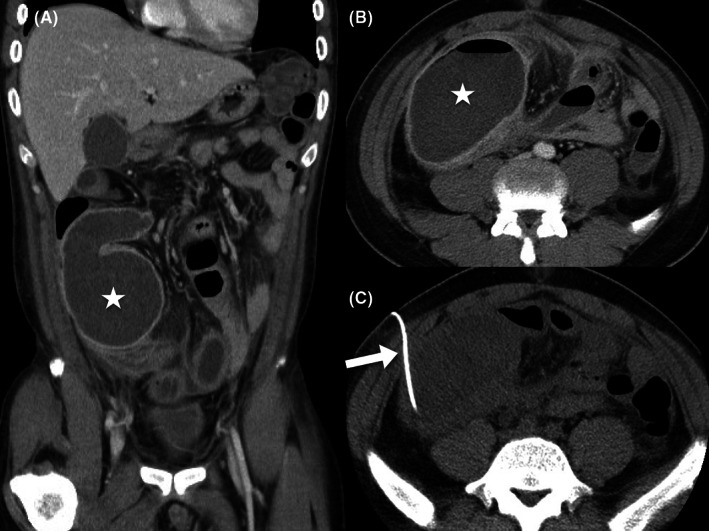
Contrast‐enhanced CT of a 29‐year‐old man with CD who presented with right lower quadrant pain that lasted for 3 months. (A and B) coronal and axial images of inflammatory changes of the ileal loops, with a large abscess formation (star) on the lower right abdomen. (C) CT‐guided percutaneous drainage of the abscess was performed, and a pigtail catheter (arrow) was inserted into the abscess. The abscess was successfully treated
FIGURE 3
FIGURE 3
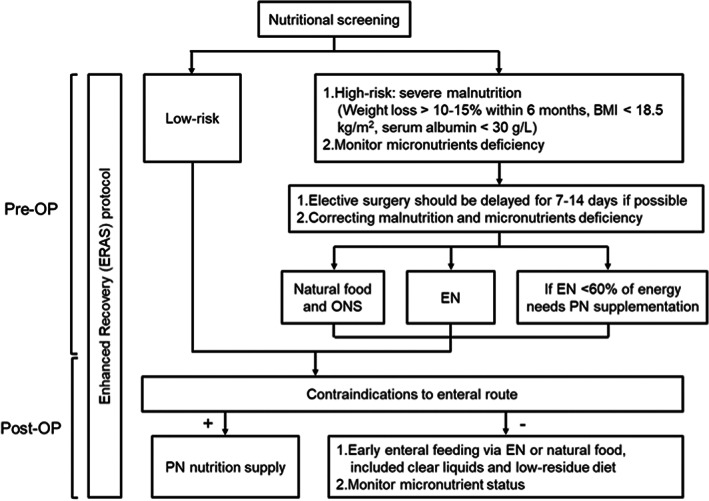
Perioperative nutritional management of CD
FIGURE 4
FIGURE 4
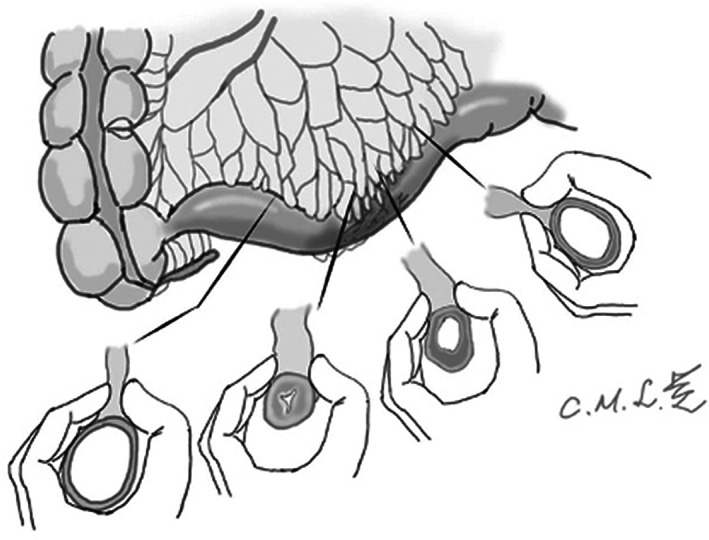
Mesenteric thickening can be detected using the “pinch test,” which can distinguish the contours of a diseased bowel from a healthy bowel. A healthy bowel has a soft, pliable mesentery, whereas a diseased bowel exhibits obvious fat wrapping and swelling, congestion, and a firm mesentery
FIGURE 5
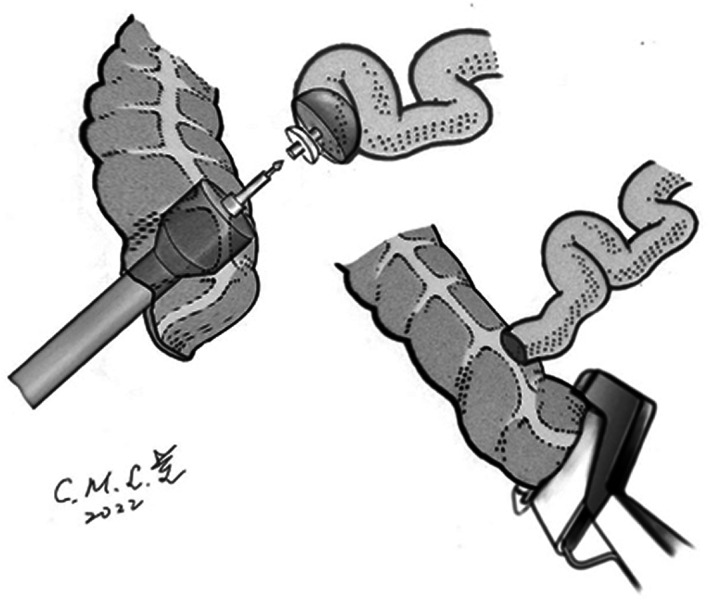
FIGURE 5
Stapled ileocolic end‐to‐side anastomosis with a circular stapler. The retained stump could be closed using a thoraco‐abdominal or gastrointestinal anastomosis linear stapler at approximately 5 cm distal to an ileocolic anastomosis

References

    1. Baumgart DC, Sandborn WJ. Crohn's disease. Lancet. 2012;380(9853):1590–605. 10.1016/s0140-6736(12)60026-9 - DOI - PubMed
    1. Gionchetti P, Dignass A, Danese S, Magro Dias FJ, Rogler G, Lakatos PL, et al. 3rd European evidence‐based consensus on the diagnosis and Management of Crohn's disease 2016: part 2: surgical management and special situations. J Crohns Colitis. 2017;11(2):135–49. 10.1093/ecco-jcc/jjw169 - DOI - PubMed
    1. Kotze PG. The essential role of a multidisciplinary approach in inflammatory bowel diseases. Clin Colon Rectal Surg. 2022;35(1):3–4. 10.1055/s-0041-1740034 - DOI - PMC - PubMed
    1. Adamina M, Bonovas S, Raine T, Spinelli A, Warusavitarne J, Armuzzi A, et al. ECCO guidelines on therapeutics in Crohn's disease: surgical treatment. J Crohns Colitis. 2020;14(2):155–68. 10.1093/ecco-jcc/jjz187 - DOI - PubMed
    1. Bemelman WA, Warusavitarne J, Sampietro GM, Serclova Z, Zmora O, Luglio G, et al. ECCO‐ESCP consensus on surgery for Crohn's disease. J Crohns Colitis. 2018;12(1):1–16. 10.1093/ecco-jcc/jjx061 - DOI - PubMed