


Ionized hypercalcemia in 238 cats from a referral hospital population (2009-2019)
- PMID: 36645022
- PMCID: PMC9889682
- DOI: 10.1111/jvim.16627
Ionized hypercalcemia in 238 cats from a referral hospital population (2009-2019)
Abstract
Background: Ionized calcium concentration ([iCa]) is more sensitive for detecting calcium disturbances than serum total calcium concentration but literature on ionized hypercalcemia in cats is limited. Urolithiasis is a possible adverse consequence of hypercalcemia.
Hypothesis/objectives: To describe clinical details of diagnoses associated with ionized hypercalcemia in cats and association with urolithiasis.
Animals: Cats (238) seen between 2009 and 2019 at a referral hospital with [iCa] above the normal reference interval.
Methods: Observational cross-sectional study. Signalment, serum biochemical and imaging findings were reviewed for cats with ionized hypercalcemia considered to be clinically relevant (>1.41 mmol/L). Data were summarized by cause of hypercalcemia (i.e., diagnosis).
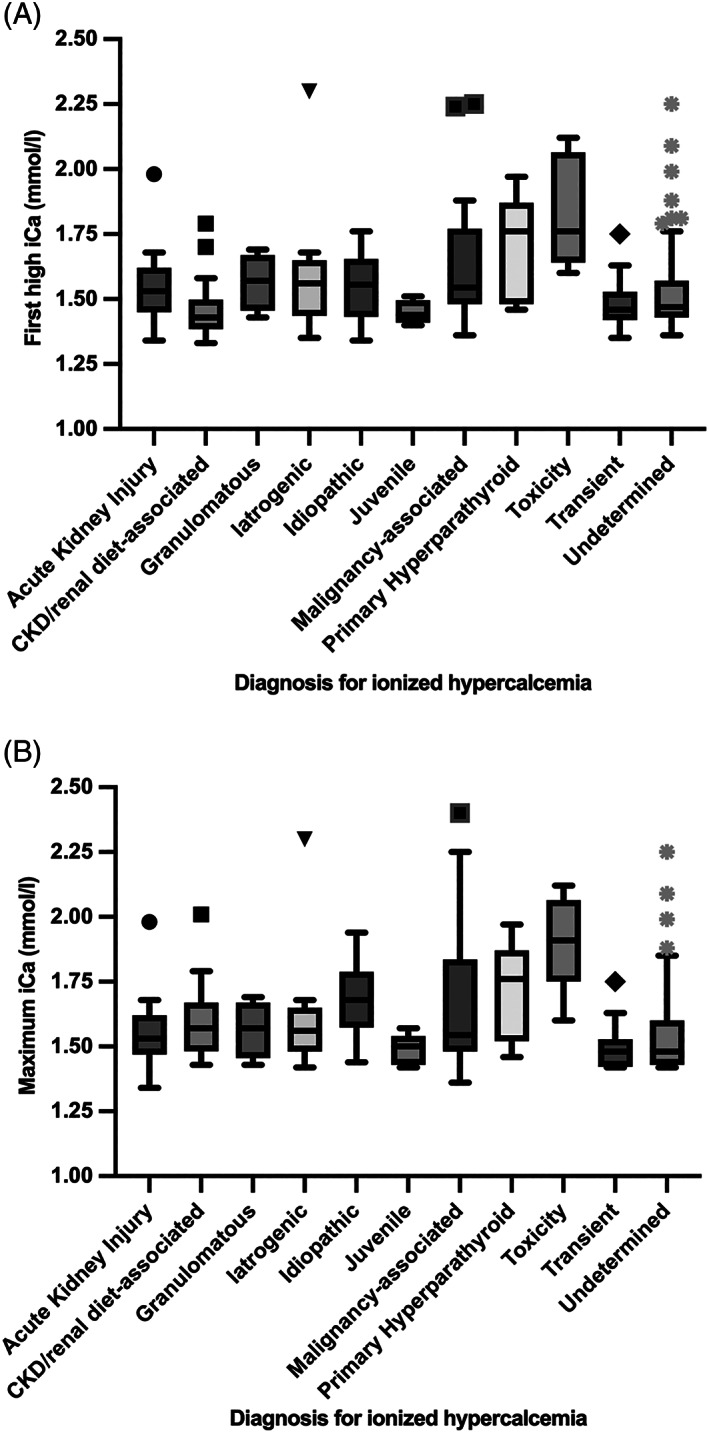
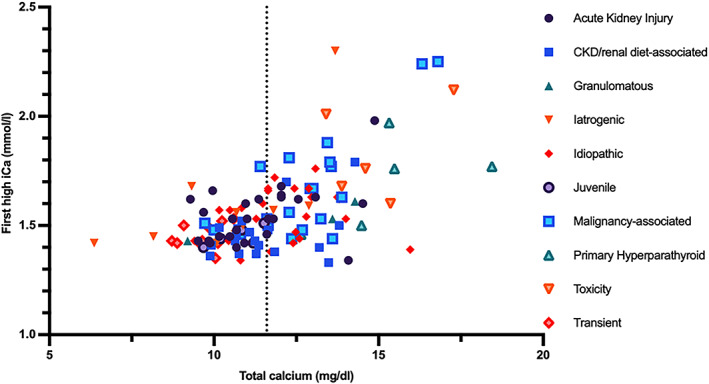
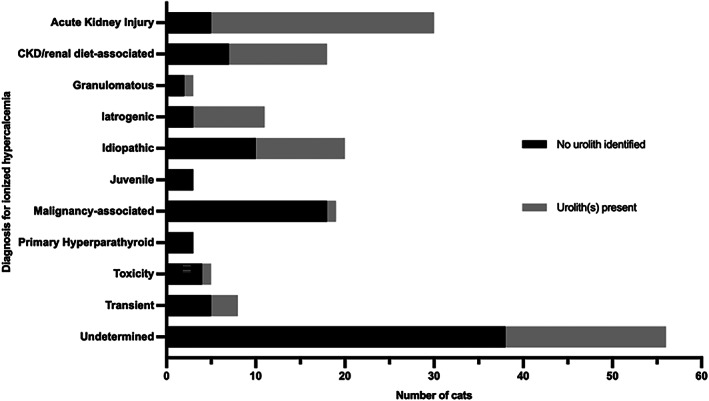
Results: Diagnoses for the 238 cats with [iCa] >1.41 mmol/L included: acute kidney injury (AKI; 13%), malignancy-associated (10.1%), idiopathic hypercalcemia (IHC; 10.1%), chronic kidney disease/renal diet-associated (8.4%), iatrogenic (5.5%), primary hyperparathyroidism (2.1%), vitamin D toxicity (2.1%) and granulomatous disease (1.7%). In 112 cases (47.1%), no cause for ionized hypercalcemia could be determined (n = 95), hypercalcemia was transient (n = 12), or the cat was juvenile (<1 year; n = 5). Urolithiasis was identified in 83.3% of AKI, 72.7% of iatrogenic, 61.1% of CKD/renal diet-associated and 50% of IHC cases that were imaged (<50% for other diagnoses). Diagnoses with a high proportion of concurrent total hypercalcemia included primary hyperparathyroidism (100%), vitamin D toxicity (100%), malignancy-associated (71.4%), granulomatous disease (66.7%) and IHC (65.2%).
Conclusions and clinical importance: Ionized hypercalcemia was most commonly associated with kidney diseases, neoplasia or IHC. The proportion of urolithiasis cases varied by diagnosis.
Keywords: AKI; calcium; cat; idiopathic; kidney stone.
© 2023 The Authors. Journal of Veterinary Internal Medicine published by Wiley Periodicals LLC on behalf of American College of Veterinary Internal Medicine.
Conflict of interest statement
Authors declare no conflict of interest.
Figures
References
-
- Schenck PA, Chew DJ. Calcium: total or ionized? Vet Clin North Am Small Anim Pract. 2008;38(497–502):ix. - PubMed
-
- de Brito Galvao JF, Parker V, Schenck PA, et al. Update on feline ionized hypercalcemia. Vet Clin North Am Small Anim Pract. 2017;47:273‐292. - PubMed
-
- Savary KC, Price GS, Vaden SL. Hypercalcemia in cats: a retrospective study of 71 cases (1991‐1997). J Vet Intern Med. 2000;14:184‐189. - PubMed
Publication types
MeSH terms
Substances
LinkOut - more resources
Full Text Sources
Medical
Miscellaneous