


Interventions for infantile esotropia
- PMID: 36645238
- PMCID: PMC9841886
- DOI: 10.1002/14651858.CD004917.pub4
Interventions for infantile esotropia
Abstract
Background: Infantile esotropia (IE) is the inward deviation of the eye. Various aspects of the clinical management of IE are unclear; mainly, the most effective type of intervention and the age at intervention.
Objectives: To examine the effectiveness and optimal timing of surgical and non-surgical treatment options for IE to improve ocular alignment and achieve or allow the development of binocular single vision.
Search methods: We searched CENTRAL, MEDLINE, Embase, one other database, and three trials registers (November 2021). We did not use any date or language restrictions in the electronic searches for trials. SELECTION CRITERIA: We included randomized trials and quasi-randomized trials comparing any surgical or non-surgical intervention for IE.
Data collection and analysis: We used standard Cochrane methodology and graded the certainty of the body of evidence for six outcomes using the GRADE classification.
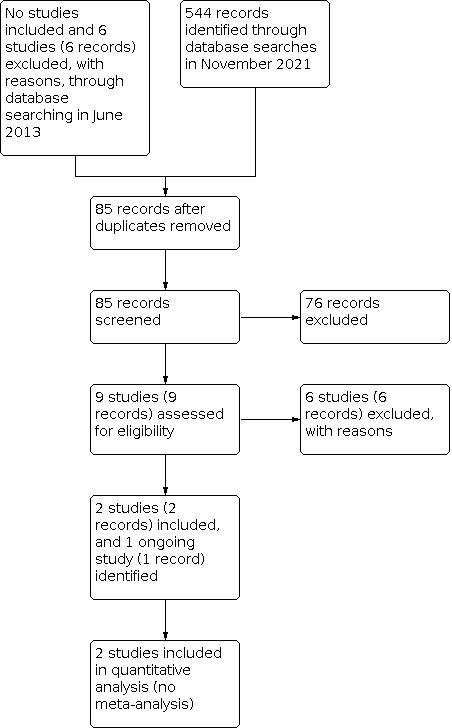
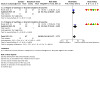
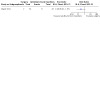
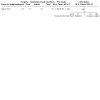
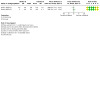
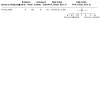
Main results: We included two studies with 234 children with IE. The first study enrolled 110 children (mean age 26.9 ± 14.5 months) with an onset of esotropia before six months of age, and large-angle IE defined as esotropia of ≥ 40 prism diopters. It was conducted between 2015 and 2018 in a tertiary care hospital in South Africa. It compared a maximum of three botulinum toxin injections with surgical intervention of bimedial rectus muscle recession, and children were followed for six months. There were limitations in study design and implementation; the risk of bias was high, or we had some concerns for most domains. Surgery may increase the incidence of treatment success, defined as orthophoria or residual esotropia of ≤ 10 prism diopters, compared with botulinum toxin injections, but the evidence was very uncertain (risk ratio (RR) of treatment success 1.88, 95% confidence interval (CI) 1.27 to 2.77; 1 study, 101 participants; very low-certainty evidence). The results should be read with caution because 23 children with > 60 prism diopters at baseline in the surgery arm also received botulinum toxin at the time of surgery to augment the recessions. There was no evidence of an important difference between surgery and botulinum toxin injections for over-correction (> 10 prism diopters) of deviation (RR 0.29, 95% CI 0.06 to 1.37; 1 study, 101 participants; very low-certainty evidence), or additional interventions required (RR 0.66, 95% CI 0.36 to 1.19; 1 study, 101 participants; very low-certainty evidence). No major complications of surgery were observed in the surgery arm, while children experienced various complications in the botulinum toxin arm, including partial transient ptosis in 9 (16.7%) children, transient vertical deviation in 3 (5.6%) children, and consecutive exotropia in 13 (24.1%) children. No other outcome data for our prespecified outcomes were reported. The second study enrolled 124 children with onset of esotropia before one year of age in 12 university hospitals in Germany and the Netherlands. It compared bilateral recession with unilateral recession surgeries, and followed children for three months postoperatively. Very low-certainty evidence suggested that there was no evidence of an important difference between bilateral and unilateral surgeries in the presence of binocular vision (numbers with event unclear, P = 0.35), and over-correction (RR of having exotropia 1.09, 95% CI 0.45 to 2.63; 1 study, 118 participants). Dissociated vertical deviation, latent nystagmus, or both were observed in 8% to 21% of participants.
Authors' conclusions: Medial rectus recessions may increase the incidence of treatment success compared with botulinum toxin injections alone, but the evidence was very uncertain. No evidence of important difference was found between bilateral surgery and unilateral surgery. Due to insufficient evidence, it was not possible to resolve the controversies regarding type of surgery, non-surgical intervention, or age of intervention in this review. There is clearly a need to conduct good quality trials in these areas to improve the evidence base for the management of IE.
Copyright © 2023 The Cochrane Collaboration. Published by John Wiley & Sons, Ltd.
Conflict of interest statement
LM: none known SMN: reports a grant from the National Eye Institute, National Institutes of Health, USA; payment to institution JS: no relevant financial interests. Non‐financial interests include employment as a physician with Pepose Vision Institute; affiliation with AAPOS and AAO
Figures
Update of
-
Interventions for infantile esotropia.Cochrane Database Syst Rev. 2013 Jul 29;2013(7):CD004917. doi: 10.1002/14651858.CD004917.pub3. Cochrane Database Syst Rev. 2013. Update in: Cochrane Database Syst Rev. 2023 Jan 16;1:CD004917. doi: 10.1002/14651858.CD004917.pub4. PMID: 23897277 Free PMC article. Updated.
References
References to studies included in this review
Mayet 2021 {published data only}
Polling 2009 {published data only}
-
- Polling JR, Eijkemans MJ, Esser J, Gilles U, Kolling GH, Schulz E, et al. A randomised comparison of bilateral recession versus unilateral recession-resection as surgery for infantile esotropia. British Journal of Ophthalmology 2009;93(7):954-7. - PubMed
References to studies excluded from this review
Arnoult 1976 {published data only}
-
- Arnoult JB, Yeshurun O, Mazow ML. Comparative study of the surgical management of congenital esotropia of 50 prism dioptres or less. Journal of Pediatric Ophthalmology 1976;13(3):129-31. - PubMed
Badawi 2014 {published data only}
Badawi 2018 {published data only}
Birch 1995 {published data only}
-
- Birch E, Stager D, Everett M. Random dot stereoacuity following surgical correction of infantile esotropia. Journal of Pediatric Ophthalmology and Strabismus 1995;32(4):231-5. - PubMed
Birch 1998 {published data only}
-
- Birch E, Stager D, Wright K, Beck R. The natural history of infantile esotropia during the first six months of life. Journal of American Association for Pediatric Ophthalmology and Strabismus 1998;2(6):325-8. - PubMed
Fouad 2016 {published data only}
-
- Fouad HM, Abdelhakim MA, Awadein A, Elhilali H. Comparison between medial rectus pulley fixation and augmented recession in children with convergence excess and variable-angle infantile esotropia. Journal of American Association for Pediatric Ophthalmology and Strabismus 2016;20(5):405-9.e1. - PubMed
Ghali 2017 {published data only}
Ing 1992 {published data only}
Kushner 1984 {published data only}
-
- Kushner B, Morton G. A randomized comparison of surgical procedures for infantile esotropia. American Journal of Ophthalmology 1984;98(1):50-61. - PubMed
NCT03459092 {published data only}
-
- NCT03459092. Botox instead of strabismus surgery (BISS) [A pragmatic, randomized, non-inferiority trial comparing the effectiveness of botulinum toxin-based treatment with conventional strabismus surgery in acquired esotropia]. clinicaltrials.gov/ct2/show/NCT03459092 (first received 8 March 2018).
Simonsz 2005 {published data only}
-
- Simonsz HJ, Kolling GH, Unnebrink K. Final report of the early vs late infantile strabismus surgery study (ELISSS), a controlled, prospective, multicenter study. Strabismus 2005;13(4):169-99. - PubMed
TCTR20210210001 {published data only}
-
- TCTR20210210001. Effect of two difference doses of botulinum toxin A on infantile esotropia. trialsearch.who.int/Trial2.aspx?TrialID=TCTR20210210001 (first received 10 February 2021).
References to ongoing studies
NCT03266549 {published data only}
-
- NCT03266549. Botulinum toxin augmented surgery vs conventional surgery in the management of large angle infantile esotropia. clinicaltrials.gov/ct2/show/NCT03266549 (first received 30 August 2017).
Additional references
Ansons 2001
-
- Ansons AM, Davis H. Diagnosis and Management of Ocular Motility Disorders. 3rd edition. Malden, Mass: Blackwell Science Ltd, 2001.
AOA 2010
-
- American Optometric Association (AOA). Optometric clinical practice guideline. Care of the patient with strabismus: esotropia and exotropia. www.aoa.org/AOA/Documents/Practice%20Management/Clinical%20Guidelines/Co... (accessed 19 August 2022).
Benabent 2002
-
- Benabent EC, García Hermosa P, Arrazola MT, Alió y Sanz JL. Botulinum toxin injection without electromyographic assistance. Journal of Pediatric Ophthalmology & Strabismus 2002;39(4):231–4. - PubMed
Birch 2006
-
- Birch EE, Stager DR Sr. Long-term motor and sensory outcomes after early surgery for infantile esotropia. Journal of American Association for Pediatric Ophthalmology and Strabismus 2006;10(5):409-13. - PubMed
Calcutt 1993
-
- Calcutt C. Infantile esotropia: current concepts in aetiology and management. British Orthoptic Journal 1993;50:37.
Caputo 2007
-
- Caputo R, Tinelli F, Bancale A, Campa L, Frosini R, Guzzetta A, et al. Motor coordination in children with congenital strabismus: effects of late surgery. European Journal of Paediatric Neurology 2007;11(5):285-91. - PubMed
Covidence [Computer program]
-
- Covidence. Version accessed 05 January 2022. Melbourne, Australia: Veritas Health Innovation. Available at covidence.org.
de Alba Campomanes 2010
-
- Alba Campomanes AG, Binenbaum G, Campomanes Eguiarte G. Comparisons of botulinum with surgery as primary treatment for infantile esotropia. Journal of American Association for Pediatric Ophthalmology and Strabismus 2010;14(2):111-6. - PubMed
Deeks 2022
-
- Deeks JJ, Higgins JPT, Altman DG, editor(s). Chapter 10: Analysing data and undertaking meta-analyses. In: Higgins JPT, Thomas J, Chandler J, Cumpston M, Li T, Page MJ, et al, editor(s). Cochrane Handbook for Systematic Reviews of Interventions Version 6.3 (updated February 2022). Cochrane, 2022. Available from www.training.cochrane.org/handbook.
Drover 2008
Friedman 1980
-
- Friedman Z, Neumann E, Hyams SW, Peleg B. Ophthalmic screening of 38,000 children, age 1 to 2 1/2 years, in child welfare clinics. Journal of Pediatric Ophthalmology & Strabismus 1980;17(4):261-7. - PubMed
Gerth 2008
Glanville 2006
Gursoy 2012
-
- Gursoy H, Basmak H, Sahin A, Yildirim N, Aydin Y, Colak E. Long-term follow-up of bilateral botulinum toxin injections versus bilateral recessions of the medial rectus muscles for treatment of infantile esotropia. Journal of American Association for Pediatric Ophthalmology and Strabismus 2012;16(3):269-73. - PubMed
Helveston 1990
-
- Helveston EM, Ellis FD, Plager DW, Miller KK. Early surgery for essential infantile esotropia. Journal of Pediatric Ophthalmology & Strabismus 1990;27(3):115-9. - PubMed
Higgins 2022
-
- Higgins JP, Thomas J, Chandler J, Cumpston M, Li T, Page MJ, et al, editor(s). Cochrane Handbook for Systematic Reviews of Interventions Version 6.3 (updated February 2022)). Cochrane, 2022. www.training.cochrane.org/handbook.
Ing 1980
-
- Ing MR. Early surgical alignment for congenital esotropia. Ophthalmology 1980;90(2):132-5. - PubMed
Ing 1995
-
- Ing MR. Outcome study of surgical alignment before six months of age for congenital esotropia. Ophthalmology 1995;102(12):2041-5. - PubMed
Kommerell 1988
-
- Kommerell G. Ocular motor phenomena in infantile strabismus. Asymmetry in optokinetic nystagmus and pursuit, latent nystagmus, and dissociated vertical divergence. In: Lennerstrand G, Noorden GK, Campos EC, editors(s). Strabismus and Amblyopia. London, UK: MacMillan Press, 1988:99-109.
Lueder 2008
-
- Lueder GT, Galli ML. Effect of preoperative stability of alignment on outcome of strabismus surgery for infantile esotropia. Journal of American Association for Pediatric Ophthalmology and Strabismus 2008;12(1):66-8. - PubMed
Lueder 2012
-
- Lueder GT, Galli M, Tychsen L, Yildirim C, Pegado V. Long-term results of botulinum toxin-augmented medial rectus recessions for large-angle infantile esotropia. American Journal of Ophthalmology 2012;153(3):560-3. - PubMed
Nixon 1985
-
- Nixon RB, Helveston EM, Miller K, Archer SM, Ellis FD. Incidence of strabismus in neonates. American Journal of Ophthalmology 1985;100(6):798-801. - PubMed
Page 2022
-
- Page MJ, Higgins JPT, Sterne JAC. Chapter 13: Assessing risk of bias due to missing results in a synthesis. In: Higgins JP, Thomas J, Chandler J, Cumpston M, Li T, Page MJ, et al, editor(s). Cochrane Handbook for Systematic Reviews of Interventions Version 6.3 (updated February 2022). Cochrane, 2022. Available from www.training.cochrane.org/handbook.
PEDIG 2002
-
- Pediatric Eye Disease Investigator Group (PEDIG). Spontaneous resolution of early-onset esotropia: experience of the congenital esotropia observational study. American Journal of Ophthalmology 2002;133(1):109-18. - PubMed
RCO 2012
-
- The Royal College of Ophthalmologists (RCO). Guidelines for the management of strabismus in childhood (updated March 2012). www.rcophth.ac.uk/resources-listing/guidelines-for-the-management-of-str... (accessed 4 November 2022).
RevMan Web 2022 [Computer program]
-
- Review Manager Web (RevMan Web). Version 4.18.1. The Cochrane Collaboration, 2022. Available at revman.cochrane.org.
Ruiz 2004
-
- Ruiz MF, Alvarez MT, Sanchez-Garrido CM, Hernaez JM, Rodrigues JM. Surgery and botulinum toxin in congential esotropia. Canadian Journal of Ophthalmology 2004;39(6):639-49. - PubMed
Scheiman 2020
Scott 1980
-
- Scott AB. Botulinum toxin injection into extraocular muscles as an alternative to strabismus surgery. Ophthalmology 1980;87(10):1044-9. - PubMed
Simonsz 2010
-
- Simonsz HJ, Eijkemans MJ. Predictive value of age, angle and refraction on rate of reoperation and rate of spontaneous resolution in infantile esotropia. Strabismus 2010;18(3):87-97. - PubMed
Tejedor 1999
Vaughan 1998
-
- Vaughan D, Asbury T, Riordan-Eva P. General Ophthalmology. 15th edition. New York, NY: McGraw-Hill/ Appleton & Lange, 1998.
Wright 1994
-
- Wright KW, Edelman PM, McVey JH, Terry AP, Lin M. High grade stereo-acuity after early surgery for congenital esotropia. Archives of Ophthalmology 1994;112(7):913-9. - PubMed
References to other published versions of this review
Elliott 2005
Publication types
MeSH terms
Substances
LinkOut - more resources
Full Text Sources
