


How aging couples' emotional and physiological associations change across positive, supportive, and conflictual discussions: Roles of capitalization and responsive behaviors
- PMID: 36646301
- PMCID: PMC10023389
- DOI: 10.1016/j.biopsycho.2023.108500
How aging couples' emotional and physiological associations change across positive, supportive, and conflictual discussions: Roles of capitalization and responsive behaviors
Abstract
Background: Couples' emotions and physiology change across interactions and based on behaviors. Aging couples' emotions and physiology may be closely related as they spend more time together and rely on each other for support. We examined aging couples' emotional and physiological associations across multiple indices and marital interactions; we also assessed how couples' capitalization and responsive behaviors during the first discussion were protective in subsequent emotional conversations.
Methods: Married couples (n = 107 couples, 214 individuals) engaged in positive event, social support, and conflict discussions. Emotional and physiological assessments across discussions included: positive and negative emotion, electrodermal activity, systolic and diastolic blood pressure, heart rate, and heart rate variability. We coded partners' capitalization and responsive behaviors during the first discussion.
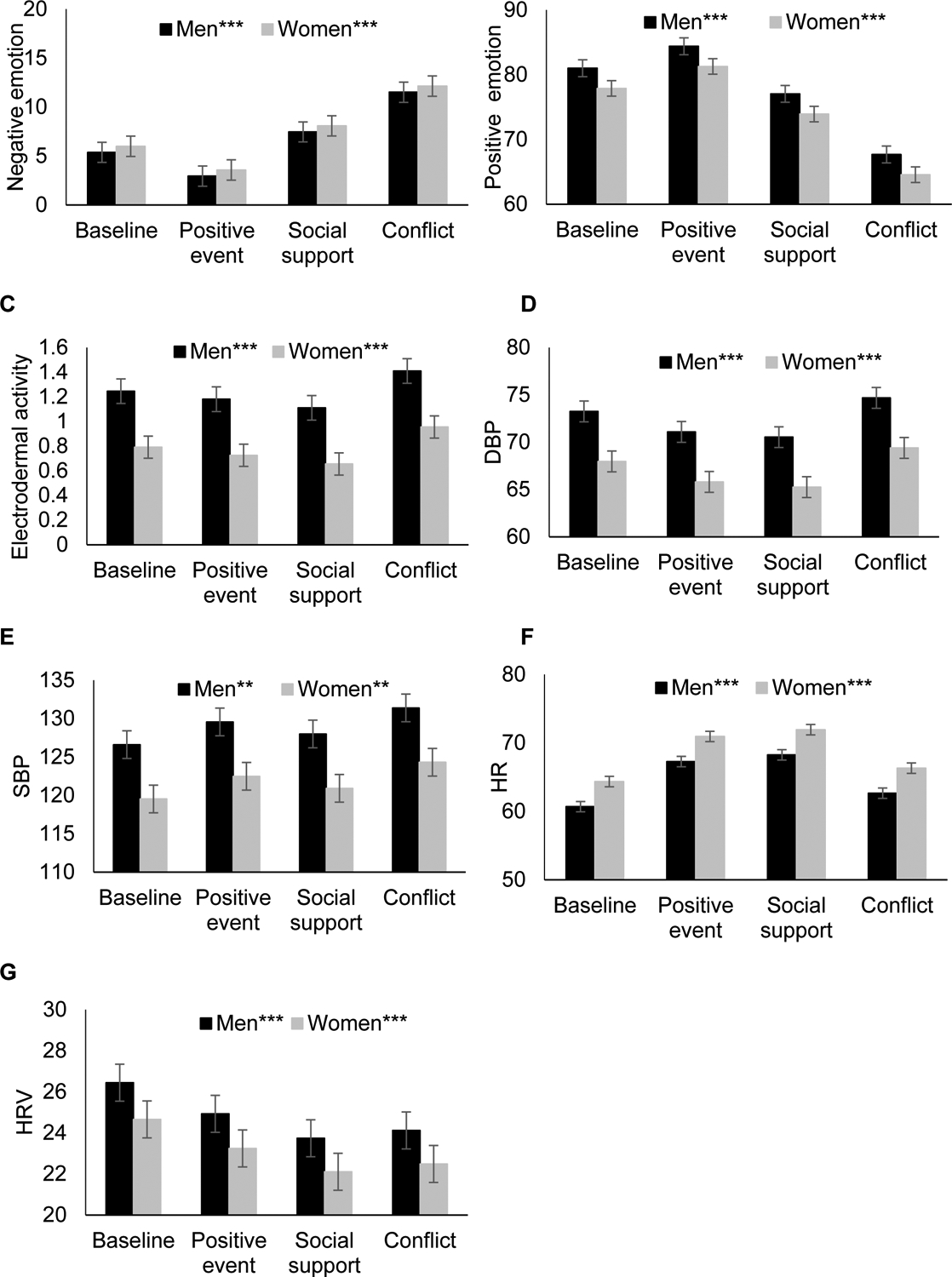
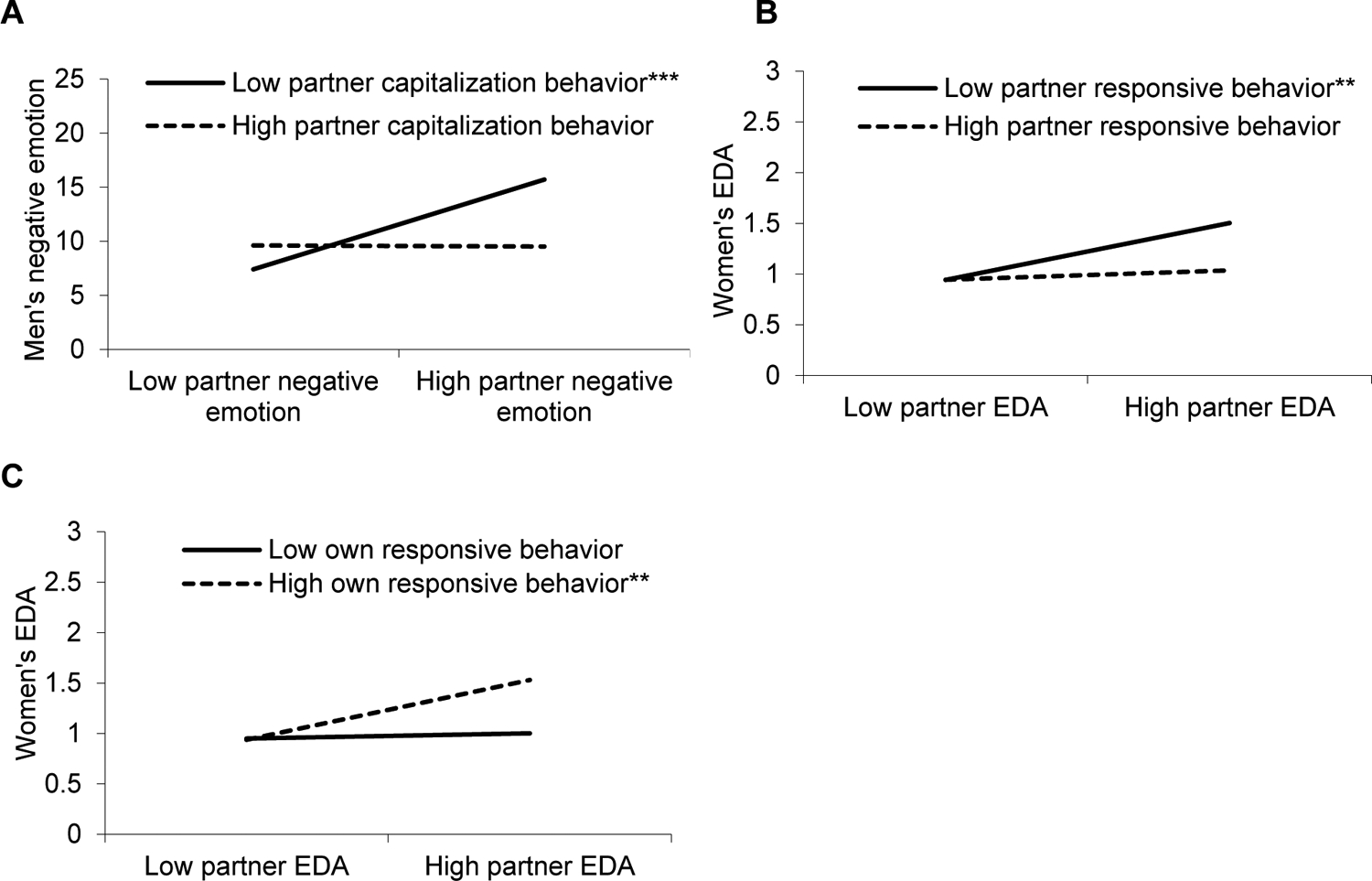
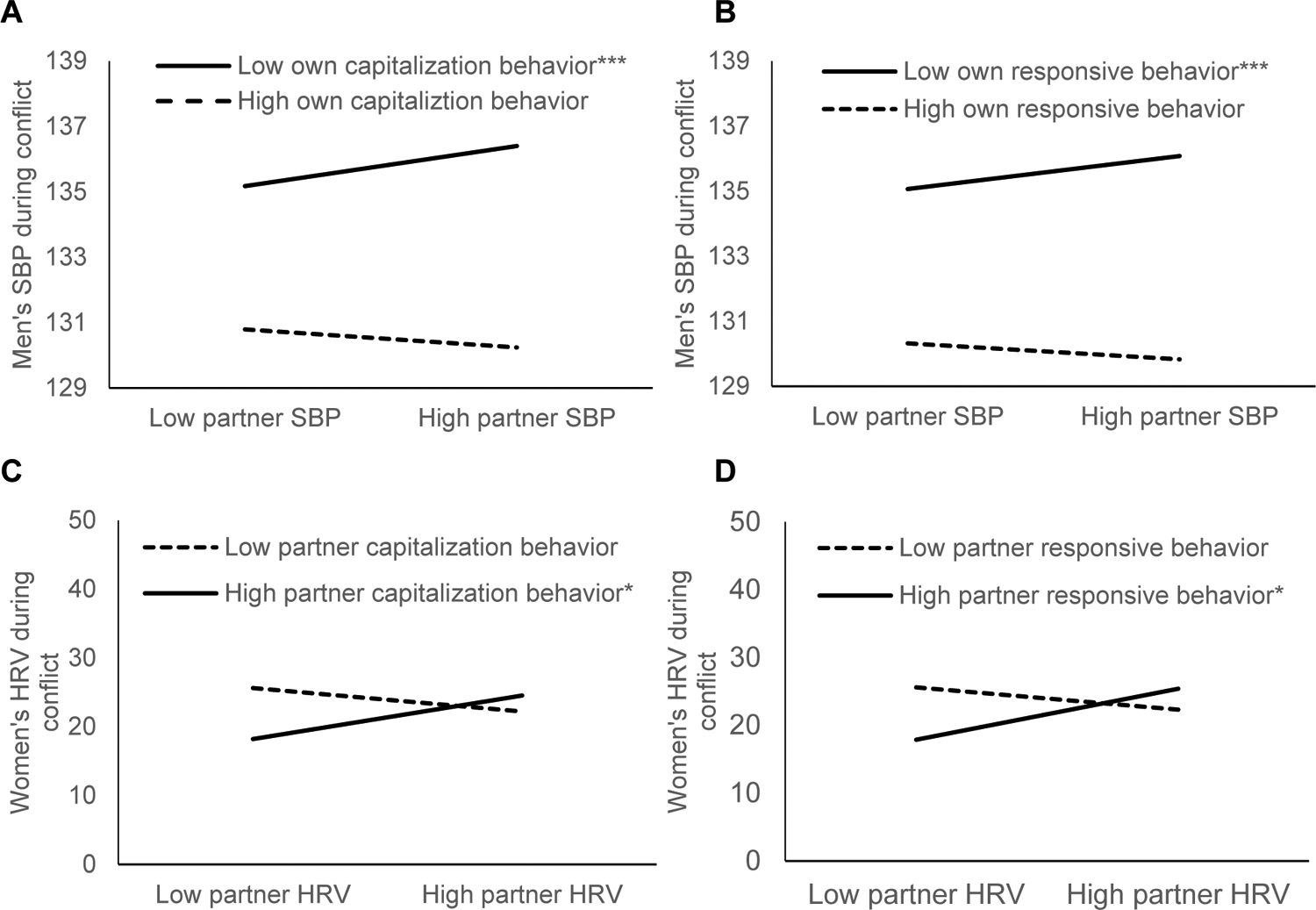
Results: There were ties in spouses' positive emotion, negative emotion, electrodermal activity, systolic blood pressure, heart rate, and heart rate variability during positive, supportive, and conflictual discussions. Emotional and physiological associations reflecting shared stress (negative emotion, electrodermal activity, systolic blood pressure) were stronger in couples who were less capitalizing or responsive earlier that day; associations reflecting physiological adaptation (heart rate variability) were stronger for more capitalizing and responsive couples.
Conclusion: Aging couples' emotions and physiology tracked together during discussions central to maintaining relationships, and their past behaviors carried over into future interactions and across contexts. Enthusiastic, caring, and understanding behaviors may protect partners from shared emotional and physiological stress; lacking such behaviors may increase emotional and physiological vulnerability. This research identifies behavioral, emotional, and physiological pathways connecting relationships to health in adulthood.
Keywords: Capitalization; Conflict; Health; Marriage; Relationships; Responsiveness; Stress.
Copyright © 2023 Elsevier B.V. All rights reserved.
Conflict of interest statement
Declaration of Conflicting Interests The author(s) declared that there were no conflicts of interest with respect to the authorship or the publication of this article.
Figures
References
-
- Aiken LS, & West SG (1991). Multiple regression: Testing and interpreting interactions. In Multiple regression: Testing and interpreting interactions. Sage Publications, Inc.
-
- Antonucci TC (2001). Social relations: An examination of social networks, social support, and sense of control. In Handbook of the psychology of aging, 5th ed. (pp. 427–453). Academic Press.
-
- Bogdány T, Boros S, Szemerszky R, & Köteles F (2016). Validation of the Firstbeat TeamBelt and BodyGuard2 systems Health tourism View project Nutrition as an intervention View project. October, 4–12. https://www.researchgate.net/publication/308809187
-
- Butler EA (2015). Interpersonal affect dynamics: It takes two (and time) to tango. Emotion Review, 7(4), 336–341. 10.1177/1754073915590622 - DOI
Publication types
MeSH terms
Grants and funding
LinkOut - more resources
Full Text Sources
Medical
Miscellaneous
