


Risk Factors for Increased Stent-associated Symptoms Following Ureteroscopy for Urinary Stones: Results From STENTS
- PMID: 36648152
- PMCID: PMC10336697
- DOI: 10.1097/JU.0000000000003183
Risk Factors for Increased Stent-associated Symptoms Following Ureteroscopy for Urinary Stones: Results From STENTS
Abstract
Purpose: The STudy to Enhance uNderstanding of sTent-associated Symptoms sought to identify risk factors for pain and urinary symptoms, as well as how these symptoms interfere with daily activities after ureteroscopy for stone treatment.
Materials and methods: This prospective observational cohort study enrolled patients aged ≥12 years undergoing ureteroscopy with ureteral stent for stone treatment at 4 clinical centers. Participants reported symptoms at baseline; on postoperative days 1, 3, 5; at stent removal; and day 30 post-stent removal. Outcomes of pain intensity, pain interference, urinary symptoms, and bother were captured with multiple instruments. Multivariable analyses using mixed-effects linear regression models were identified characteristics associated with increased stent-associated symptoms.
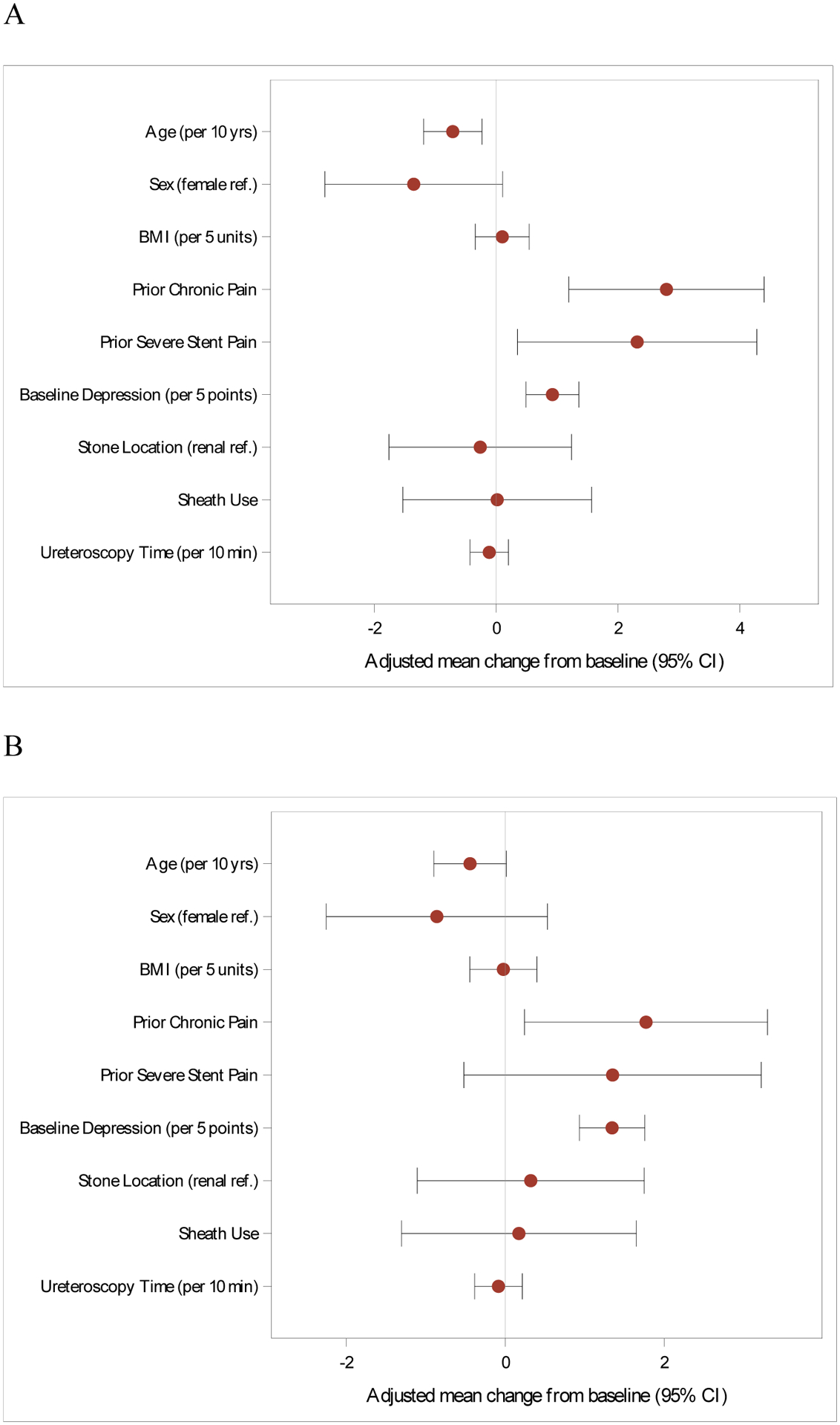
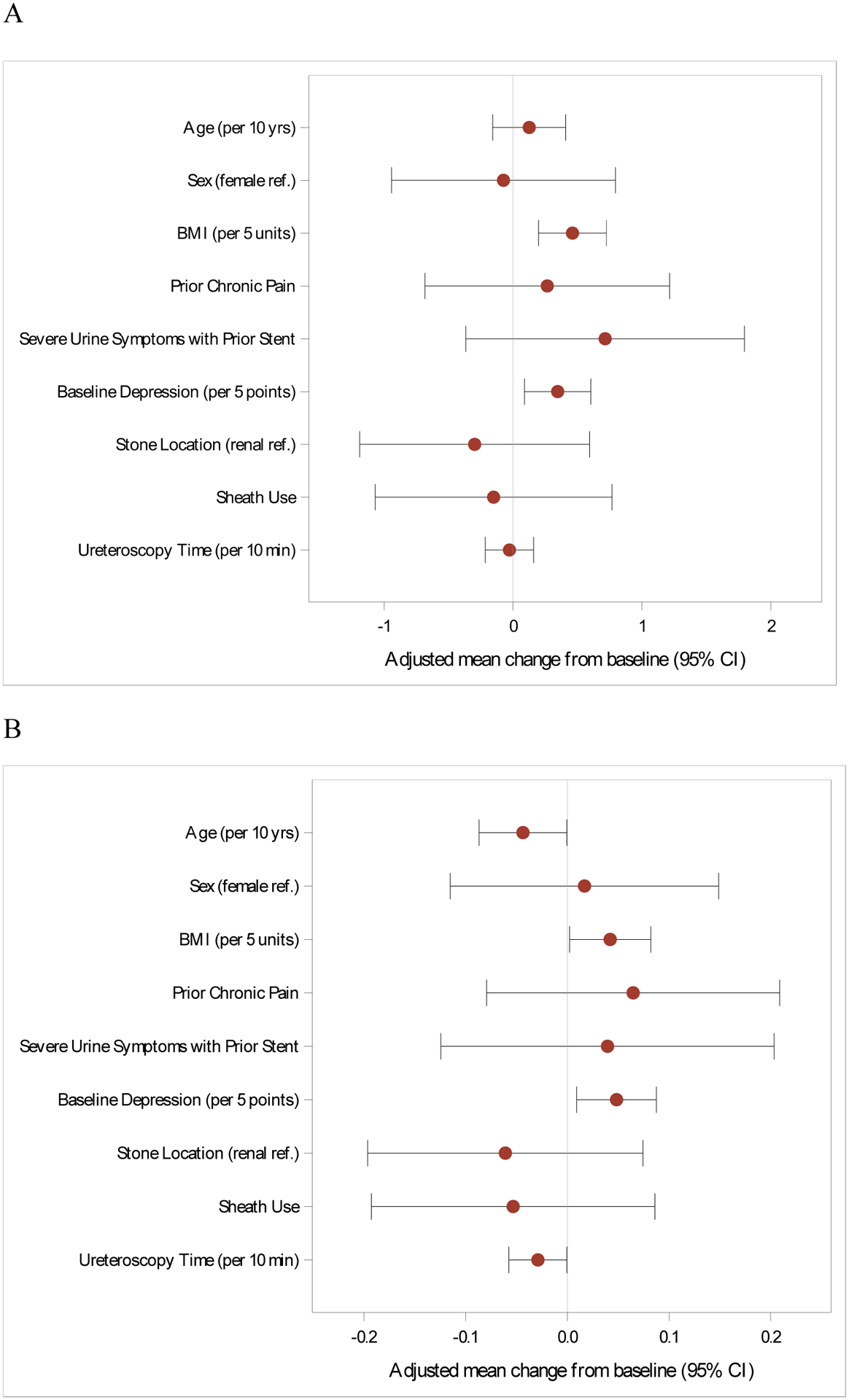
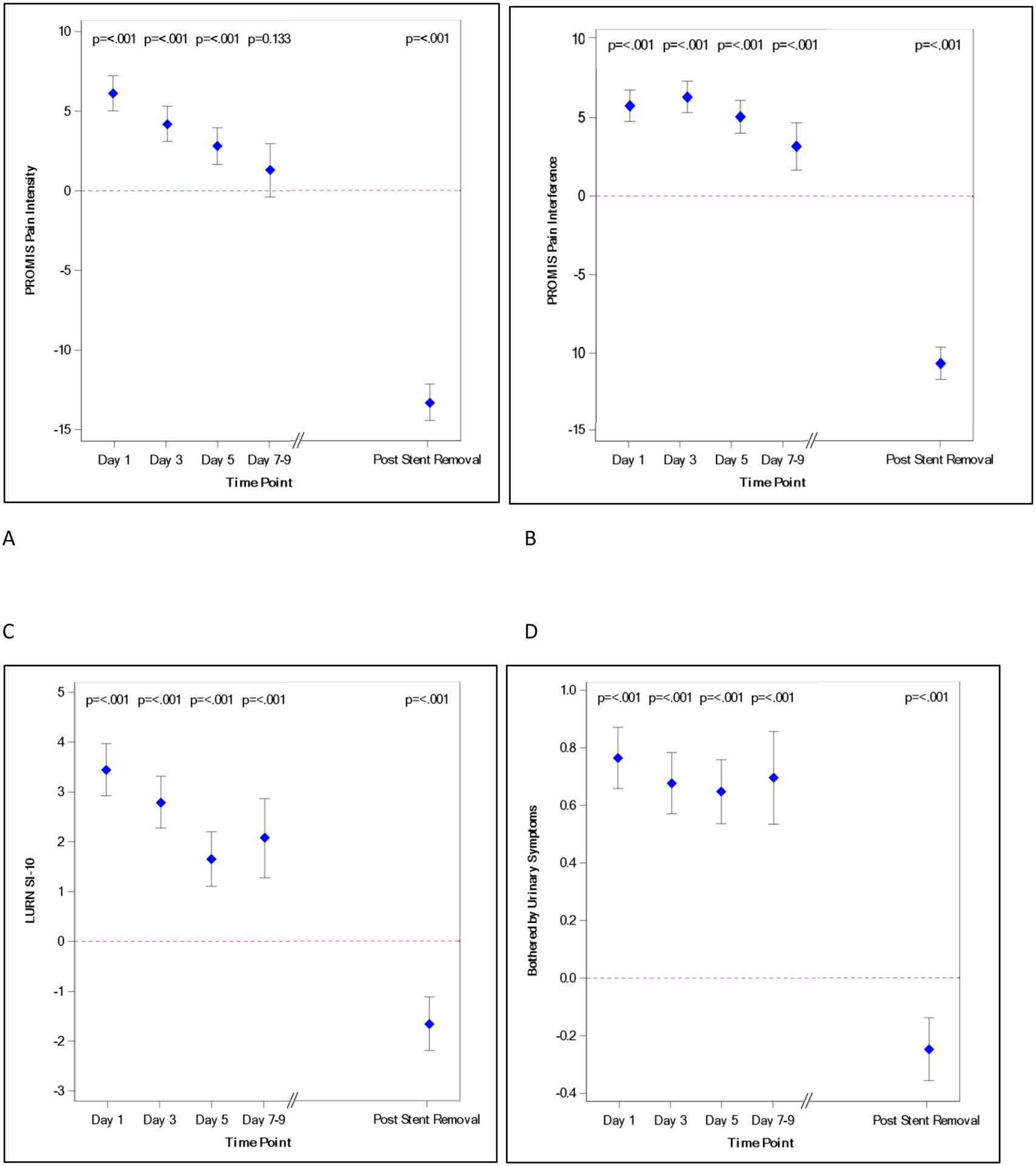
Results: A total of 424 participants were enrolled. Mean age was 49 years (SD 17); 47% were female. Participants experienced a marked increase in stent-associated symptoms on postoperative day 1. While pain intensity decreased ∼50% from postoperative day 1 to postoperative day 5, interference due to pain remained persistently elevated. In multivariable analysis, older age was associated with lower pain intensity (P = .004). Having chronic pain conditions (P < .001), prior severe stent pain (P = .021), and depressive symptoms at baseline (P < .001) were each associated with higher pain intensity. Neither sex, stone location, ureteral access sheath use, nor stent characteristics were drivers of stent-associated symptoms.
Conclusions: In this multicenter cohort, interference persisted even as pain intensity decreased. Patient factors (eg, age, depression) rather than surgical factors were associated with symptom intensity. These findings provide a foundation for patient-centered care and highlight potential targets for efforts to mitigate the burden of stent-associated symptoms.
Keywords: pain, urinary calculi; patient outcome assessment; stents; ureteroscopy.
Figures
References
-
- Joshi HB, Stainthorpe A, MacDonagh RP, Keeley FX Jr, Timoney AG, Barry MJ. Indwelling ureteral stents: evaluation of symptoms, quality of life and utility. J Urol 2003;169:1065–9. - PubMed
-
- Cleeland CS, Ryan KM. Pain assessment: global use of the Brief Pain Inventory. Ann Acad Med Singapore 1994;23:129–38. - PubMed
Publication types
MeSH terms
Grants and funding
LinkOut - more resources
Full Text Sources
