


Prediction of contraceptive discontinuation among reproductive-age women in Ethiopia using Ethiopian Demographic and Health Survey 2016 Dataset: A Machine Learning Approach
- PMID: 36650511
- PMCID: PMC9843668
- DOI: 10.1186/s12911-023-02102-w
Prediction of contraceptive discontinuation among reproductive-age women in Ethiopia using Ethiopian Demographic and Health Survey 2016 Dataset: A Machine Learning Approach
Abstract
Background: Globally, 38% of contraceptive users discontinue the use of a method within the first twelve months. In Ethiopia, about 35% of contraceptive users also discontinue within twelve months. Discontinuation reduces contraceptive coverage, family planning program effectiveness and contributes to undesired fertility. Hence understanding potential predictors of contraceptive discontinuation is crucial to reducing its undesired outcomes. Predicting the risk of discontinuing contraceptives is also used as an early-warning system to notify family planning programs. Thus, this study could enable to predict and determine the predictors for contraceptive discontinuation in Ethiopia.
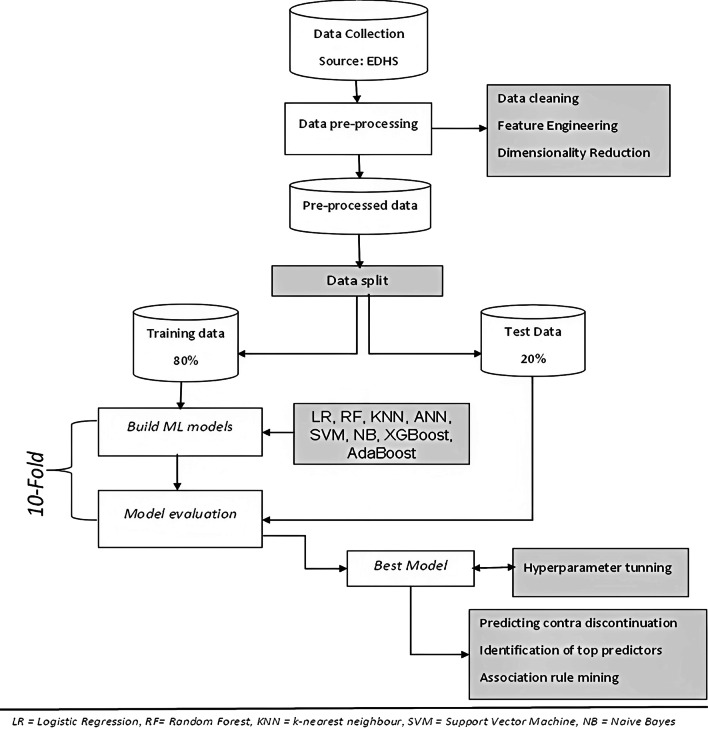
Methodology: Secondary data analysis was done on the 2016 Ethiopian Demographic and Health Survey. Eight machine learning algorithms were employed on a total sample of 5885 women and evaluated using performance metrics to predict and identify important predictors of discontinuation through python software. Feature importance method was used to select top predictors of contraceptive discontinuation. Finally, association rule mining was applied to discover the relationship between contraceptive discontinuation and its top predictors by using R statistical software.
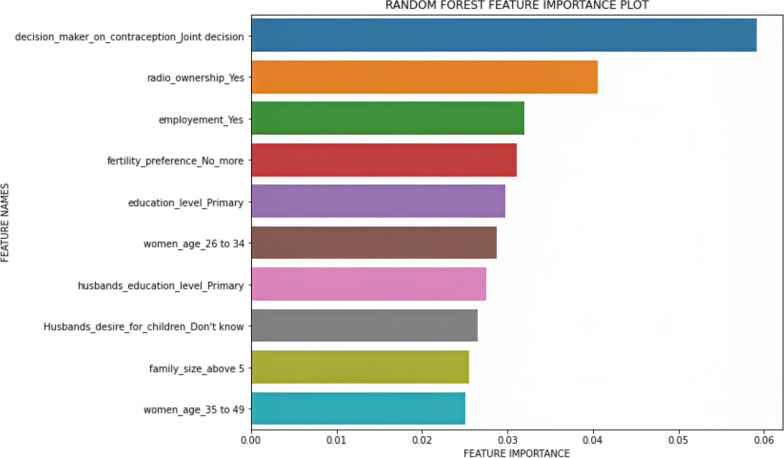
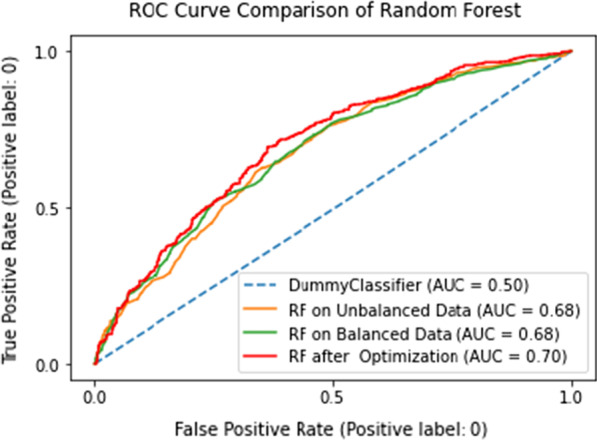
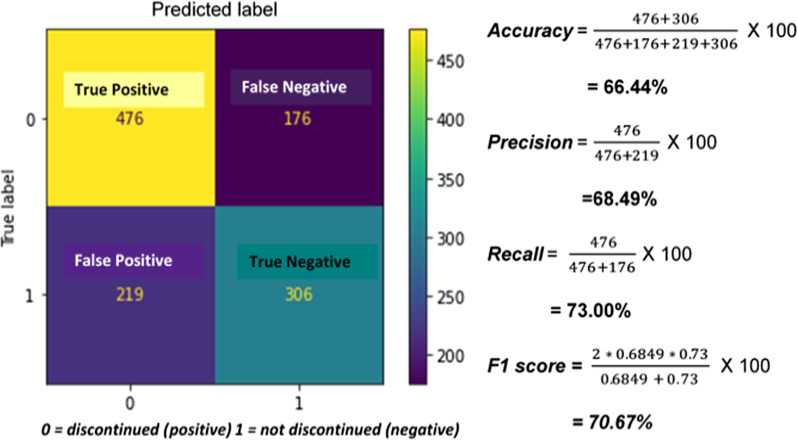
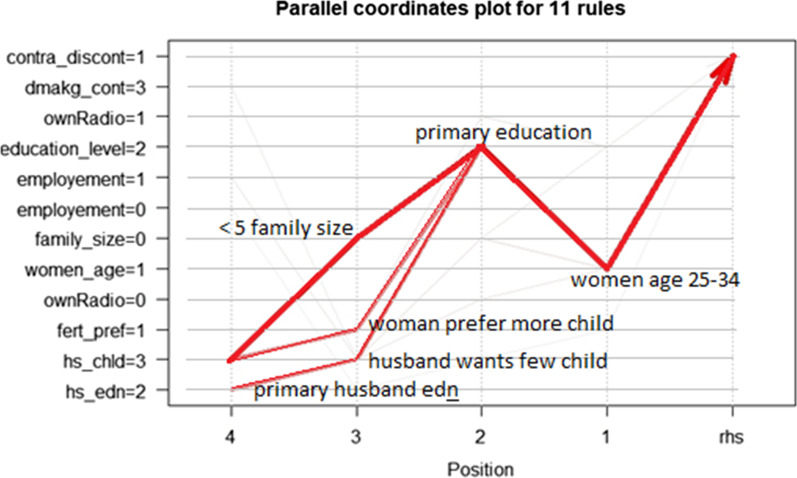
Result: Random forest was the best predictive model with 68% accuracy which identified the top predictors of contraceptive discontinuation. Association rule mining identified women's age, women's education level, family size, husband's desire for children, husband's education level, and women's fertility preference as predictors most frequently associated with contraceptive discontinuation.
Conclusion: Results have shown that machine learning algorithms can accurately predict the discontinuation status of contraceptives, making them potentially valuable as decision-support tools for the relevant stakeholders. Through association rule mining analysis of a large dataset, our findings also revealed previously unknown patterns and relationships between contraceptive discontinuation and numerous predictors.
Keywords: Association rule mining; Contraceptive discontinuation; Ethiopia; Ethiopian Demographic and Health Survey; Machine learning.
© 2023. The Author(s).
Conflict of interest statement
The authors declare that they have no competing interests.
Figures
References
-
- Aljanabi M, Qutqut H, Hijjawi M. Machine learning classification techniques for heart disease prediction: a review. Int J Eng Technol. 2018;7(4):5373–5379.
-
- Ali MM, Cleland JG, Shah IH, World Health O. Causes and consequences of contraceptive discontinuation: evidence from 60 demographic and health surveys. Geneva: World Health Organization; 2012.
MeSH terms
Substances
LinkOut - more resources
Full Text Sources
