Review
. 2023 Jan 17;4(1):100884.
doi: 10.1016/j.xcrm.2022.100884.

Current understanding of the intratumoral microbiome in various tumors

Affiliations
Review

Current understanding of the intratumoral microbiome in various tumors

Chen Xue et al. Cell Rep Med. .

Abstract

It is estimated that in the future, the number of new cancer cases worldwide will exceed the 19.3 million recorded in 2020, and the number of deaths will exceed 10 million. Cancer remains the leading cause of human mortality and lagging socioeconomic development. Intratumoral microbes have been revealed to exist in many cancer types, including pancreatic, colorectal, liver, esophageal, breast, and lung cancers. Intratumoral microorganisms affect not only the host immune system, but also the effectiveness of tumor chemotherapy. This review concentrates on the characteristics and roles of intratumoral microbes in various tumors. In addition, the potential of therapies targeting intratumoral microbes, as well as the main challenges currently delaying these therapies, are explored. Furthermore, we briefly summarize existing technical methods used to characterize intratumoral microbes. We hope to provide ideas for exploring intratumoral microbes as potential biomarkers and targets for tumor diagnosis, treatment, and prognostication.

Keywords: 16S rRNA; cancer; challenge; immune; intratumoral bacteria; therapeutic potential.


Conflict of interest statement

Declaration of interests The authors declare no competing interests.

Figures
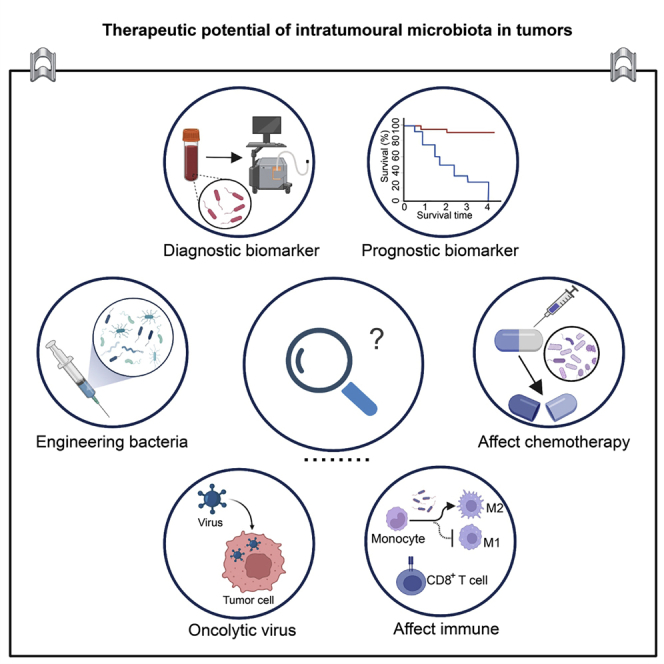
None
Graphical abstract
Figure 1
Figure 1
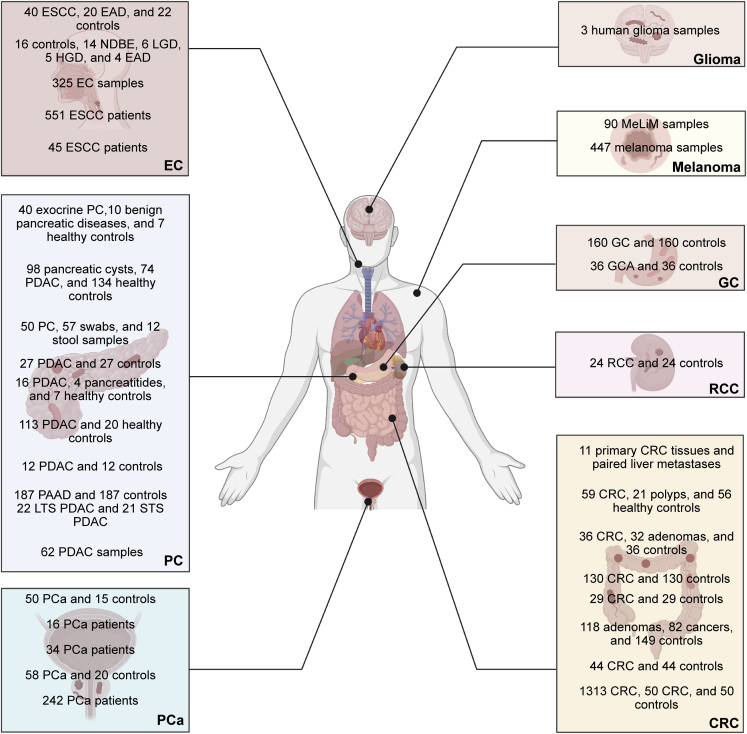
Intratumoral microbes are present in esophageal cancer (EC), pancreatic cancer (PC), prostate cancer (PCa), glioma, melanoma, gastric cancer (GC), renal cell cancer (RCC), and colorectal cancer (CRC) Each box represents a cancer type. Number of clinical samples used by different study groups to study microorganisms in tumors is presented in the box.
Figure 2
Figure 2
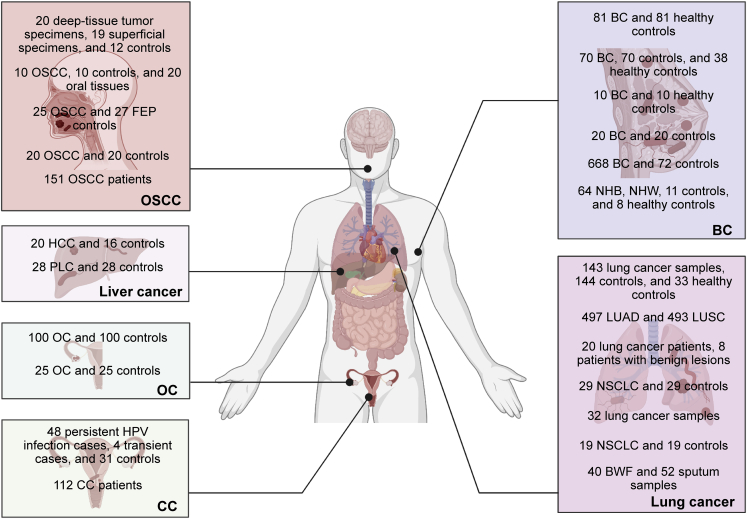
Intratumoral microbes were present in oral squamous cell carcinoma (OSCC), liver cancer, ovarian cancer (OC), cervical cancer (CC), breast cancer (BC), and lung cancer Each box represents a cancer type. Number of clinical samples used by different study groups to study microorganisms in tumors is presented in the box.
Figure 3
Figure 3
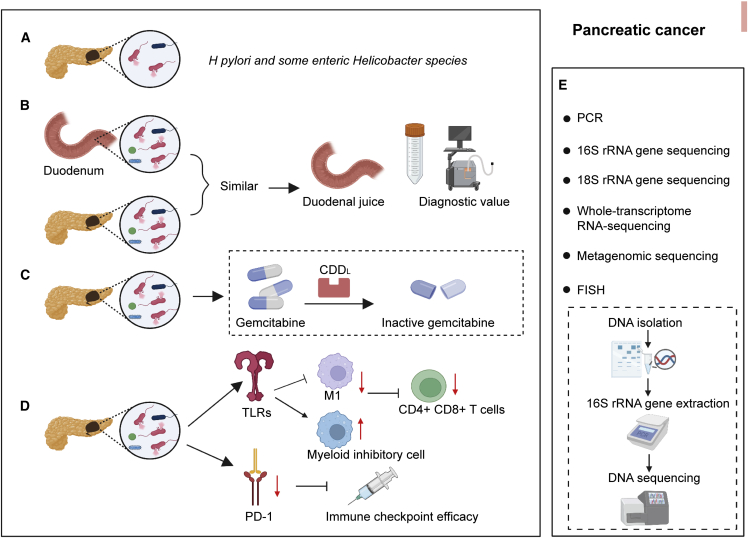
Characterization of the intratumoral microbiota in pancreatic cancer (PC) (A) Gastric H. pylori and low levels of intestinal H. pylori were detected in tissue from PC patients but not in tissue from controls. (B) Researchers believe that most intratumoral bacteria in PDAC patients result from retrograde migration from the duodenum, and the microbial composition of the two is similar. (C) PDAC contains bacteria that modulate tumor sensitivity to gemcitabine. (D) The microbiome promotes PC tumorigenesis by inducing innate and adaptive immune suppression. (E) Methods commonly used by researchers to study microbes in PC tumors.
Figure 4
Figure 4
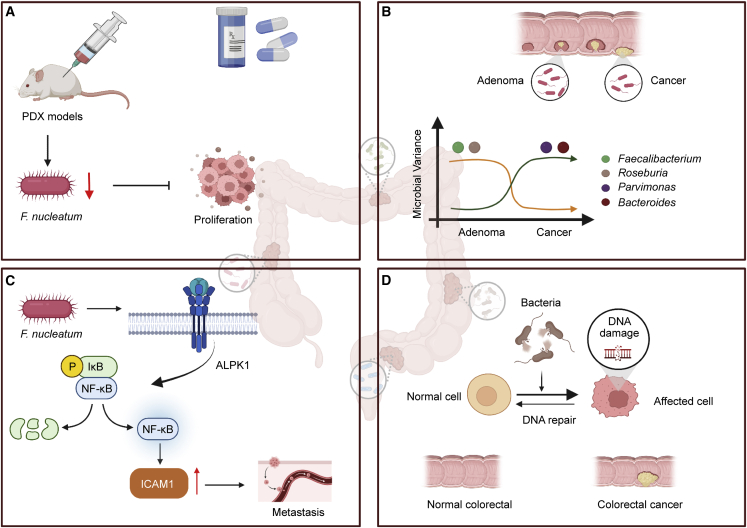
Characterization of the intratumoral microbiota in colorectal cancer (CRC) (A) Treatment of Fusobacterium-containing PDX models with metronidazole inhibited tumor growth. (B) Changes in individual microbial abundance within tumors vary along the adenoma-cancer sequence. The abundance of intratumoral variants of Bacteroides and Parvimonas increases from adenoma to carcinoma. The abundance of intratumoral variants of Faecalibacterium and Roseburia decreases from adenoma to carcinoma. (C) F. nucleatum induced ALPK1 to activate the NF-κB pathway, leading to the upregulation of ICAM1. (D) The development of CRC could be caused in part by DNA damage caused by substances released by bacterial infection.

References

    1. Crosby D., Bhatia S., Brindle K.M., Coussens L.M., Dive C., Emberton M., Esener S., Fitzgerald R.C., Gambhir S.S., Kuhn P., et al. Vol. 375. 2022. Early detection of cancer. Science. - DOI - PubMed
    1. Organization W.H. 2020. Deaths by cause, age, sex, by Country and by region, 2000-2019 (WHO) Global Health Estimates 2020.
    1. Sung H., Ferlay J., Siegel R.L., Laversanne M., Soerjomataram I., Jemal A., Bray F. Global cancer statistics 2020: GLOBOCAN Estimates of incidence and mortality worldwide for 36 cancers in 185 Countries. CA Cancer J. Clin. 2021;71:209–249. doi: 10.3322/caac.21660. - DOI - PubMed
    1. Yabroff K.R., Wu X.C., Negoita S., Stevens J., Coyle L., Zhao J., Mumphrey B.J., Jemal A., Ward K.C. Association of the COVID-19 pandemic with patterns of Statewide cancer Services. J Natl. Cancer Inst. 2022;114:907–909. doi: 10.1093/jnci/djab122. - DOI - PMC - PubMed
    1. Burd E.M. Human papillomavirus and cervical cancer. Clin. Microbiol. Rev. 2003;16:1–17. doi: 10.1128/cmr.16.1.1-17.2003. - DOI - PMC - PubMed

Publication types

LinkOut - more resources