


Alcohol Use, Screening, and Brief Intervention Among Pregnant Persons - 24 U.S. Jurisdictions, 2017 and 2019
- PMID: 36656783
- PMCID: PMC9869740
- DOI: 10.15585/mmwr.mm7203a2
Alcohol Use, Screening, and Brief Intervention Among Pregnant Persons - 24 U.S. Jurisdictions, 2017 and 2019
Abstract
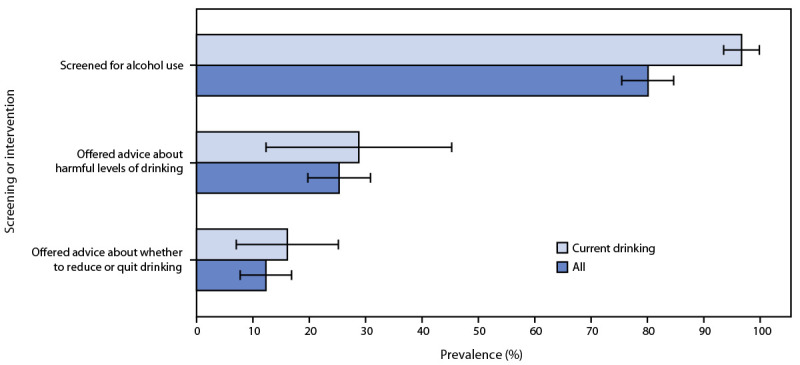
Alcohol use during pregnancy is a major preventable cause of adverse alcohol-related outcomes, including birth defects and developmental disabilities.* Alcohol screening and brief intervention (ASBI) is an evidence-based primary care tool that has been shown to prevent or reduce alcohol consumption during pregnancy; interventions have resulted in an increase in the proportion of pregnant women reporting abstinence (odds ratio = 2.26; 95% CI = 1.43-3.56) (1). Previous national estimates have not characterized ASBI in populations of pregnant persons. Using 2017 and 2019 Behavioral Risk Factor Surveillance System (BRFSS) data, CDC examined prevalence of ASBI and characteristics of pregnant persons and nonpregnant women aged 18-49 years (reproductive-aged women) residing in jurisdictions that participated in the BRFSS ASBI module. During their most recent health care visit within the past 2 years, approximately 80% of pregnant persons reported being asked about their alcohol use; however, only 16% of pregnant persons who self-reported current drinking at the time of the survey (at least one alcoholic beverage in the past 30 days) were advised by a health care provider to quit drinking or reduce their alcohol use. Further, the prevalence of screening among pregnant persons who did not graduate from high school was lower than that among those who did graduate from high school or had at least some college education. This gap between screening and brief intervention, along with disparities in screening based on educational level, indicate missed opportunities to reduce alcohol use during pregnancy. Strategies to enhance ASBI during pregnancy include integrating screenings into electronic health records, increasing reimbursement for ASBI services, developing additional tools, including electronic ASBI, that can be implemented in a variety of settings (2,3).
Conflict of interest statement
All authors have completed and submitted the International Committee of Medical Journal Editors form for disclosure of potential conflicts of interest. No potential conflicts of interest were disclosed.
Figures
References
-
- O’Connor EA, Perdue LA, Senger CA, et al. Screening and behavioral counseling interventions to reduce unhealthy alcohol use in adolescents and adults: updated evidence report and systematic review for the US Preventive Services Task Force. JAMA 2018;320:1910–28. 10.1001/jama.2018.12086 - DOI - PubMed
MeSH terms
Substances
LinkOut - more resources
Full Text Sources
Miscellaneous
