


Identification and characterization of probiotics isolated from indigenous chicken (Gallus domesticus) of Nepal
- PMID: 36656809
- PMCID: PMC9851537
- DOI: 10.1371/journal.pone.0280412
Identification and characterization of probiotics isolated from indigenous chicken (Gallus domesticus) of Nepal
Abstract
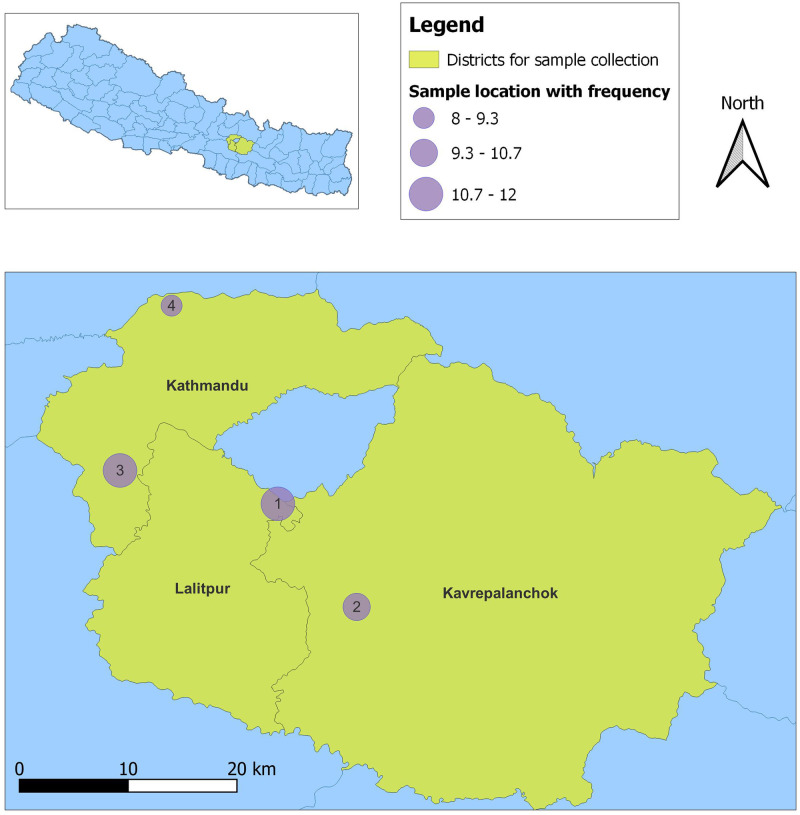
Background: Excessive and irrational use of antibiotics as growth promoters in poultry has been one of key factors contributing to increased emergence of antibiotics resistant bacteria. Several alternatives for antibiotic growth promoters are being sought, and the search for effective probiotics to be used as feed additives is amongst the promising ones. Our study aimed to isolate and test potential probiotics bacteria from cloacal swabs of various indigenous chicken (Gallus domesticus) breeds from rural outskirts of the Kathmandu valley (Nepal).
Methods: Selective isolation of probiotics was conducted by micro-aerophilic enrichment of sample in MRS Broth at 37°C, followed by culturing on MRS agar supplemented with 5 g/L of CaCO3. Isolated bacterial colonies producing transparent halo were selected as potential lactic acid bacteria (LAB), and tested for their antibacterial activity, phenotypic and biochemical characteristics, acidic yield, and tolerance to acid and bile.
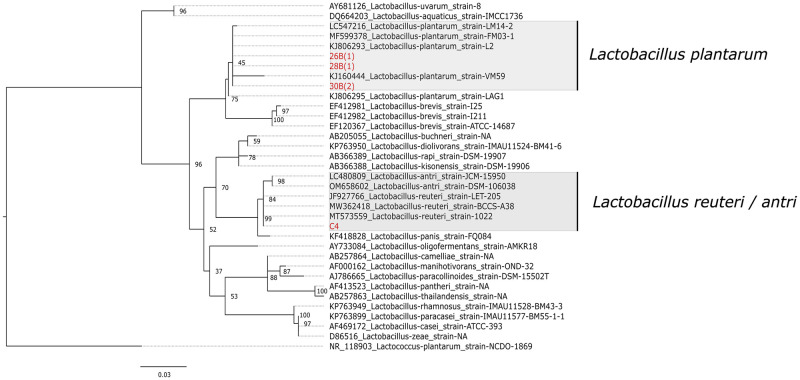
Results: A total of 90 potential LAB were isolated from cloacal samples collected from 41 free-ranging chickens of indigenous breeds. Of these, 52 LAB isolates (57%) showed variable antibacterial activity to at least one bacterial pathogen. Of 52 LAB, 46 isolates fulfilled phenotypic and biochemical criteria of Lactobacillus spp. Of these, 37 isolates produced varying percentage yields of lactic acid, 27 isolates showed survival at pH 3.0, and 17 isolates showed survival tolerances in the presence of 0.3% and 0.5% bile salts for 24 hours. Phylogenetic analysis of 16S rDNA sequencing of LAB isolates fulfilling in vitro probiotics properties showed that 3 isolates had genetic identity of 99.38% with Lactobacillus plantarum, while one isolate was genetically similar (99.85%) with the clade of L. reuteri, L. antri and L. panis.
Conclusion: Our study identified four Lactobacillus spp. strains having potential probiotics properties. Further investigations are needed to evaluate these isolates to be used as poultry probiotics feed supplement.
Copyright: © 2023 Gupta et al. This is an open access article distributed under the terms of the Creative Commons Attribution License, which permits unrestricted use, distribution, and reproduction in any medium, provided the original author and source are credited.
Conflict of interest statement
The authors have declared that no competing interests exist.
Figures
References
-
- FAO. Probiotics in animal nutrition: production, impact and regulation. Bajagai YS, Klieve AV, Dart PJ, Bryden WL, editors. Rome: FAO Animal Production and Health; 2016.
-
- Jensen HA, editor. Paradigm and visions: network for poultry production and health in developing countries. Proceedings of a Workshop on Poultry as a tool in poverty eradication and promotion of gender equality, Tune Landboskole, Denmark; 1999.
Publication types
MeSH terms
Substances
LinkOut - more resources
Full Text Sources
Miscellaneous
