


Association of cerebrospinal fluid brain-binding autoantibodies with cognitive impairment in post-COVID-19 syndrome
- PMID: 36657623
- PMCID: PMC9841734
- DOI: 10.1016/j.bbi.2023.01.006
Association of cerebrospinal fluid brain-binding autoantibodies with cognitive impairment in post-COVID-19 syndrome
Abstract
Background: Neurological symptoms, in particular cognitive deficits, are common in post-COVID-19 syndrome (PCS). There is no approved therapy available, and the underlying disease mechanisms are largely unknown. Besides others, autoimmune processes may play a key role.
Design: We here present data of a prospective study conducted between September 2020 and December 2021 and performed at two German University hospitals with specialized Neurology outpatient clinics. Fifty patients with self-reported cognitive deficits as main complaint of PCS and available serum and CSF samples were included. Cell-based assays and indirect immunofluorescence on murine brain sections were used to detect autoantibodies against intracellular and surface antigens in serum and CSF and analyzed for associations with cognitive screening assessment.
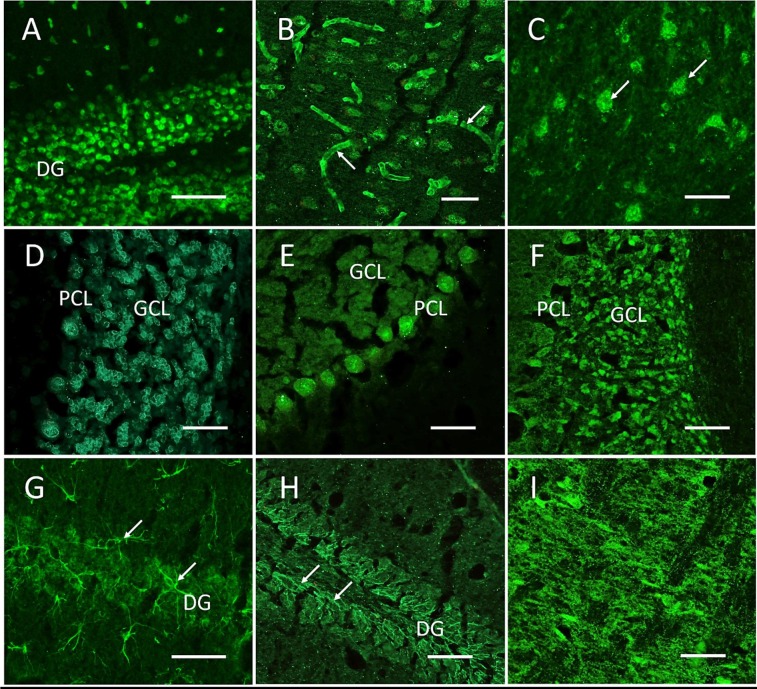
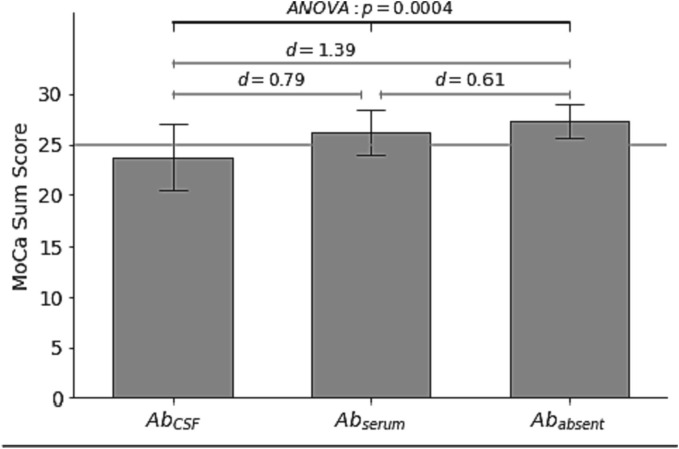
Results: Clearly abnormal cognitive status (MoCA ≤ 25/30 points) was only seen in 18/50 patients with self-reported cognitive deficits. Most patients (46/50) had normal routine CSF parameters. anti-neuronal autoantibodies were found in 52 % of all patients: n = 9 in serum only, n = 3 in CSF only and n = 14 in both, including those against myelin, Yo, Ma2/Ta, GAD65 and NMDA receptor, but also a variety of undetermined epitopes on brain sections. These included cerebral vessel endothelium, Purkinje neurons, granule cells, axon initial segments, astrocytic proteins and neuropil of basal ganglia or hippocampus as well as a formerly unknown perinuclear rim pattern. Pathological MoCA results were associated with the presence of anti-neuronal antibodies in CSF (p = 0.0004).
Conclusions: Autoantibodies targeting brain epitopes are common in PCS patients and strongly associate with pathological cognitive screening tests, in particular when found in CSF. Several underlying autoantigens still await experimental identification. Further research is needed to inform on the clinical relevance of these autoantibodies, including controlled studies that explore the potential efficacy of antibody-depleting immunotherapy in PCS.
Keywords: Autoantibody; CSF; Neurocognitive disorder; Neurology; Post-COVID-19.
Copyright © 2023 The Authors. Published by Elsevier Inc. All rights reserved.
Conflict of interest statement
Declaration of Competing Interest The authors declare that they have no known competing financial interests or personal relationships that could have appeared to influence the work reported in this paper.
Figures
References
MeSH terms
Substances
LinkOut - more resources
Full Text Sources
Medical
