


Effects of opium use on one-year major adverse cardiovascular events (MACE) in the patients with ST-segment elevation MI undergoing primary PCI: a propensity score matched - machine learning based study
- PMID: 36658513
- PMCID: PMC9854103
- DOI: 10.1186/s12906-023-03833-z
Effects of opium use on one-year major adverse cardiovascular events (MACE) in the patients with ST-segment elevation MI undergoing primary PCI: a propensity score matched - machine learning based study
Abstract
Background: Considerable number of people still use opium worldwide and many believe in opium's health benefits. However, several studies proved the detrimental effects of opium on the body, especially the cardiovascular system. Herein, we aimed to provide the first evidence regarding the effects of opium use on one-year major adverse cardiovascular events (MACE) in the patients with ST-elevation MI (STEMI) who underwent primary PCI.
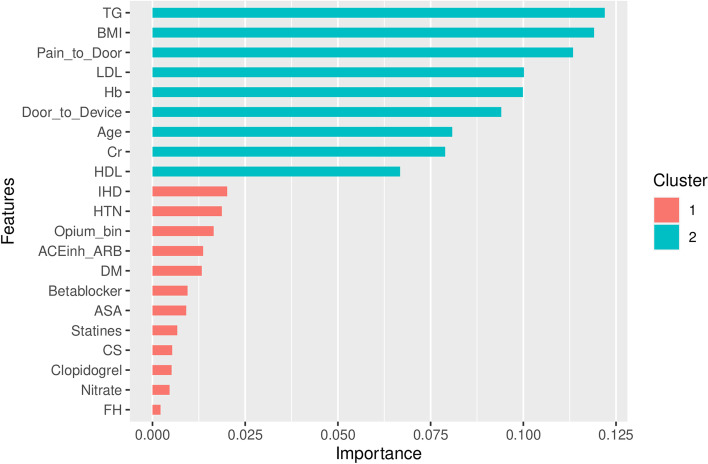
Methods: We performed a propensity score matching of 2:1 (controls: opium users) that yielded 518 opium users and 1036 controls. Then, we performed conventional statistical and machine learning analyses on these matched cohorts. Regarding the conventional analysis, we performed multivariate analysis for hazard ratio (HR) of different variables and MACE and plotted Kaplan Meier curves. In the machine learning section, we used two tree-based ensemble algorithms, Survival Random Forest and XGboost for survival analysis. Variable importance (VIMP), tree minimal depth, and variable hunting were used to identify the importance of opium among other variables.
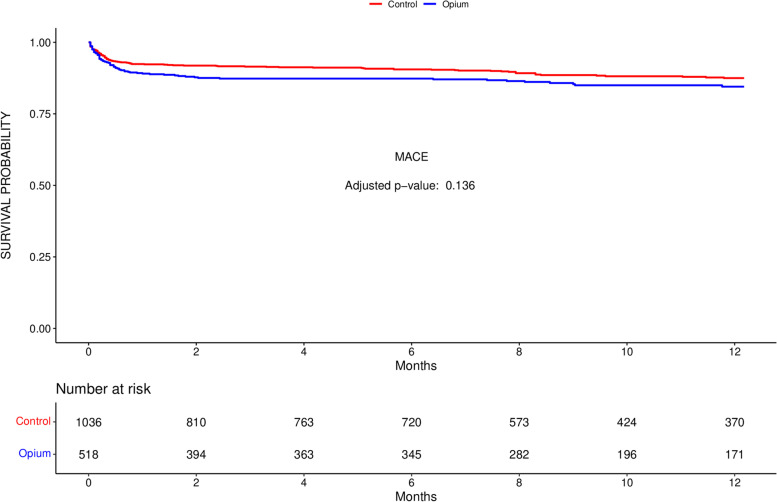
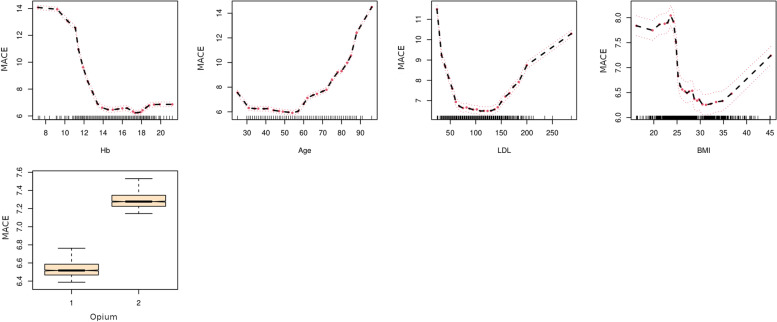
Results: Opium users experienced more one-year MACE than their counterparts, although it did not reach statistical significance (Opium: 72/518 (13.9%), Control: 112/1036 (10.8%), HR: 1.27 (95% CI: 0.94-1.71), adjusted p-value = 0.136). Survival random forest algorithm ranked opium use as 13th, 13th, and 12th among 26 variables, in variable importance, minimal depth, and variable hunting, respectively. XGboost revealed opium use as the 12th important variable. Partial dependence plot demonstrated that opium users had more one-year MACE compared to non-opium-users.
Conclusions: Opium had no protective effects on one-year MACE after primary PCI on patients with STEMI. Machine learning and one-year MACE analysis revealed some evidence of its possible detrimental effects, although the evidence was not strong and significant. As we observed no strong evidence on protective or detrimental effects of opium, future STEMI guidelines may provide similar strategies for opium and non-opium users, pending the results of forthcoming studies. Governments should increase the public awareness regarding the evidence for non-beneficial or detrimental effects of opium on various diseases, including the outcomes of primary PCI, to dissuade many users from relying on false beliefs about opium's benefits to continue its consumption.
Keywords: Machine learning; Major adverse cardiovascular events; Mortality,Myocardial infarction; Opium; Percutaneous coronary intervention.
© 2023. The Author(s).
Conflict of interest statement
The authors declare that they have no competing interests.
Figures




References
-
- Amin-Esmaeili M, Rahimi-Movaghar A, Sharifi V, Hajebi A, Radgoodarzi R, Mojtabai R, et al. Epidemiology of illicit drug use disorders in Iran: prevalence, correlates, comorbidity and service utilization results from the Iranian mental health survey. Addiction. 2016;111(10):1836–1847. doi: 10.1111/add.13453. - DOI - PubMed
-
- United Nations Office on Drugs and Crime (UNODC), World Drug Report 2021, accessed September 7, 2021 [available online at: https://www.unodc.org/unodc/en/data-and-analysis/wdr2021.html].
MeSH terms
LinkOut - more resources
Full Text Sources
Research Materials
Miscellaneous
