


The emotional journey of neuro-oncology: Primary brain tumor patients share their experience during this life-threatening disease
- PMID: 36659970
- PMCID: PMC9837771
- DOI: 10.1093/nop/npac067
The emotional journey of neuro-oncology: Primary brain tumor patients share their experience during this life-threatening disease
Abstract
Background: To achieve patient-centric quality care in neuro-oncology, all aspects of the disease and its impact on quality survival need to be considered. This includes the psychological consequences of a brain tumor diagnosis and subsequent life-altering experiences. Far too often the voice of our patients is unheard. Empowering patients to advocate for their own psychological needs is essential.
Methods: Data were derived from four focus groups with adult patients with brain tumors (N = 15; M age = 46 years, 53% female). A trained moderator led each 90-min group and posed semi-structured questions regarding patients' care needs throughout their neuro-oncological disease trajectory. Emphasis was placed on the quality of life and distress reduction. Common themes were identified via thematic content analysis using NVivo software. A high inter-rater reliability (M kappa = 0.92, range = 0.85-0.93) was achieved. Two themes are presented here: Emotional Response to Stressors and Existential Considerations.
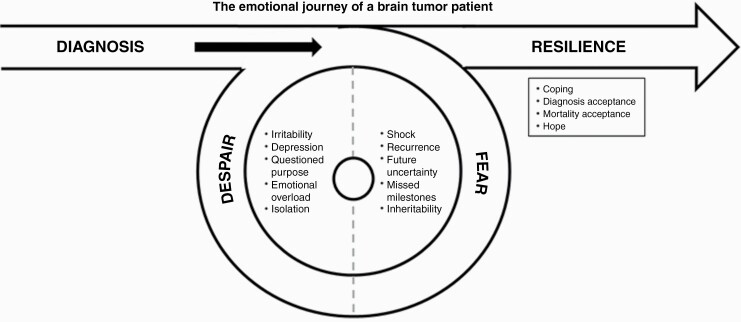
Results: Of the two themes presented, 14 codes emerged. Codes were classified into three broad categories: Fear, Despair, and Resilience. The frequency of each category ranged from 31.4% to 34.7%. Example quotes and a discussion of each category follows.
Conclusions: It is imperative that we include the patient perspective in the development of neuro-oncology programs, thereby considering the quality of survival in addition to quantity. Neuro-oncology quality care must be driven by our patients' experiences and should integrate support for emotional distress while promoting resilience throughout this life-threatening illness.
Keywords: brain tumor; despair; fear; quality of life; resilience.
© The Author(s) 2022. Published by Oxford University Press on behalf of the Society for Neuro-Oncology and the European Association of Neuro-Oncology. All rights reserved. For permissions, please e-mail: journals.permissions@oup.com.
Figures
References
-
- Fox SW, Lyon D, Farace E. Symptom clusters in patients with high-grade glioma. J Nurs Scholarsh. 2007;39(1):61–67. - PubMed
-
- Litofsky NS, Farace E, Anderson F, et al. Depression in patients with high-grade glioma: results of the glioma outcomes project. Neurosurgery. 2004;54(2):358–66; discussion 366. - PubMed
-
- Kilbride L, Smith G, Grant R. The frequency and cause of anxiety and depression amongst patients with malignant brain tumours between surgery and radiotherapy. J Neurooncol. 2007;84(3):297–304. - PubMed
-
- Loughan AR, Husain M, Ravyts SG, et al. Death anxiety in patients with primary brain tumor: Measurement, prevalence, and determinants. Palliat Support Care. 2021;19(6):672–680. - PubMed
