


Elderly with Varying Extents of Cardiac Disease Show Interindividual Fluctuating Myocardial TRPC6-Immunoreactivity
- PMID: 36661921
- PMCID: PMC9861266
- DOI: 10.3390/jcdd10010026
Elderly with Varying Extents of Cardiac Disease Show Interindividual Fluctuating Myocardial TRPC6-Immunoreactivity
Abstract
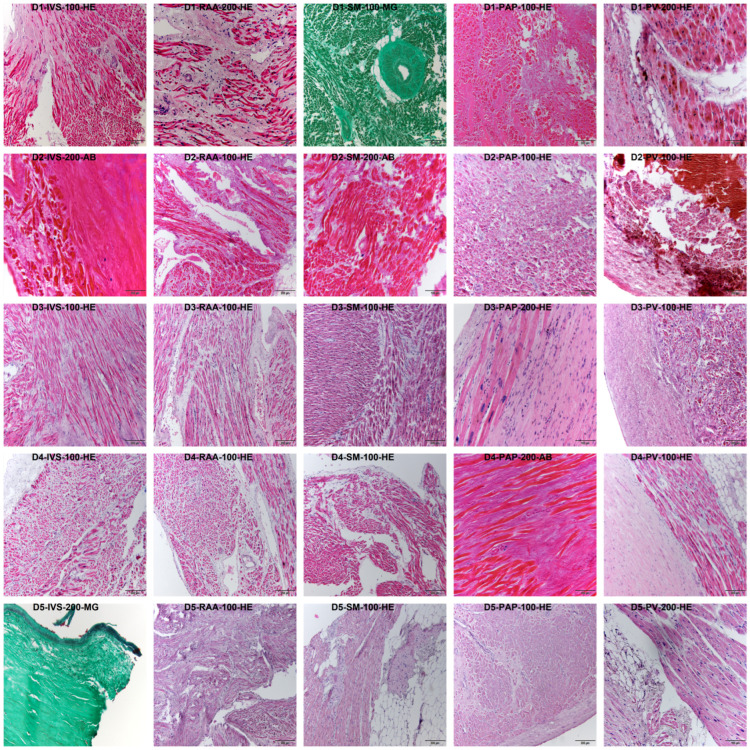
Both particular myocardial locations in the human heart and the canonical transient receptor potential 6 (TRPC6) cation channel have been linked with cardiac pathophysiologies. Thus, the present study mapped TRPC6-protein distribution in select anatomic locations associated with cardiac disease in the context of an orienting pathological assessment. Specimens were obtained from 5 body donors (4 formalin fixation, 1 nitrite pickling salt-ethanol-polyethylene glycol (NEP) fixation; median age 81 years; 2 females) and procured for basic histological stains and TRPC6-immunohistochemistry. The latter was analyzed descriptively regarding distribution and intensity of positive signals. The percentage of positively labelled myocardium was also determined (optical threshold method). Exclusively exploratory statistical analyses were performed. TRPC6-protein was distributed widespread and homogenously within each analyzed sample. TRPC6-immunoreactive myocardial area was comparable regarding the different anatomic regions and sex. A significantly larger area of TRPC6-immunoreactive myocardium was found in the NEP-fixed donor compared to the formalin fixed donors. Two donors with more severe heart disease showed smaller areas of myocardial TRPC6-immunoreactivity overall compared to the other 3 donors. In summary, in the elderly, TRPC6-protein is widely and homogenously distributed, and severe cardiac disease might be associated with less TRPC6-immunoreactive myocardial area. The tissue fixation method represents a potential confounder.
Keywords: TRPC6; heart; heart disease; histology; immunohistochemistry; morphology.
Conflict of interest statement
The authors declare no conflict of interest.
Figures


References
-
- Kinoshita H., Kuwahara K., Nishida M., Jian Z., Rong X., Kiyonaka S., Kuwabara Y., Kurose H., Inoue R., Mori Y., et al. Inhibition of TRPC6 channel activity contributes to the antihypertrophic effects of natriuretic peptides-guanylyl cyclase-A signaling in the heart. Circ. Res. 2010;106:1849–1860. doi: 10.1161/CIRCRESAHA.109.208314. - DOI - PubMed
Grants and funding
LinkOut - more resources
Full Text Sources
