


Origins of genome-editing excisases as illuminated by the somatic genome of the ciliate Blepharisma
- PMID: 36669098
- PMCID: PMC9942806
- DOI: 10.1073/pnas.2213887120
Origins of genome-editing excisases as illuminated by the somatic genome of the ciliate Blepharisma
Abstract
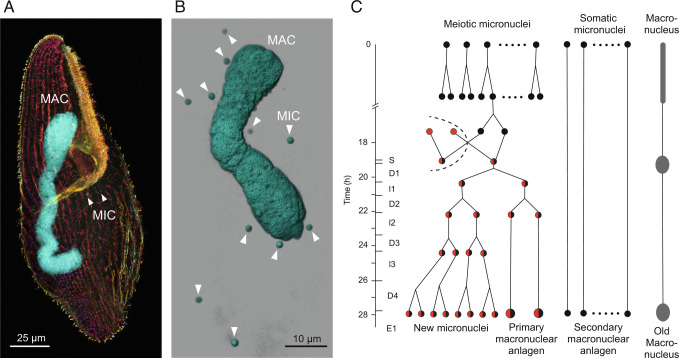
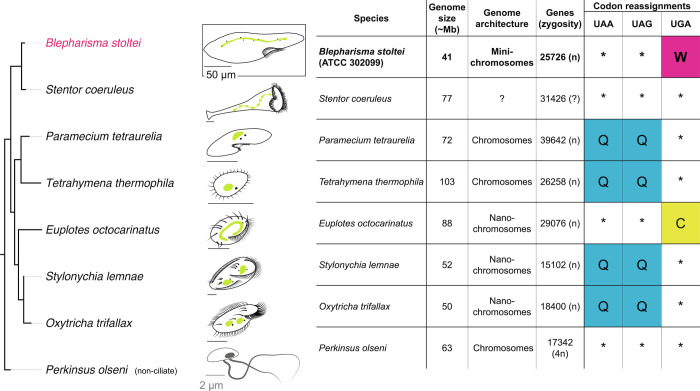
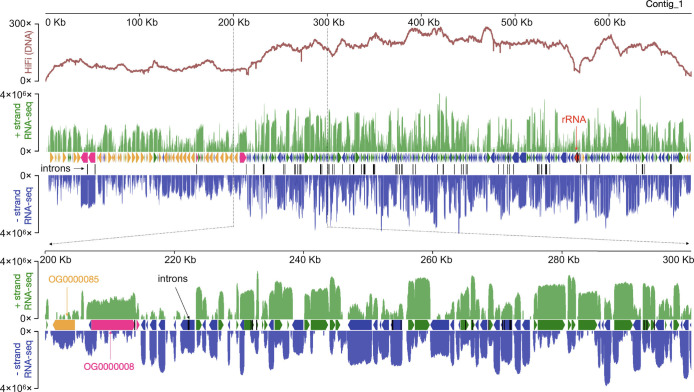
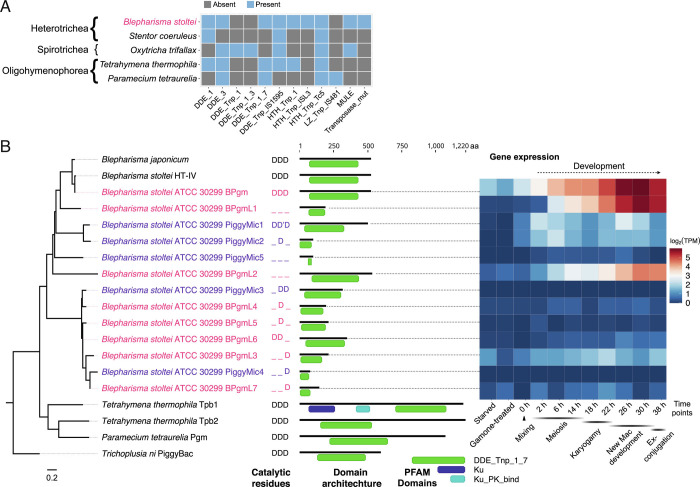
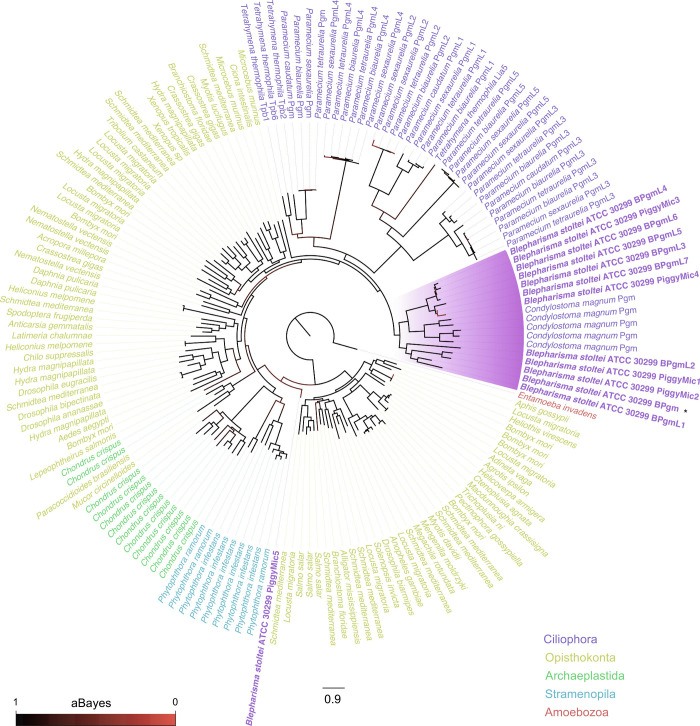
Massive DNA excision occurs regularly in ciliates, ubiquitous microbial eukaryotes with somatic and germline nuclei in the same cell. Tens of thousands of internally eliminated sequences (IESs) scattered throughout the ciliate germline genome are deleted during the development of the streamlined somatic genome. The genus Blepharisma represents one of the two high-level ciliate clades (subphylum Postciliodesmatophora) and, unusually, has dual pathways of somatic nuclear and genome development. This makes it ideal for investigating the functioning and evolution of these processes. Here we report the somatic genome assembly of Blepharisma stoltei strain ATCC 30299 (41 Mbp), arranged as numerous telomere-capped minichromosomal isoforms. This genome encodes eight PiggyBac transposase homologs no longer harbored by transposons. All appear subject to purifying selection, but just one, the putative IES excisase, has a complete catalytic triad. We hypothesize that PiggyBac homologs were ancestral excisases that enabled the evolution of extensive natural genome editing.
Keywords: PiggyBac; PiggyMac; natural genome editing; transposase; transposon.
Conflict of interest statement
The authors declare no competing interest.
Figures
References
-
- Swart E. C., Nowacki M., The eukaryotic way to defend and edit genomes by sRNA-targeted DNA deletion. Ann. N. Y. Acad. Sci. 1341, 106–114 (2015). - PubMed
Publication types
MeSH terms
Substances
Grants and funding
LinkOut - more resources
Full Text Sources
Molecular Biology Databases
Miscellaneous
