


Dietary Acrylamide Exposure and Cancer Risk: A Systematic Approach to Human Epidemiological Studies
- PMID: 36673439
- PMCID: PMC9858116
- DOI: 10.3390/foods12020346
Dietary Acrylamide Exposure and Cancer Risk: A Systematic Approach to Human Epidemiological Studies
Abstract
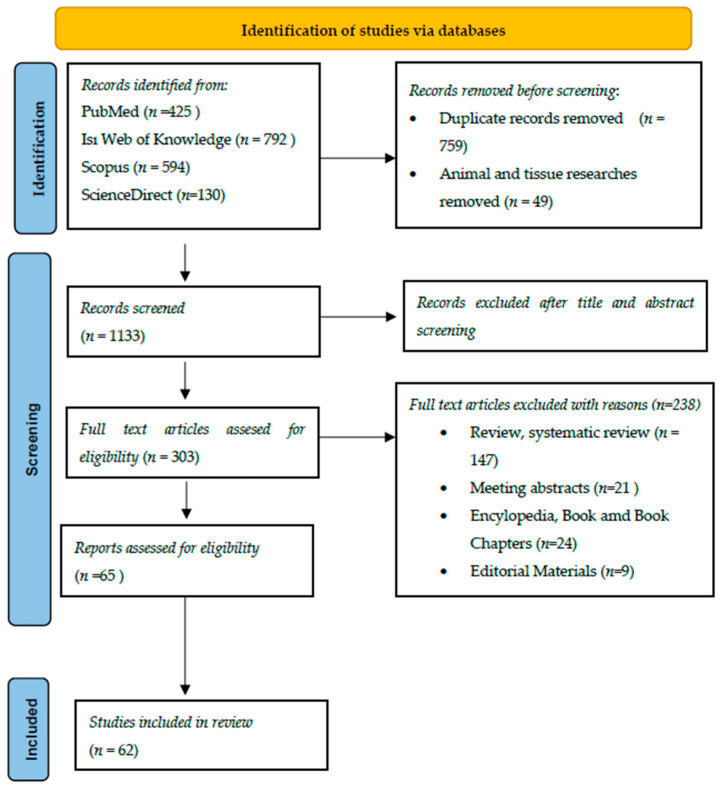
Acrylamide, identified by the International Cancer Research Center as a possible carcinogenic compound to humans, is a contaminant formed as a result of the thermal process in many foods, such as coffee, French fries, biscuits and bread, which are frequently consumed by individuals in their daily lives. The biggest concern about acrylamide is that the health risks have not yet been fully elucidated. For this reason, many studies have been carried out on acrylamide in the food, nutrition and health equation. This study focused on epidemiological studies examining the associations between dietary acrylamide exposure and cancer risk. For this purpose, articles published in PubMed, Isı Web of Knowledge, Scopus and Science Direct databases between January 2002 and April 2022 were systematically examined using various keywords, and a total of 63 articles were included in the study. Although some studies on reproductive, urinary, gastrointestinal, respiratory and other systems and organs stated that there is a positive relationship between dietary acrylamide exposure and cancer risk, many publications did not disclose a relationship in this direction. Studies examining the relationship between dietary acrylamide exposure and cancer should be planned to include more people and foods in order to obtain more reliable results. Making research plans in this way is very important in terms of guiding health policies to be formed in the future.
Keywords: acrylamide; cancer; dietary exposure; human cancer.
Conflict of interest statement
The authors declare that there are no conflict of interest.
References
-
- International Programme on Chemical Safety (IPCS) Acrylamide. 2018. [(accessed on 3 October 2022)]. Available online: http://www.inchem.org/documents/pims/chemical/pim652.htm#PartTitle:1.%20....
-
- National Institutes of Health (NIH) Acrylamid. [(accessed on 6 November 2022)];2018 Available online: https://pubchem.ncbi.nlm.nih.gov/compound/acrylamide#section=Top.
Publication types
LinkOut - more resources
Full Text Sources
Miscellaneous
