


Eating Behaviors, Lifestyle, and Ischemic Stroke: A Lebanese Case-Control Study
- PMID: 36674240
- PMCID: PMC9864864
- DOI: 10.3390/ijerph20021487
Eating Behaviors, Lifestyle, and Ischemic Stroke: A Lebanese Case-Control Study
Abstract
Background: Stroke is the second leading cause of death and the third leading cause of disability on a global scale. Most clinicians tend to underestimate the importance of diet and inadequate or dysfunctional eating attitudes in patients with a complicated relationship with food. Concerned about the potential of an independent Lebanese approach, and also because prior international research has revealed a link between eating intake or choice and ischemic stroke risk, it was considered vital to broaden the scope of the literature and evaluate further the association of disordered eating attitudes and focus on the distinct relationship with food in the case of orthorexia nervosa (ON) in the Lebanese community. Consequently, the purpose of the present study is to investigate the potential association between pre-existing disordered eating attitudes, specifically ON, and ischemic stroke risk, with an emphasis on the evidence supporting a Mediterranean-style diet.
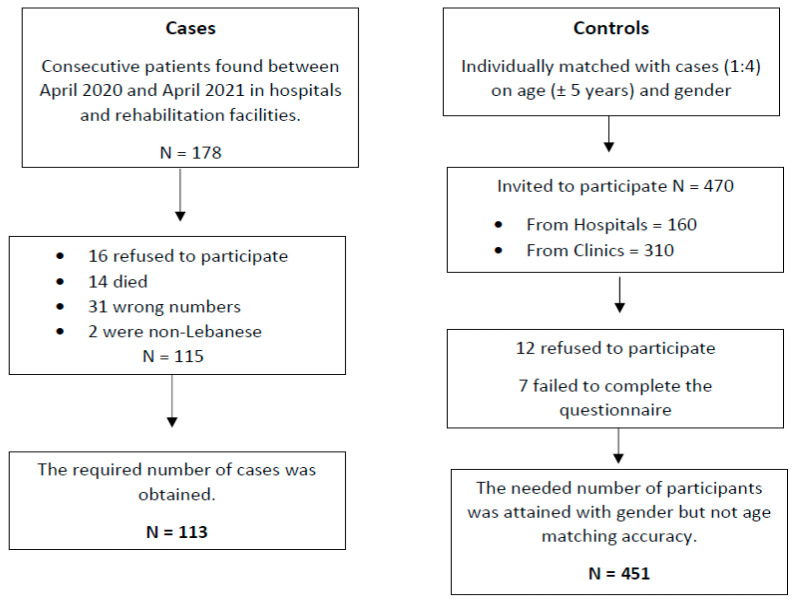
Methods: This research is a case-control survey study involving 113 Lebanese individuals with ischemic stroke and 451 age-(within 5 years) and sex-matched controls recruited from several hospitals in Lebanon (April 2020-April 2021).
Results: According to the findings of our first regression model, living 100 m from a crowded road (adjusted odds ratio [aOR]: 3.421, 95% confidence interval [CI]: 1.585-7.387), living 100 m from an electricity generator (aOR: 3.686, 95% CI: 1.681-8.085), higher waterpipe dependence (aOR: 1.204, 95% CI: 1.117-1.297), higher exposure to passive smoking (aOR: 2.651, 95% CI: 2.051-3.426), being married (aOR: 3.545, 95% CI: 1.297-9.689), having a low educational attainment (aOR: 0.239, 95% CI: 0.084-0.679), vigorous physical activity (aOR: 1.003, 95% CI: 1.001-1.006), and having more inappropriate eating (aOR: 1.040, 95% CI: 1.006-1.074) were all associated with higher odds of having ischemic stroke. Furthermore, atrial fibrillation (aOR: 2.945, 95% CI: 1.010-8.585), diabetes (aOR: 2.550, 95% CI: 1.169-5.561), heart diseases (aOR: 6.193, 95% CI: 2.196-17.463), and hypertension (aOR: 2.744, 95% CI: 1.049-7.180) were also linked to an increased risk of stroke. Moreover, having more orthorexia nervosa tendencies (aOR: 1.123, 95% CI: 1.021-1.235) was related to a higher odds of having an ischemic stroke, whereas better adherence to the MeD was significantly linked (aOR: 0.691, 95% CI: 0.583-0.819) to lower odds of ischemic stroke.
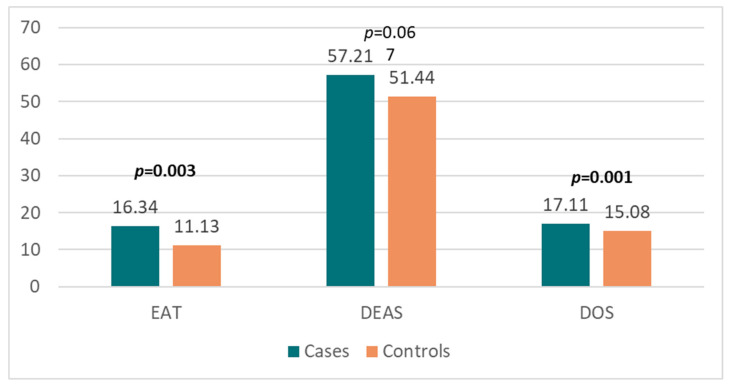
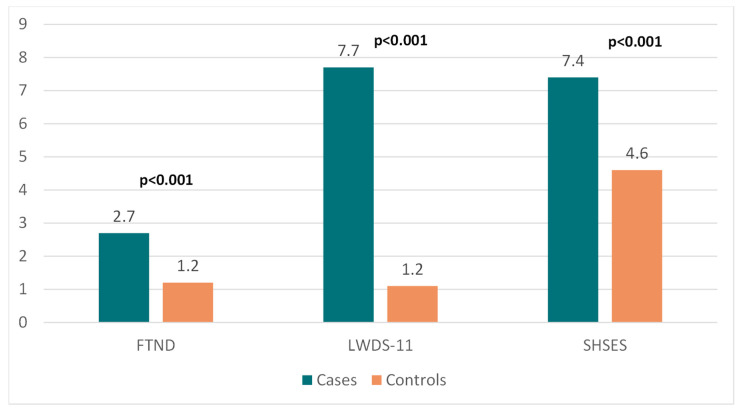
Conclusions: Ischemic stroke patients were more likely to have disordered eating attitudes and orthorexic behaviors. Furthermore, the MeD has been found to be beneficial in reducing ischemic stroke risk. Despite the study's focus, outdoor pollution, waterpipe dependence, and passive smoking were linked to ischemic stroke. In summary, this review suggests that improving one's nutritional status and making a few lifestyle changes are key stroke prevention and treatment methods.
Keywords: Mediterranean diet; eating behaviors; ischemic stroke; lifestyle; orthorexia nervosa.
Conflict of interest statement
The authors declare no conflict of interest.
Figures
References
-
- O’Donnell M.J., Xavier D., Liu L., Zhang H., Chin S.L., Rao-Melacini P., Rangarajan S., Islam S., Pais P., McQueen M.J., et al. Risk factors for ischaemic and intracerebral haemorrhagic stroke in 22 countries (the INTERSTROKE study): A case-control study. Lancet. 2010;376:112–123. doi: 10.1016/S0140-6736(10)60834-3. - DOI - PubMed
Publication types
MeSH terms
Substances
LinkOut - more resources
Full Text Sources
Medical
Miscellaneous
