Review
. 2023 Jan 6;15(1):204.
doi: 10.3390/pharmaceutics15010204.

Exploring the Potential of Cannabinoid Nanodelivery Systems for CNS Disorders

Affiliations
Review

Exploring the Potential of Cannabinoid Nanodelivery Systems for CNS Disorders

Mariana Kolesarova et al. Pharmaceutics. .

Abstract

Cannabinoids have a major therapeutic value in a variety of disorders. The concepts of cannabinoids are difficult to develop, but they can be used and are advantageous for a number of diseases that are not sufficiently managed by existing treatments. Nanoconjugation and encapsulation techniques have been shown to be effective in improving the delivery and the therapeutic effectiveness of drugs that are poorly soluble in water. Because the bioavailability of cannabinoids is low, the challenge is to explore different administration methods to improve their effectiveness. Because cannabinoids cross the blood-brain-barrier (BBB), they modify the negative effects of inflammatory processes on the BBB and may be a key factor in the improvement of BBB function after ischemic disease or other conditions. This review discusses various types of cannabinoid administration, as well as nanotechnologies used to improve the bioavailability of these compounds in CNS diseases.

Keywords: CBD; THC; brain; cannabinoids; endocannabinoid system; lipids; nanoparticles; neurodegenerative diseases; targeted delivery.


Conflict of interest statement

The authors declare no conflict of interest.

Figures
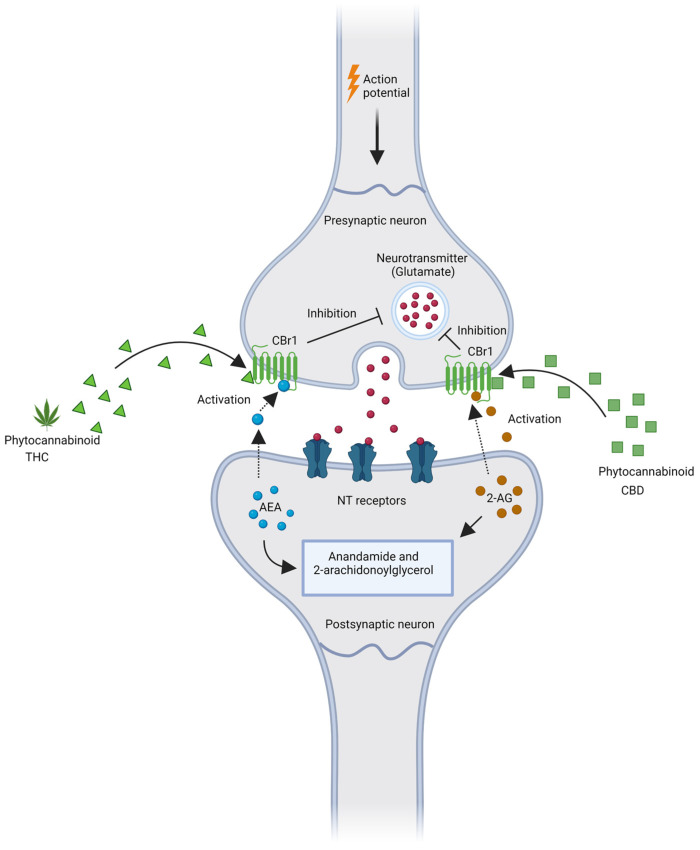
Figure 1
Figure 1
Simplified scheme of the basic modulation of the endocannabinoid system by phytocannabinoids (CBD and THC). The main mechanism by which endocannabinoids regulate synaptic function is retrograde signaling [37]. Once released from the postsynaptic neuron, endocannabinoids bind to CBr1 located on the presynaptic membrane to inhibit the release of neurotransmitters. Endocannabinoids are removed from the synaptic junction after CBr1 activation via cellular transport followed by hydrolysis. AEA is hydrolyzed in postsynaptic neurons by fatty acid amide hydrolase (FAAH), terminating its action. After CBr1 activation, 2-AG is hydrolyzed in presynaptic neurons by monoacylglycerol lipase (MAGL). This retrograde signaling provides an inhibitory feedback mechanism to regulate neurotransmitter release in the brain. [38,39]. NT- neurotransmitter receptor. Created with BioRender.com, accessed on 28 November 2022.
Figure 2
Figure 2
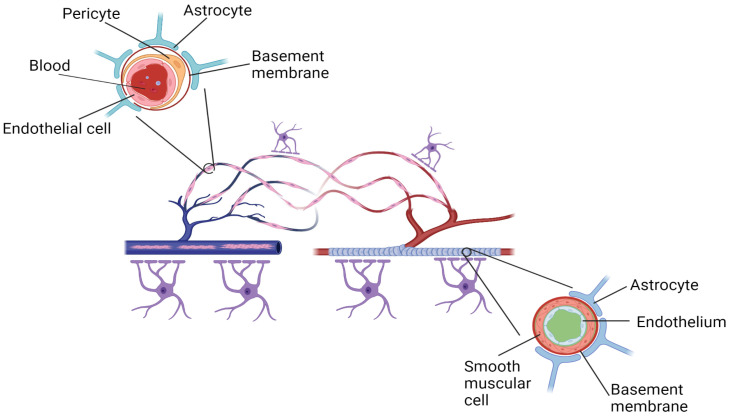
The neurovascular unit (upper part of the image) represents an interactive network of vascular cells (pericytes and endothelial cells), glia (astrocytes and microglia), and neurons. The blood-brain barrier is centrally positioned within the neurovascular unit and is formed by a monolayer of endothelial cells extending along the vascular tree. Created with BioRender.com, accessed on 28 November 2022.

References

    1. Zvonarev V., Fatuki T.A., Tregubenko P. The Public Health Concerns of Marijuana Legalization: An Overview of Current Trends. Cureus. 2019;11:e5806. doi: 10.7759/cureus.5806. - DOI - PMC - PubMed
    1. Manthey J., Freeman T.P., Kilian C., López-Pelayo H., Rehm J. Public health monitoring of cannabis use in Europe: Prevalence of use, cannabis potency, and treatment rates. Lancet Reg. Health–Eur. 2021;10:100227. doi: 10.1016/j.lanepe.2021.100227. - DOI - PMC - PubMed
    1. Rupasinghe H.P.V., Davis A., Kumar S.K., Murray B., Zheljazkov V.D. Industrial Hemp (Cannabis sativa subsp. sativa) as an Emerging Source for Value-Added Functional Food Ingredients and Nutraceuticals. Molecules. 2020;25:4078. doi: 10.3390/molecules25184078. - DOI - PMC - PubMed
    1. Calapai F., Cardia L., Sorbara E.E., Navarra M., Gangemi S., Calapai G., Mannucci C. Cannabinoids, Blood-Brain Barrier, and Brain Disposition. Pharmaceutics. 2020;12:265. doi: 10.3390/pharmaceutics12030265. - DOI - PMC - PubMed
    1. Chandra S., Radwan M.M., Majumdar C.G., Church J.C., Freeman T.P., ElSohly M.A. New trends in cannabis potency in USA and Europe during the last decade (2008–2017) Eur. Arch. Psychiatry Clin. Neurosci. 2019;269:5–15. doi: 10.1007/s00406-019-00983-5. - DOI - PubMed

LinkOut - more resources