. 2023 Jan 21;9(1):17.
doi: 10.1038/s41420-023-01336-x.

Cancer-associated fibroblast-secreted IGFBP7 promotes gastric cancer by enhancing tumor associated macrophage infiltration via FGF2/FGFR1/PI3K/AKT axis

Affiliations

Cancer-associated fibroblast-secreted IGFBP7 promotes gastric cancer by enhancing tumor associated macrophage infiltration via FGF2/FGFR1/PI3K/AKT axis

Dandan Li et al. Cell Death Discov. .

Abstract

We previously reported that IGFBP7 plays a role in maintaining mRNA stability of oncogenic lncRNA UBE2CP3 by RNA-RNA interaction in gastric cancer (GC). Clinical cohort studies had implied an oncogenic role of IGFBP7 in GC. However, the molecular mechanism of IGFBP7 in GC progression remains unknown. In this study, clinical analysis based on two independent cohorts showed that IGFBP7 was positively associated with poor prognosis and macrophage infiltration in GC. Loss-of-function studies confirmed the oncogenic properties of IGFBP7 in regulating GC cell proliferation and invasion. Mechanismly, IGFBP7 was highly expressed in cancer-associated fibroblasts (CAF) and mesenchymal cells, and was induced by epithelial-to-mesenchymal transition (EMT) signaling, since its expression was increased by TGF-beta treatment and reduced by overexpression of OVOL2 in GC. RNA sequencing, qRT-PCR, ELISA assay showed that IGFBP7 positively regulated FGF2 expression and secretion in GC. Transcriptome analysis revealed that FGFR1 was downregulated in M1 polarization but upregulated in M2 polarization. Exogenous recombinant IGFBP7 treatment in macrophages and GC cells further identified that IGFBP7 promotes tumor associated macrophage (TAM) polarization via FGF2/FGFR1/PI3K/AKT axis. Our finding here represented the first evidence that IGFBP7 promotes GC by enhancing TAM/M2 macrophage polarization through FGF2/FGFR1/PI3K/AKT axis.


Conflict of interest statement

The authors declare no competing interests.

Figures

Fig. 1
Fig. 1. The prognostic significance of IGFBP7 in GC was analyzed in TCGA cohort.
A IGFBP7 expression in 27 paired GC samples in TCGA_STAD datasets. B IGFBP7 was overexpressed in GC. C The expression difference of IGFBP7 in intestinal and diffuse GC. D IGFBP7 expression was positively correlated with poor differentiation of GC. EH The expression level of IGFBP7 in GC tissues with different TNM stages and pathologic stages. I The expression difference of IGFBP7 in GC patients with/without H. pylori infection. J GC patients with Barrett’s esophagus possessed relatively low expression of IGFBP7. K, L The overall-survival and disease-free survival analysis of IGFBP7 in GC. **P < 0.01.
Fig. 2
Fig. 2. The clinical value of IGFBP7 was analyzed in ACRG cohort.
A The expression difference of IGFBP7 in intestinal and diffuse GC. B The expression difference of IGFBP7 between GC patients with/without perineural invasion. C, D The expression difference of IGFBP7 in GC patients with different pathologic stages or Borrmann stages. EG The expression level of IGFBP7 in GC tissues with different TNM stages. H The expression difference of IGFBP7 between GC patients with pylorus-sparing radical gastrectomy (STG) operation or total gastrectomy (TG) operation. I, J The overall-survival and disease-free survival analysis of IGFBP7 in GC. K The expression difference of IGFBP7 between GC patients with/without MLH1 expression. L The expression difference of IGFBP7 between GC patients over 55 years old and patients under 55 years old. **P < 0.01.
Fig. 3
Fig. 3. IGFBP7 expression was positively regulated by EMT signaling in GC.
A Gene expression correlation analysis confirmed that IGFBP7 was related to EMT signaling in GC. B, C Expression level of IGFBP7 in the different subtypes of GC in GSE35809 and GSE62254 cohorts. D The expression of IGFBP7 was determined by qRT-PCR after TGF-beta treatment. E, F The expression correlation between IGFBP7 and OVOL2 in GC tissues and normal stomach tissues. G RNA-seq analysis was conducted in GC cells overexpressing OVOL2. IGFBP7 expression was decreased in GC cells overexpression OVOL2. H Quantitative RT-PCR assay showed that the expression of IGFBP7 was significantly reduced by OVOL2 in GC. ****P < 0.0001; ***P < 0.001; **P < 0.01; *P < 0.05.
Fig. 4
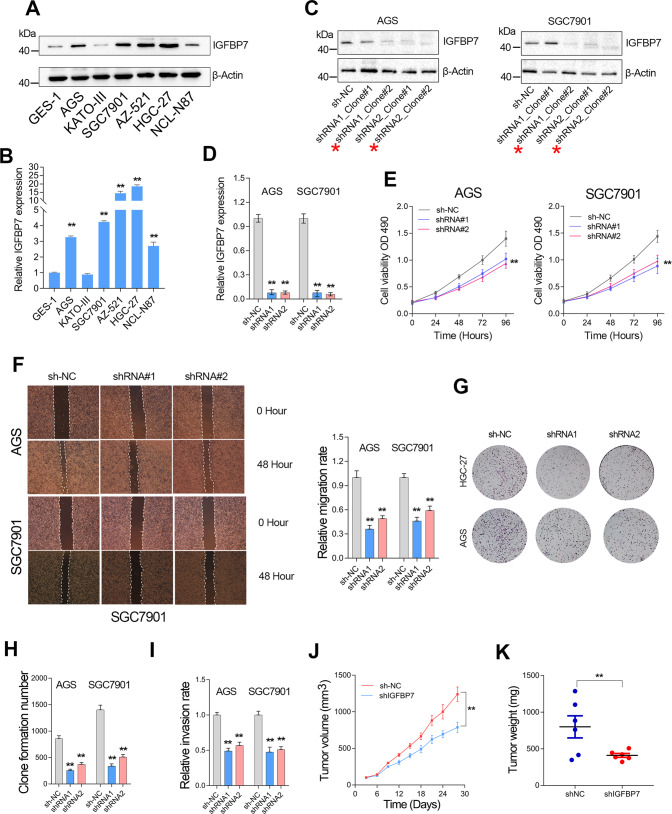
Fig. 4. IGFBP7 knockdown inhibited GC cell proliferation, migration and invasion.
A, B IGFBP7 expression level in different GC cell lines was examined by western blotting and qRT-PCR assays. C, D The knockdown efficiency of IGFBP7 in GC cell lines was determined by western blotting and qRT-PCR assays. E The growth rate of GC cells was determined by MTT assay after knockdown of IGFBP7 in GC cell lines. F The migration of GC cells was examined by wound healing assay after knockdown of IGFBP7 in GC cell lines. G, H The proliferation of GC cells was examined by clone formation assay after knockdown of IGFBP7 in GC cell lines. I The transwell invasion of GC cells was examined after knockdown of IGFBP7 in GC cell lines. J Tumor volumes for the indicated Day 3 to 30 after injecting shNC and shIGFBP7 cells into nude mice. Data represent mean tumor volumes ± SEM. K After 30 days of subcutaneous tumor bearing, nude mice were euthanized. The subcutaneous transplanted tumor in nude mice was taken out and weighed. **P < 0.01.
Fig. 5
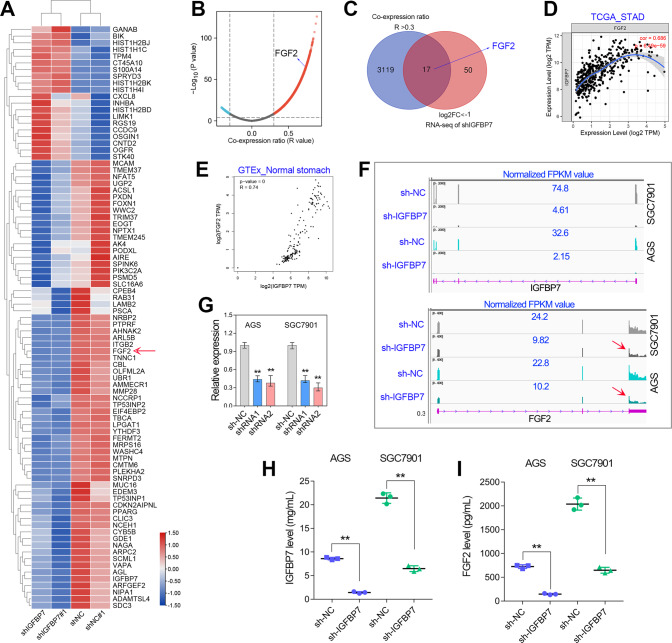
Fig. 5. IGFBP7 depletion suppressed FGF2 expression and secretion in GC.
A The differentially expressed genes after IGFBP7 depletion were shown in the heatmap. Among them, FGF2 was downregulated by knockdown of IGFBP7 in GC. B The expression correlation analysis between protein-coding genes and IGFBP7 was conducted in GC. C A total of 17 genes that co-expressed with IGFBP7 were greatly downregulated by IGFBP7 depletion in GC cell lines. D, E IGFBP7 was highly co-expressed with FGF2 in both GC tissues and normal stomach tissues. F, G RNA-seq and qRT-PCR analysis showed that IGFBP7 depletion decreased the expression of FGF2. H, I ELISA assay verified that IGFBP7 knockdown decreased secreted level of IGFBP7 and FGF2. **P < 0.01.
Fig. 6
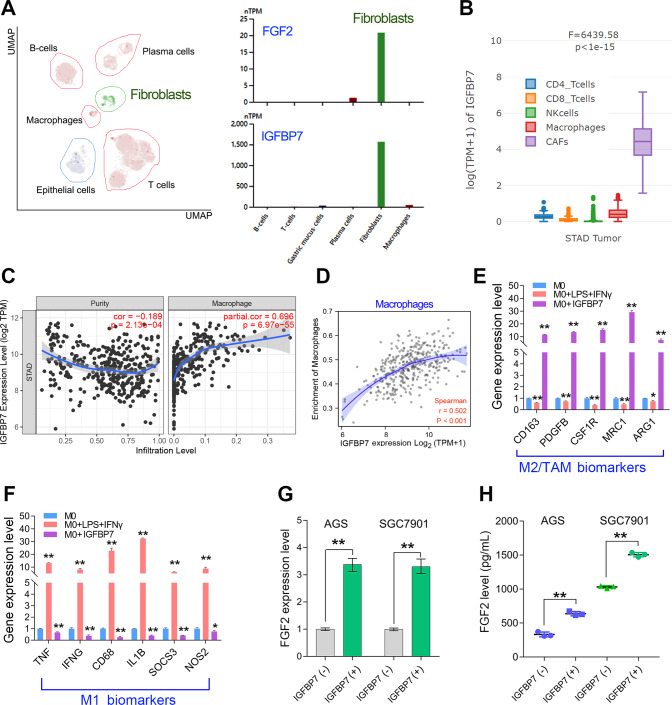
Fig. 6. IGFBP7 promotes TAM infiltration and FGF2 expression in GC.
A Single-cell analysis confirmed that IGFBP7 and FGF2 was specifically expressed in fibroblasts. B Immune estimation using EPIC method showed that IGFBP7 was highly expressed in CAFs of GC. C, D Immune infiltration analysis using TIMER or CIBERSOTR showed that IGFBP7 expression was highly associated with macrophage infiltration in GC. E, F Exogenous IGFBP7 treatment in macrophages downregulated the expression of M1 macrophage biomarkers, but upregulated expression of M2/TAM macrophage biomarkers. G, H Exogenous IGFBP7 treatment in GC cells upregulated FGF2 expression and secretion. **p < 0.01.
Fig. 7
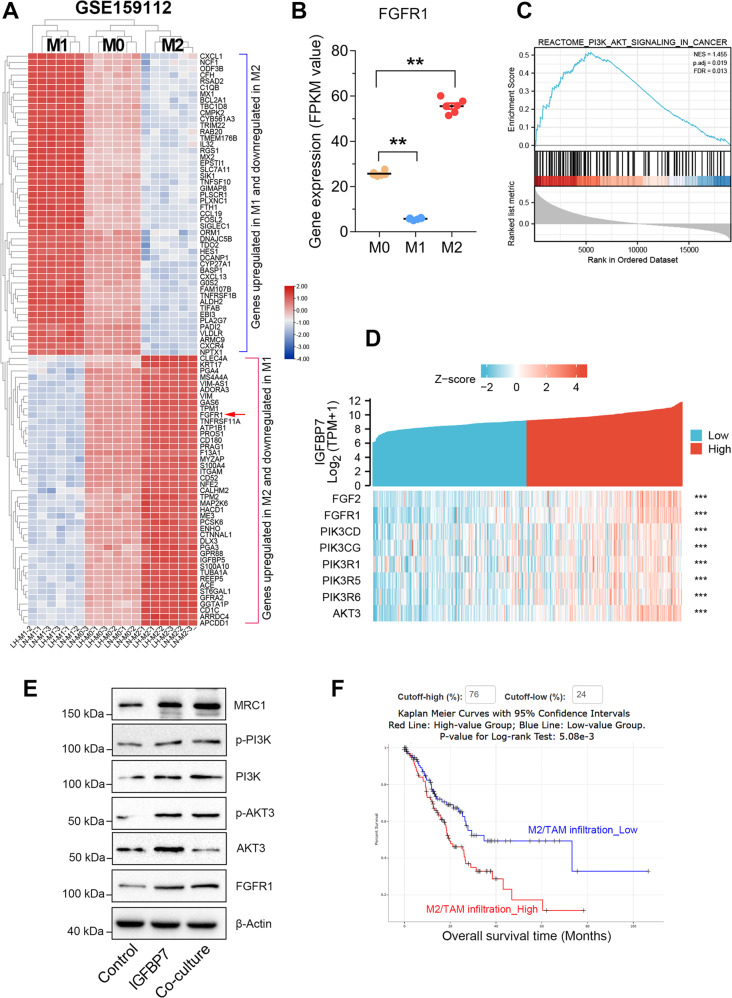
Fig. 7. IGFBP7 promotes TAM infiltration by activating FGFR1/PI3K/AKT signaling.
A Differentially expressed genes of macrophages polarized towards M1 phenotype or towards M2 phenotype. B FGFR1 was significantly downregulated in M1 macrophages but upregulated in M2 macrophages. C, D The GSEA and expression correlation analysis showed that IGFBP7 was highly associated with PI3K/AKT signaling in GC. E Exogenous IGFBP7 promotes TAM/M2 macrophages polarization via FGFR1/PI3K/AKT signaling. F High level of M2/TAM macrophage infiltration predicted poor prognosis in GC. **p < 0.01.
Fig. 8
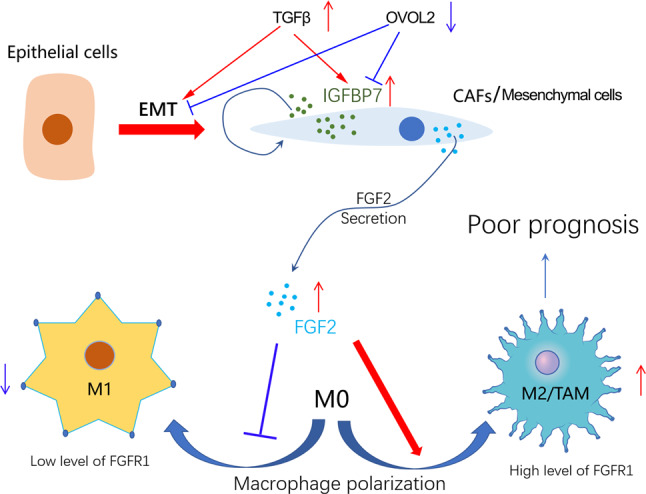
Fig. 8. Working model of IGFBP7 in promoting macrophage infiltration and GC progression.
Abnormal EMT signaling led to overexpression of IGFBP7 in CAFs. Meanwhile, IGFBP7 overexpression increased the levels of IGFBP7 and FGF2 in tumor microenvironment. Eventually, FGF2 promotes TAM polarization and infiltration through FGFR1/PI3K/AKT axis, thereby resulted in poor prognosis of GC.

References

    1. Siegel RL, Miller KD, Fuchs HE, Jemal A. Cancer Statistics, 2021. Ca-Cancer J Clin. 2021;71:7–33. doi: 10.3322/caac.21654. - DOI - PubMed
    1. Wang J, Zhang M, Hu X, She J, Sun R, Qin S, et al. MiRNA-194 predicts favorable prognosis in gastric cancer and inhibits gastric cancer cell growth by targeting CCND1. FEBS Open Bio. 2021;11:1814–26. doi: 10.1002/2211-5463.13125. - DOI - PMC - PubMed
    1. Huang P, Xia L, Guo Q, Huang C, Wang Z, Huang Y, et al. Genome-wide association studies identify miRNA-194 as a prognostic biomarker for gastrointestinal cancer by targeting ATP6V1F, PPP1R14B, BTF3L4, and SLC7A5. Front Oncol. 2022;12:1025594. doi: 10.3389/fonc.2022.1025594. - DOI - PMC - PubMed
    1. Van Cutsem E, Sagaert X, Topal B, Haustermans K, Prenen H. Gastric cancer. Lancet. 2016;388:2654–64.. doi: 10.1016/S0140-6736(16)30354-3. - DOI - PubMed
    1. Gotoda T, Yanagisawa A, Sasako M, Ono H, Nakanishi Y, Shimoda T, et al. Incidence of lymph node metastasis from early gastric cancer: estimation with a large number of cases at two large centers. Gastric cancer. 2000;3:219–25.. doi: 10.1007/PL00011720. - DOI - PubMed