


A novel machine learning model based on ubiquitin-related gene pairs and clinical features to predict prognosis and treatment effect in colon adenocarcinoma
- PMID: 36681855
- PMCID: PMC9863211
- DOI: 10.1186/s40001-023-00993-z
A novel machine learning model based on ubiquitin-related gene pairs and clinical features to predict prognosis and treatment effect in colon adenocarcinoma
Abstract
Background: Ubiquitin and ubiquitin-like (UB/UBL) conjugations are essential post-translational modifications that contribute to cancer onset and advancement. In colon adenocarcinoma (COAD), nonetheless, the biological role, as well as the clinical value of ubiquitin-related genes (URGs), is unclear. The current study sought to design and verify a ubiquitin-related gene pairs (URGPs)-related prognostic signature for predicting COAD prognoses.
Methods: Using univariate, least absolute shrinkage and selection operator (LASSO), and multivariate Cox regression, URGP's predictive signature was discovered. Signatures differentiated high-risk and low-risk patients. ROC and Kaplan-Meier assessed URGPs' signature. Gene set enrichment analysis (GSEA) examined biological nomogram enrichment. Chemotherapy and tumor immune microenvironment were also studied.
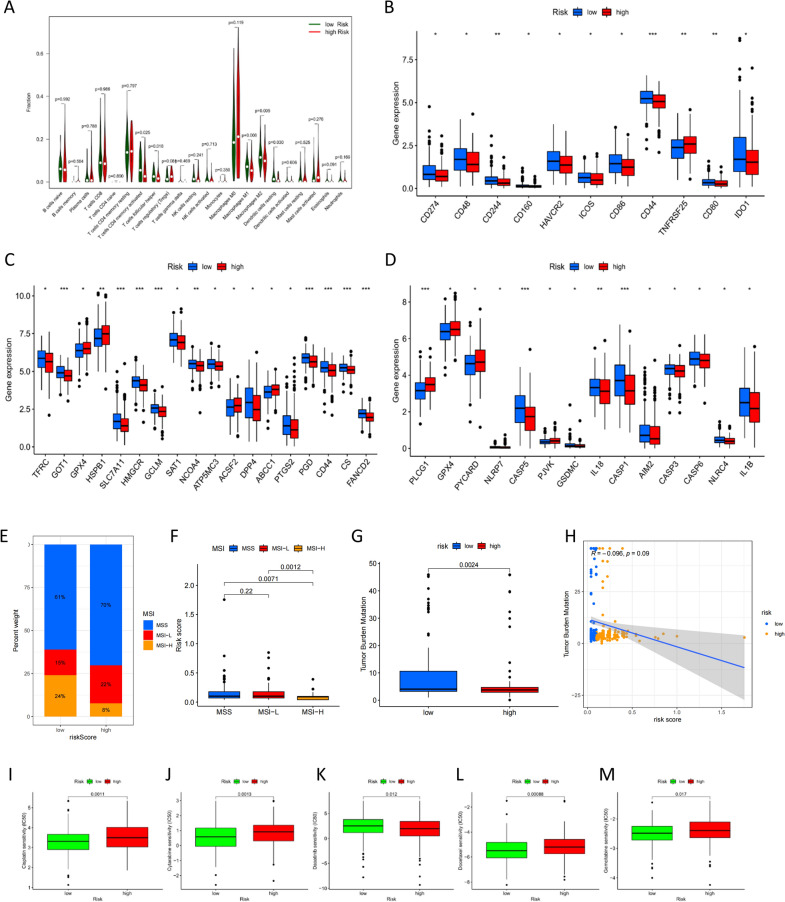
Results: The predictive signature used six URGPs. High-risk patients had a worse prognosis than low-risk patients, according to Kaplan-Meier. After adjusting for other clinical characteristics, the URGPs signature could reliably predict COAD patients. In the low-risk group, we found higher amounts of invading CD4 memory-activated T cells, follicular helper T cells, macrophages, and resting dendritic cells. Moreover, low-risk group had higher immune checkpoint-related gene expression and chemosensitivity.
Conclusion: Our research developed a nomogram and a URGPs prognostic signature to predict COAD prognosis, which may aid in patient risk stratification and offer an effective evaluation method of individualized treatment in clinical settings.
Keywords: Colon adenocarcinoma; Prognostic signature; Tumor immune microenvironment.
© 2023. The Author(s).
Conflict of interest statement
The authors state that there were no commercial or financial relationships that may be considered as a potential competing interest during the research.
Figures

References
-
- Kriegsmann M, Longuespee R, Wandernoth P, Mohanu C, Lisenko K, Weichert W, Warth A, Dienemann H, De Pauw E, Katzenberger T, Aust D, Baretton G, Kriegsmann J, Casadonte R. Typing of colon and lung adenocarcinoma by high throughput imaging mass spectrometry. Biochim Biophys Acta Proteins Proteom. 2017;1865:858–864. doi: 10.1016/j.bbapap.2016.11.018. - DOI - PubMed
-
- Cass AW, Million RR, Pfaff WW. Patterns of recurrence following surgery alone for adenocarcinoma of the colon and rectum. Cancer AM Cancer Soc. 1976;37:2861–2865. - PubMed
MeSH terms
Substances
Grants and funding
LinkOut - more resources
Full Text Sources
Research Materials
