


Whole-brain tracking of cocaine and sugar rewards processing
- PMID: 36683039
- PMCID: PMC9868126
- DOI: 10.1038/s41398-023-02318-4
Whole-brain tracking of cocaine and sugar rewards processing
Abstract
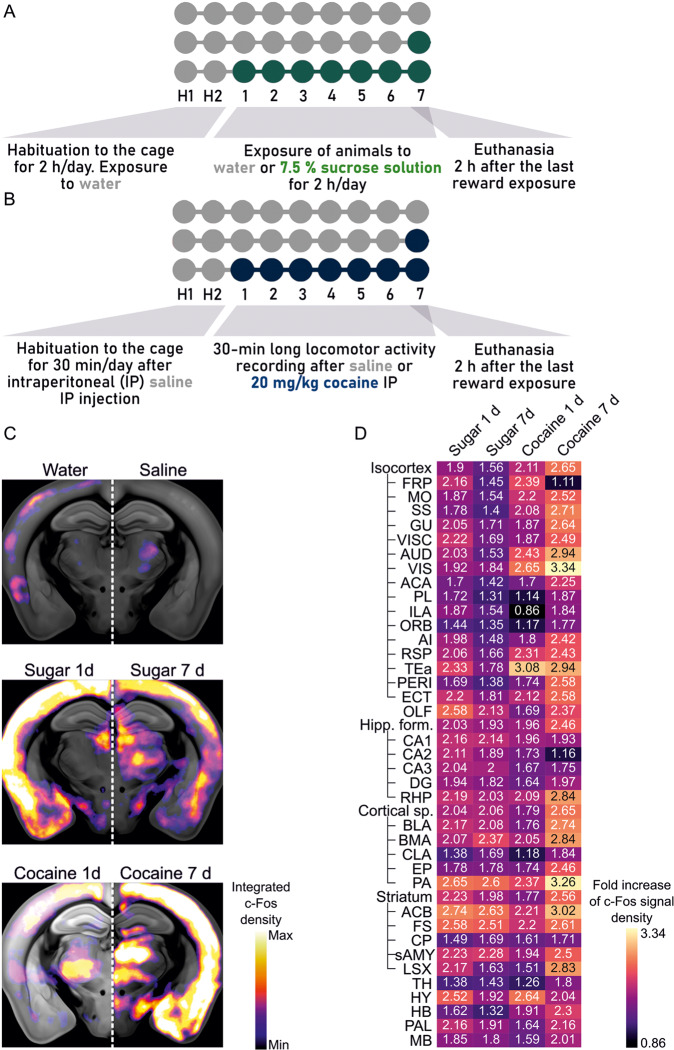
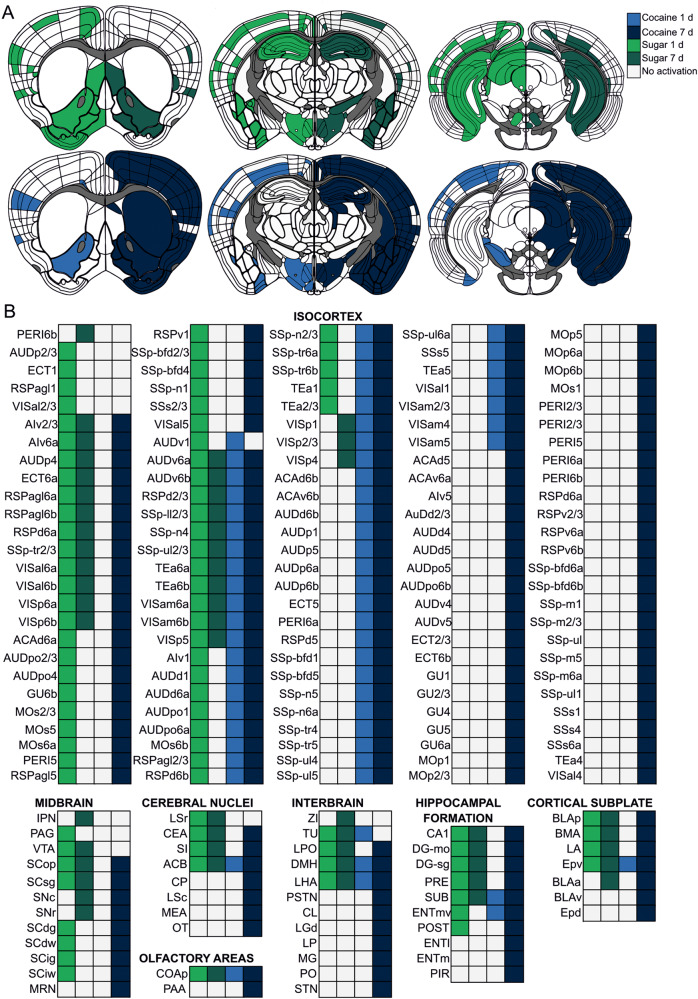
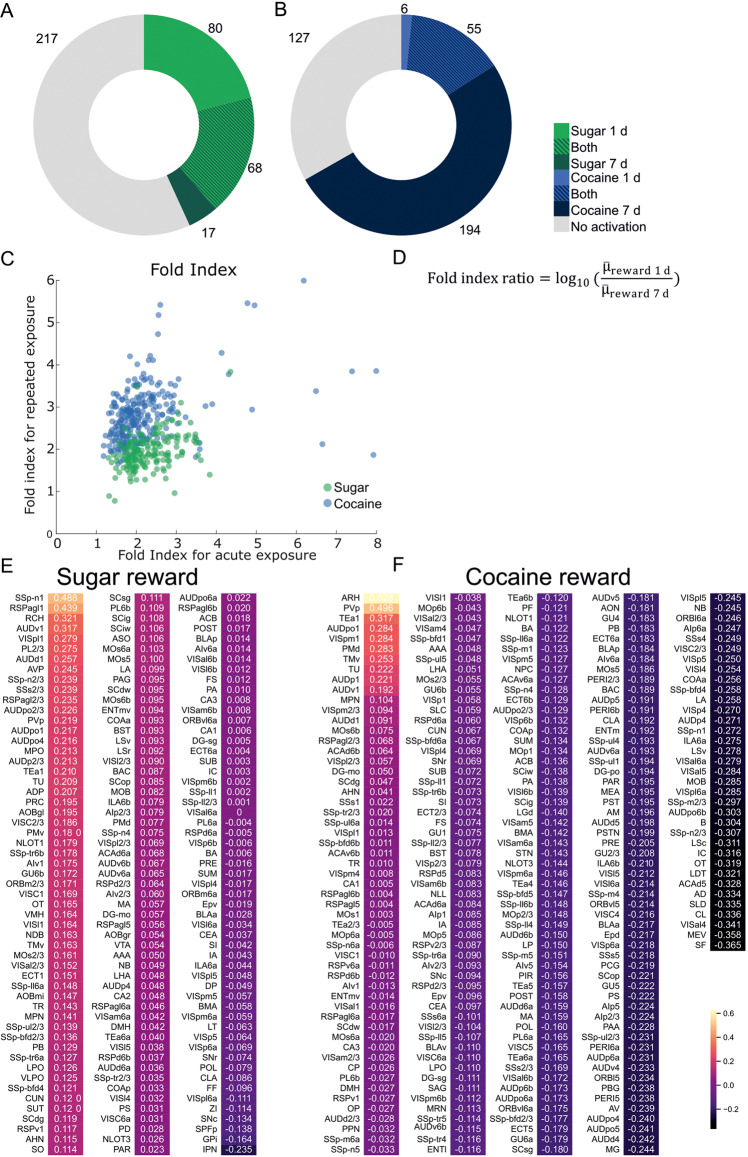
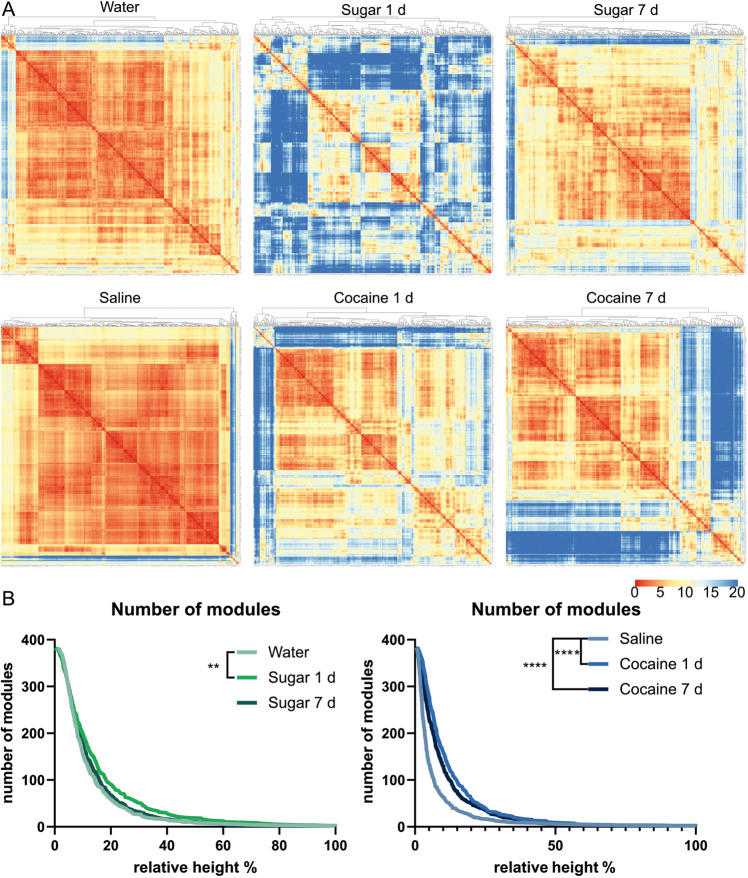
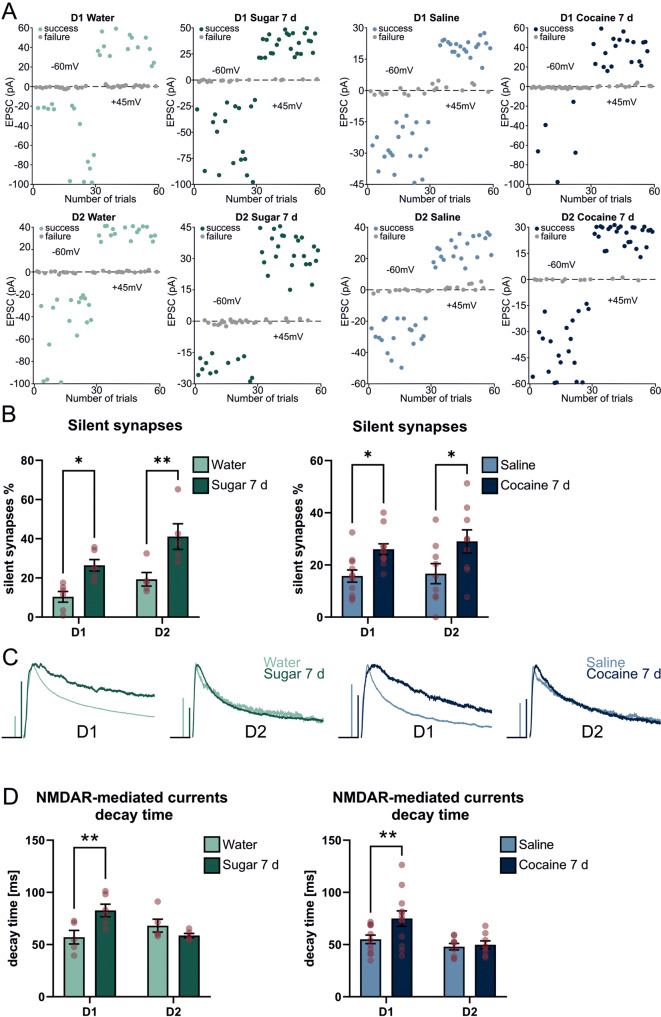
Natural rewards, such as food, and sex are appetitive stimuli available for animals in their natural environment. Similarly, addictive rewards such as drugs of abuse possess strong, positive valence, but their action relies on their pharmacological properties. Nevertheless, it is believed that both of these kinds of rewards activate similar brain circuitry. The present study aimed to discover which parts of the brain process the experience of natural and addictive rewards. To holistically address this question, we used a single-cell whole-brain imaging approach to find patterns of activation for acute and prolonged sucrose and cocaine exposure. We analyzed almost 400 brain structures and created a brain-wide map of specific, c-Fos-positive neurons engaged by these rewards. Acute but not prolonged sucrose exposure triggered a massive c-Fos expression throughout the brain. Cocaine exposure on the other hand potentiated c-Fos expression with prolonged use, engaging more structures than sucrose treatment. The functional connectivity analysis unraveled an increase in brain modularity after the initial exposure to both types of rewards. This modularity was increased after repeated cocaine, but not sucrose, intake. To check whether discrepancies between the processing of both types of rewards can be found on a cellular level, we further studied the nucleus accumbens, one of the most strongly activated brain structures by both sucrose and cocaine experience. We found a high overlap between natural and addictive rewards on the level of c-Fos expression. Electrophysiological measurements of cellular correlates of synaptic plasticity revealed that natural and addictive rewards alike induce the accumulation of silent synapses. These results strengthen the hypothesis that in the nucleus accumbens drugs of abuse cause maladaptive neuronal plasticity in the circuitry that typically processes natural rewards.
© 2023. The Author(s).
Conflict of interest statement
The authors declare no competing interests.
Figures
References
-
- Bisagno V, Gonzalez B, Urbano FJ. Cognitive enhancers versus addictive psychostimulants: the good and bad side of dopamine on prefrontal cortical circuits. Pharm Res. 2016;109:108–18. - PubMed
Publication types
MeSH terms
Substances
Grants and funding
- MAB/2018/10/Fundacja na rzecz Nauki Polskiej (Foundation for Polish Science)
- MAB/2018/10/Fundacja na rzecz Nauki Polskiej (Foundation for Polish Science)
- MAB/2018/10/Fundacja na rzecz Nauki Polskiej (Foundation for Polish Science)
- MAB/2018/10/Fundacja na rzecz Nauki Polskiej (Foundation for Polish Science)
- MAB/2018/10/Fundacja na rzecz Nauki Polskiej (Foundation for Polish Science)
LinkOut - more resources
Full Text Sources
Molecular Biology Databases
