


Combining local regional therapy and systemic therapy: Expected changes in the treatment landscape of recurrent hepatocellular carcinoma
- PMID: 36684055
- PMCID: PMC9850755
- DOI: 10.4251/wjgo.v15.i1.1
Combining local regional therapy and systemic therapy: Expected changes in the treatment landscape of recurrent hepatocellular carcinoma
Abstract
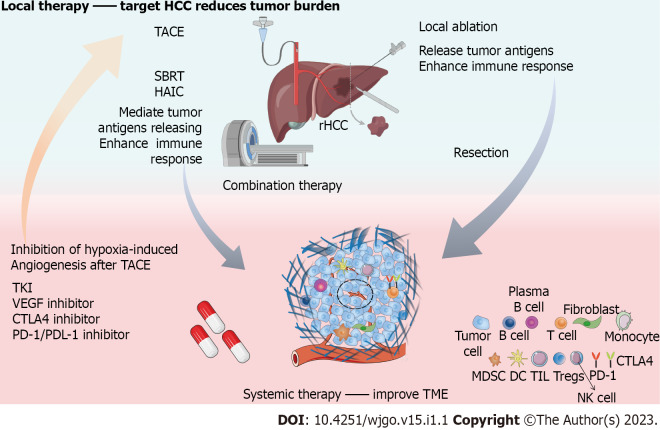
Improvements in early screening, new diagnostic techniques, and surgical treatment have led to continuous downward trends in hepatocellular carcinoma (HCC) morbidity and mortality rates. However, high recurrence and refractory cancer after hepatectomy remain important factors affecting the long-term prognosis of HCC. The clinical characteristics and prognosis of recurrent HCC are heterogeneous, and guidelines on treatment strategies for recurrent HCC are lacking. Therapies such as surgical resection, radiofrequency ablation, and transhepatic arterial chemoembolization are effective for tumors confined to the liver, and targeted therapy is a very important treatment for unresectable recurrent HCC with systemic metastasis. With the deepening of the understanding of the immune microenvironment of HCC, blocking immune checkpoints to enhance the antitumor immune response has become a new direction for the treatment of HCC. In addition, improvements in the tumor immune microenvironment caused by local treatment may provide an opportunity to improve the therapeutic effect of HCC treatment. Ongoing and future clinical trial data of combined therapy may develop the new treatment scheme for recurrent HCC. This paper reviews the pattern of recurrent HCC and the characteristics of the immune microenvironment, demonstrates the basis for combining local treatment and systemic treatment, and reports current evidence to better understand current progress and future approaches in the treatment of recurrent HCC.
Keywords: Immune checkpoint inhibitors; Local regional therapy; Recurrence type; Recurrent hepatocellular carcinoma; Systemic therapy; Tumor microenvironment.
©The Author(s) 2023. Published by Baishideng Publishing Group Inc. All rights reserved.
Conflict of interest statement
Conflict-of-interest statement: Authors declare no conflict of interests for this article.
Figures
References
-
- Sung H, Ferlay J, Siegel RL, Laversanne M, Soerjomataram I, Jemal A, Bray F. Global Cancer Statistics 2020: GLOBOCAN Estimates of Incidence and Mortality Worldwide for 36 Cancers in 185 Countries. CA Cancer J Clin. 2021;71:209–249. - PubMed
-
- Tabrizian P, Jibara G, Shrager B, Schwartz M, Roayaie S. Recurrence of hepatocellular cancer after resection: patterns, treatments, and prognosis. Ann Surg. 2015;261:947–955. - PubMed
-
- Shah SA, Cleary SP, Wei AC, Yang I, Taylor BR, Hemming AW, Langer B, Grant DR, Greig PD, Gallinger S. Recurrence after liver resection for hepatocellular carcinoma: risk factors, treatment, and outcomes. Surgery. 2007;141:330–339. - PubMed
-
- European Association for the Study of the Liver ; European Association for the Study of the Liver. EASL Clinical Practice Guidelines: Management of hepatocellular carcinoma. J Hepatol. 2018;69:182–236. - PubMed
Publication types
LinkOut - more resources
Full Text Sources
