


Comprehensive comparative analysis of prognostic value of serum systemic inflammation biomarkers for colorectal cancer: Results from a large multicenter collaboration
- PMID: 36685502
- PMCID: PMC9849562
- DOI: 10.3389/fimmu.2022.1092498
Comprehensive comparative analysis of prognostic value of serum systemic inflammation biomarkers for colorectal cancer: Results from a large multicenter collaboration
Abstract
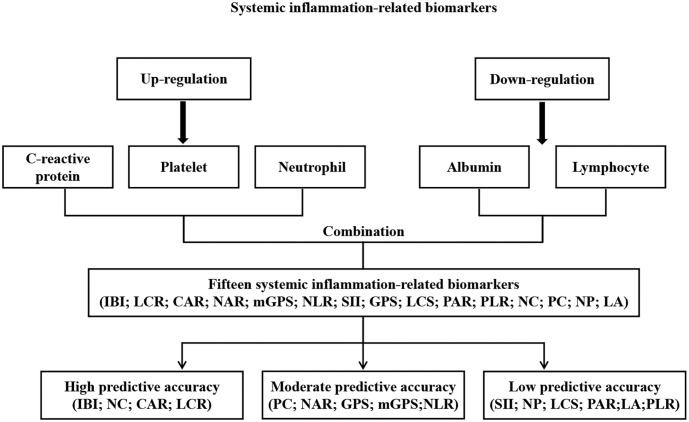
Background: The incidence of colorectal cancer (CRC) is common and reliable biomarkers are lacking. We aimed to systematically and comprehensively compare the ability of various combinations of serum inflammatory signatures to predict the prognosis of CRC. Moreover, particular attention has been paid to the clinical feasibility of the newly developed inflammatory burden index (IBI) as a prognostic biomarker for CRC.
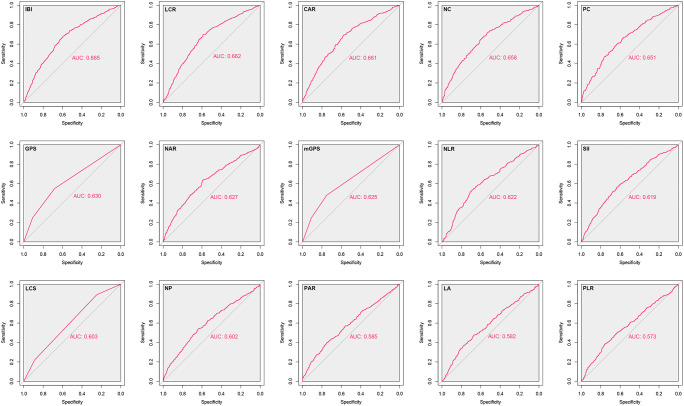
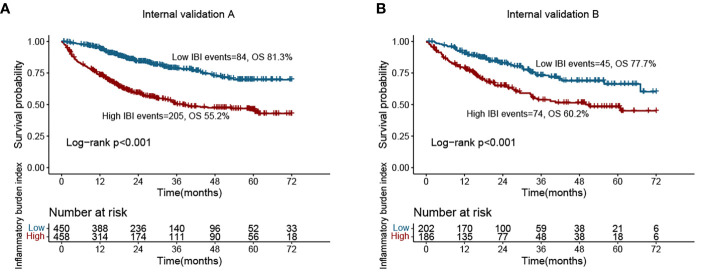
Methods: The discrimination capacity of the biomarkers was compared using receiver operating characteristic curves and Harrell's C-index. Kaplan-Meier curves and log-rank tests were used to compare survival differences between the groups. Cox proportional hazard regression analysis was used to determine the independent prognostic factors. Logistic regression analysis was used to assess the relationship between IBI, short-term outcomes, and malnutrition.
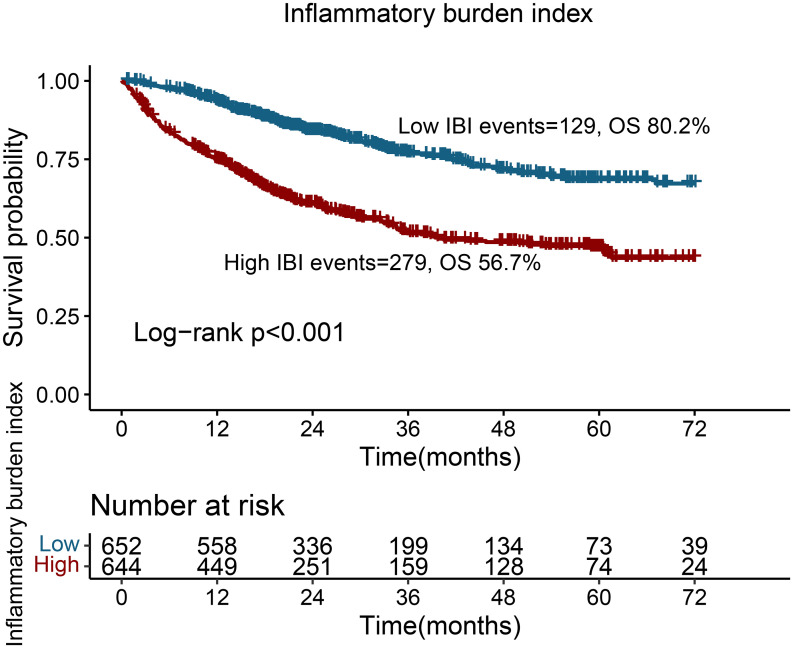
Results: IBI had the optimal prediction accuracy among the systemic inflammation biomarkers for predicting the prognosis of CRC. Taking IBI as a reference, none of the remaining systemic inflammation biomarkers showed a gain. Patients with high IBI had significantly worse overall survival than those with low IBI (56.7% vs. 80.2%; log-rank P<0.001). Multivariate Cox regression analysis showed that continuous IBI was an independent risk factor for the prognosis of CRC patients (hazard ratio = 1.165, 95% confidence interval [CI] = 1.043-1.302, P<0.001). High IBI was an independent risk factor for short-term outcomes (odds ratio [OR] = 1.537, 95% CI = 1.258-1.878, P<0.001), malnutrition (OR = 2.996, 95% CI = 1.471-6.103, P=0.003), and recurrence (OR = 1.744, 95% CI = 1.176-2.587, p = 0.006) in CRC patients.
Conclusions: IBI, as a reflection of systemic inflammation, is a feasible and promising biomarker for assessing the prognosis of CRC patients.
Keywords: biomarker; colorectal cancer; inflammatic burden Index; malnutrition; prognosis; systemic inflammation.
Copyright © 2023 Xie, Ruan, Wei, Zhang, Ge, Zhang, Song, Zhang, Liu, Lin, Yang, Hu, Tang, Deng, Hu and Shi.
Conflict of interest statement
The authors declare that the research was conducted in the absence of any commercial or financial relationships that could be construed as a potential conflict of interest.
Figures
Comment on
-
Inflammation-Related Biomarkers for the Prediction of Prognosis in Colorectal Cancer Patients.Int J Mol Sci. 2021 Jul 27;22(15):8002. doi: 10.3390/ijms22158002. Int J Mol Sci. 2021. PMID: 34360768 Free PMC article. Review.
References
-
- Kahi CJ, Boland CR, Dominitz JA, Giardiello FM, Johnson DA, Kaltenbach T, et al. Colonoscopy surveillance after colorectal cancer resection: recommendations of the US multi-society task force on colorectal cancer. Gastroenterology (2016) 150(3):758–68.e11. doi: 10.1053/j.gastro.2016.01.001. - DOI - PubMed
Publication types
MeSH terms
Substances
LinkOut - more resources
Full Text Sources
Medical
