


Prevalence and quality of life of facial acne: a cross-sectional study in high school students in Poland
- PMID: 36686019
- PMCID: PMC9837594
- DOI: 10.5114/ada.2021.112765
Prevalence and quality of life of facial acne: a cross-sectional study in high school students in Poland
Abstract
Introduction: Acne is a frequent chronic inflammatory disease, which affects most commonly adolescents. It might have a negative effect on patients' well-being.
Aim: To appraise the prevalence of facial acne among adolescents and to assess how acne of different clinical severity influences quality of life in this age group.
Material and method: This cross-sectional study was conducted on a representative sample of individuals aged 15-19 years in high schools in Poland. A total of 730 students were included in the final analysis. Standardized photographs according to the Investigator's Global Assessment (IGA) were used for self-assessment of both the presence and severity of facial acne. The Dermatology Life Quality Index (DLQI) was employed to evaluate subjects' quality of life (QoL) impairment.
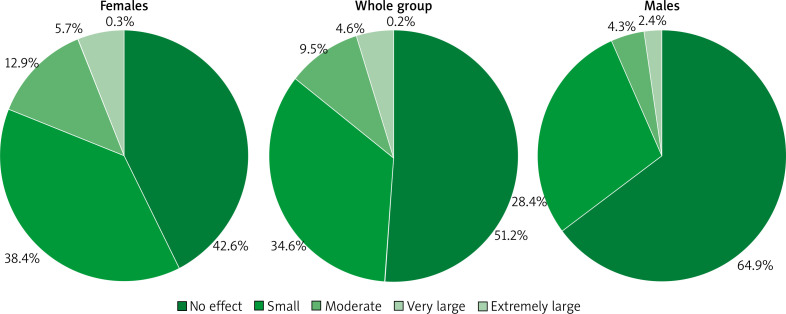
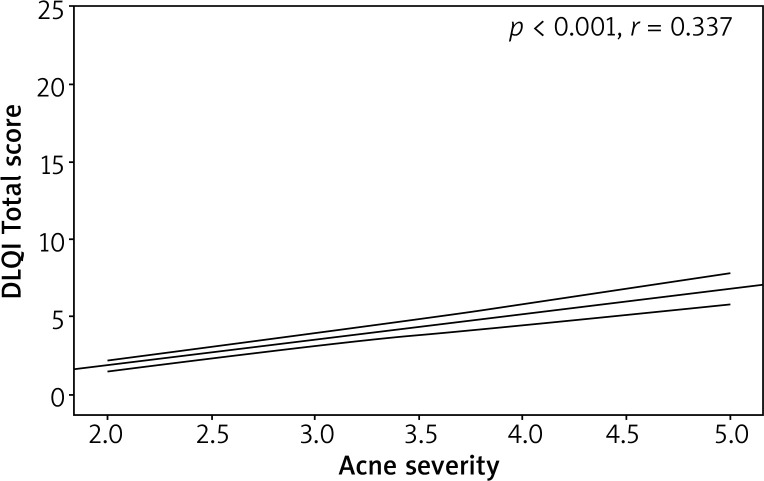
Results: Facial acne was found in 547 (74.9%) respondents with no significant difference in acne prevalence among females (75.1%) and males (74.6%). The vast majority of acne individuals (90.9%) suffered from minimal and mild acne, moderate acne was reported by 7.3% and severe one by 1.8% of acne students. Acne had a small effect on QoL (DLQI mean score of 2.8 ±3.6 points); females had significantly more decreased QoL than males (3.17 ±3.74 and 1.76 ±2.69 points, respectively). QoL impairment positively correlated with the clinical severity of facial acne.
Conclusions: Facial acne is a common health problem in adolescents. Although it is not very severe in the majority of subjects it significantly decreases their QoL. Therefore, acne should be treated as a serious skin condition requiring a holistic approach to the patients.
Keywords: acne; adolescents; prevalence; quality of life; severity.
Copyright: © 2022 Termedia Sp. z o. o.
Conflict of interest statement
The authors declare no conflict of interest.
Figures
References
-
- Dreno B, Poli F. Epidemiology of acne. Dermatology 2003; 206: 7-10. - PubMed
-
- Wolkenstein P, Machovcová A, Szepietowski JC, et al. Acne prevalence and associations with lifestyle: a cross-sectional online survey of adolescents/young adults in 7 European countries. J Eur Acad Dermatol Venereol 2018; 32: 298-306. - PubMed
-
- Poli F, Auffret N, Beylot C, et al. Acne as seen by adolescents: results of questionnaire study in 852 French individuals. Acta Derm Venereol 2011; 91: 531-6. - PubMed
LinkOut - more resources
Full Text Sources
Miscellaneous
