


Osteomyelitis due to Mycobacterium haemophilum in an adult renal transplant recipient
- PMID: 36687370
- PMCID: PMC9852681
- DOI: 10.1016/j.idcr.2023.e01684
Osteomyelitis due to Mycobacterium haemophilum in an adult renal transplant recipient
Abstract
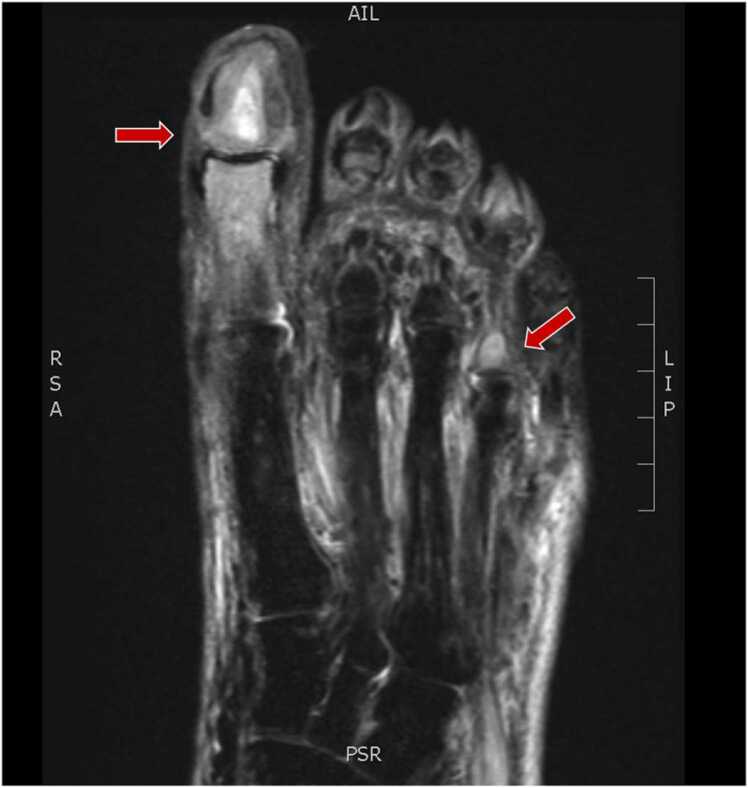
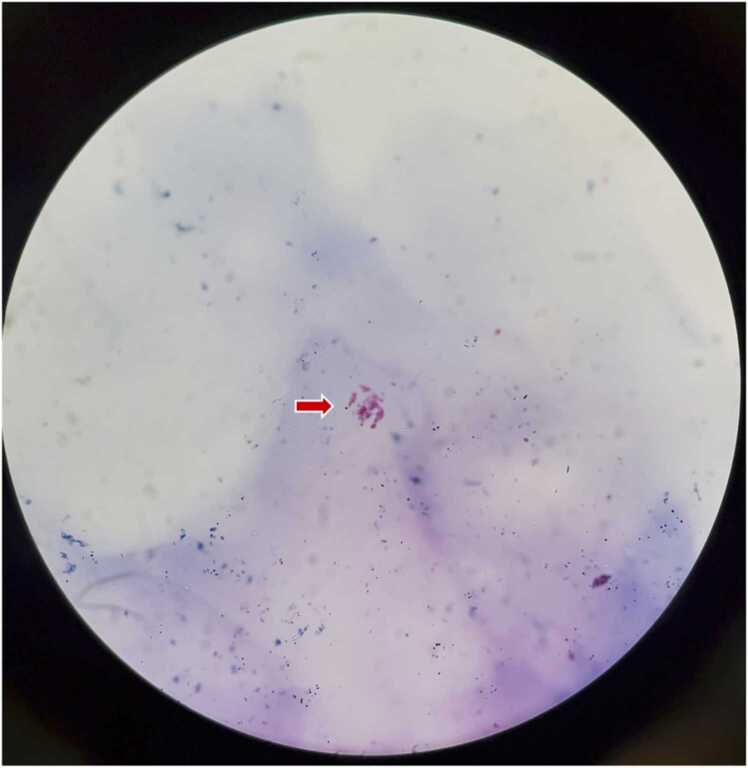
Mycobacterium haemophilum is an increasingly recognized pathogen of the non-tuberculous mycobacteria family that largely infects immunocompromised adults and immunocompetent children. M. haemophilum is a fastidious and slow-growing organism that exhibits preferential growth at lower temperature with iron supplemented media, and therefore most clinical manifestations involve cutaneous infection or musculoskeletal infection of the distal extremities. It is believed that opportunistic infection occurs in immunocompromised hosts when the organism is acquired through environmental exposure. We describe the case of a 71-year-old renal transplant recipient who developed acute M. haemophilum osteomyelitis of the left foot, likely contracted from Epsom salt soaks with contaminated tap water. Outcomes of M. haemophilum infection are generally favorable in the literature. Our patient was treated with local debridement and partial amputation followed by a 3-drug anti-mycobacterial regimen until definitive amputation could be completed.
Keywords: Mycobacterium haemophilum; Non-tuberculous mycobacteria; Osteomyelitis; Renal transplant.
© 2023 The Authors. Published by Elsevier Ltd.
Conflict of interest statement
None.
Figures


References
-
- Sompolinksy D., Lagziel A., Naveh D., Yankilevitz T. Mycobacterium haemophilum sp. Nov., a new pathogen of humans. Int J Syst Bacteriol. 1978;28(1):67–75.
-
- Shah M.K., Sebti A., Kiehn T.E., Massarella S.A., Sepkowitz K.A. Mycobacterium haemophilum in immunocompromised patients. Clin Inf Dis. 2001;33:330–337. - PubMed
Publication types
LinkOut - more resources
Full Text Sources
Miscellaneous
