


"Smart" drug delivery: A window to future of translational medicine
- PMID: 36688039
- PMCID: PMC9846181
- DOI: 10.3389/fchem.2022.1095598
"Smart" drug delivery: A window to future of translational medicine
Abstract
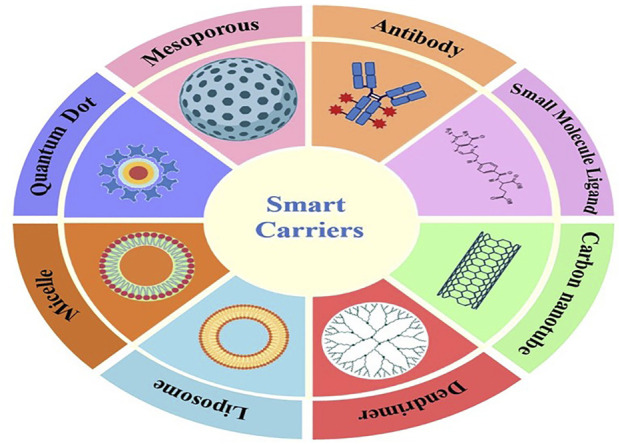
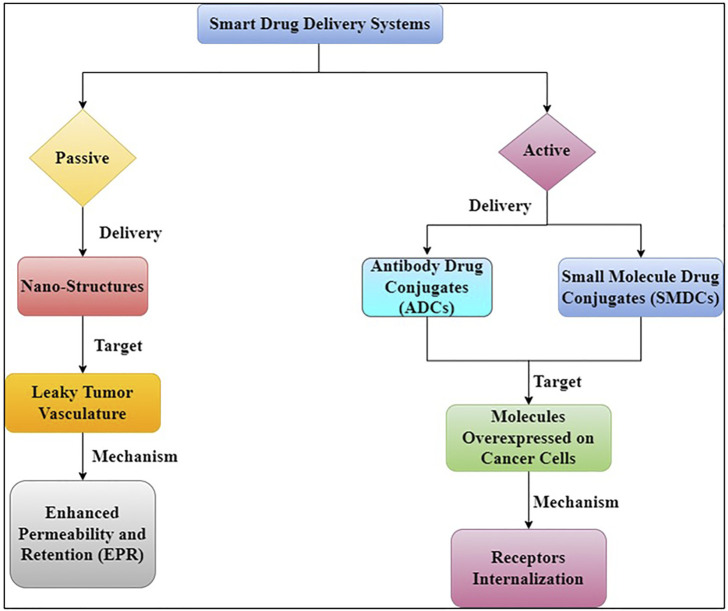
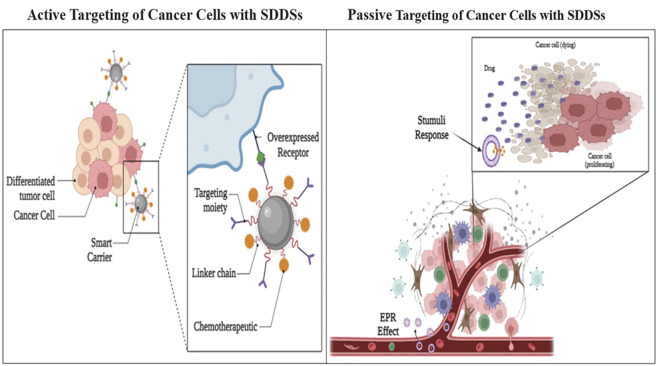
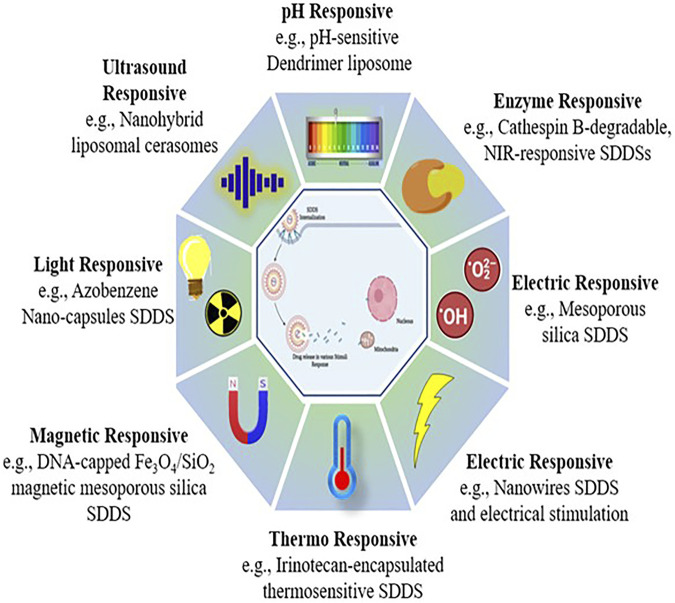
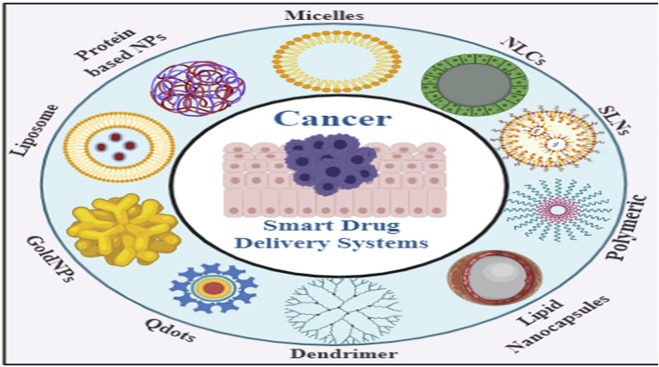
Chemotherapy is the mainstay of cancer treatment today. Chemotherapeutic drugs are non-selective and can harm both cancer and healthy cells, causing a variety of adverse effects such as lack of specificity, cytotoxicity, short half-life, poor solubility, multidrug resistance, and acquiring cancer stem-like characteristics. There is a paradigm shift in drug delivery systems (DDS) with the advent of smarter ways of targeted cancer treatment. Smart Drug Delivery Systems (SDDSs) are stimuli responsive and can be modified in chemical structure in response to light, pH, redox, magnetic fields, and enzyme degradation can be future of translational medicine. Therefore, SDDSs have the potential to be used as a viable cancer treatment alternative to traditional chemotherapy. This review focuses mostly on stimuli responsive drug delivery, inorganic nanocarriers (Carbon nanotubes, gold nanoparticles, Meso-porous silica nanoparticles, quantum dots etc.), organic nanocarriers (Dendrimers, liposomes, micelles), antibody-drug conjugates (ADC) and small molecule drug conjugates (SMDC) based SDDSs for targeted cancer therapy and strategies of targeted drug delivery systems in cancer cells.
Keywords: active targeting; cancer; nano-therapy; passive targeting; smart drug delivery systems (SDDSs); targeted cancer therapy; targeted drug delivery; translational medicine.
Copyright © 2023 Rana, Adhikary, Singh, Das and Bhatnagar.
Conflict of interest statement
The authors declare that the research was conducted in the absence of any commercial or financial relationships that could be construed as a potential conflict of interest.
Figures
References
-
- Al Faraj A, Shaik, Apshaik , Asjijon (2015). Magnetic single-walled carbon nanotubes as efficient drug delivery nanocarriers in breast cancer murine model: Noninvasive monitoring using diffusion-weighted magnetic resonance imaging as sensitive imaging biomarker. Int. J. Nanomedicine 10, 157–168. 10.2147/IJN.S75074 - DOI - PMC - PubMed
Publication types
LinkOut - more resources
Full Text Sources
