Highly Pathogenic Avian Influenza H5N1 Virus Infections in Wild Red Foxes (Vulpes vulpes) Show Neurotropism and Adaptive Virus Mutations
- PMID: 36688676
- PMCID: PMC9927208
- DOI: 10.1128/spectrum.02867-22
Highly Pathogenic Avian Influenza H5N1 Virus Infections in Wild Red Foxes (Vulpes vulpes) Show Neurotropism and Adaptive Virus Mutations
Abstract
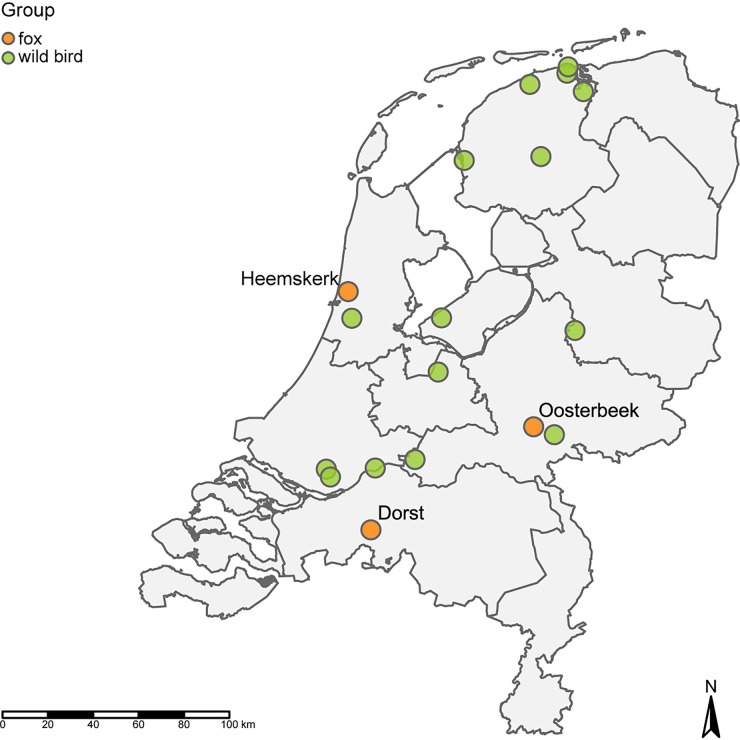
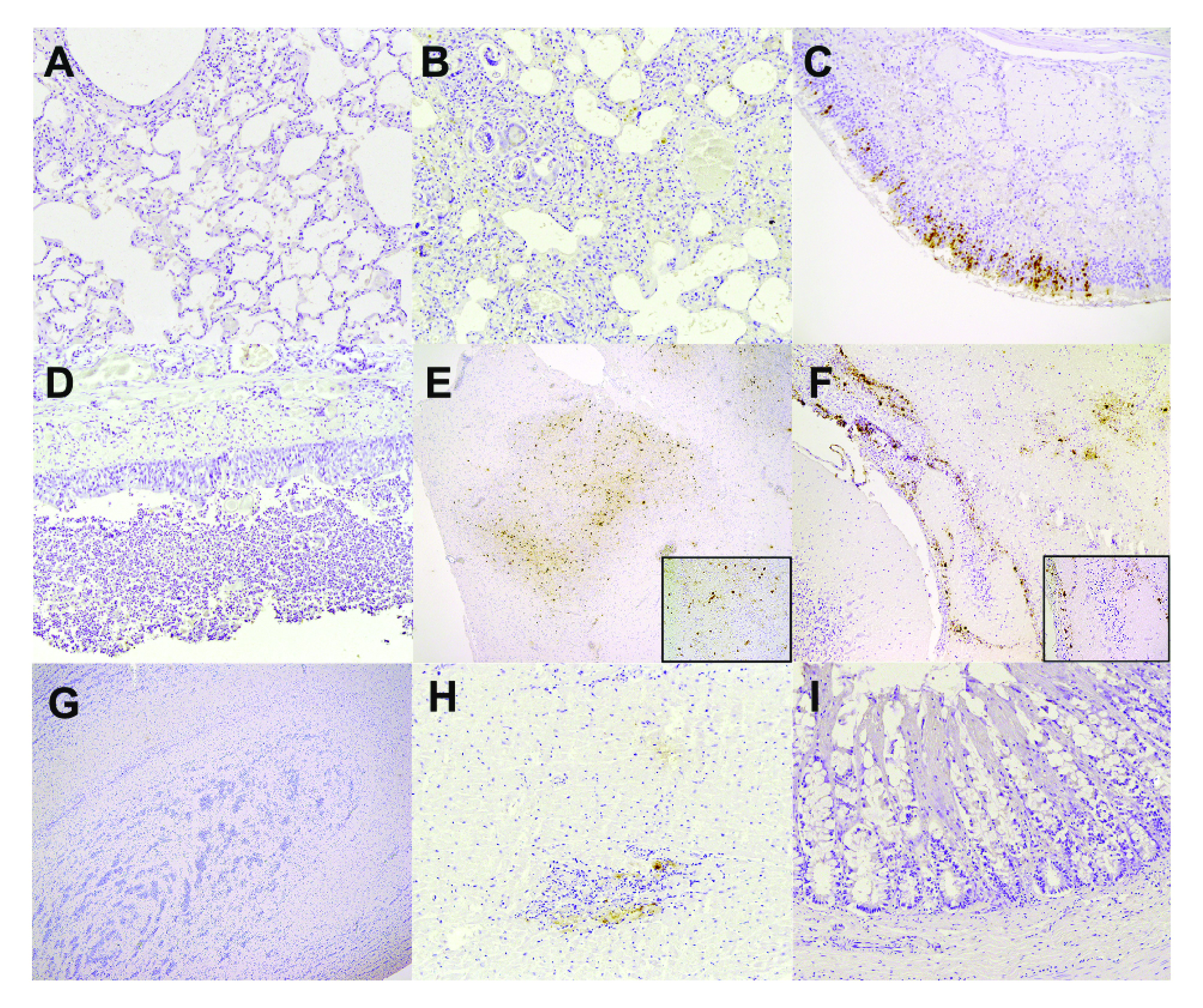
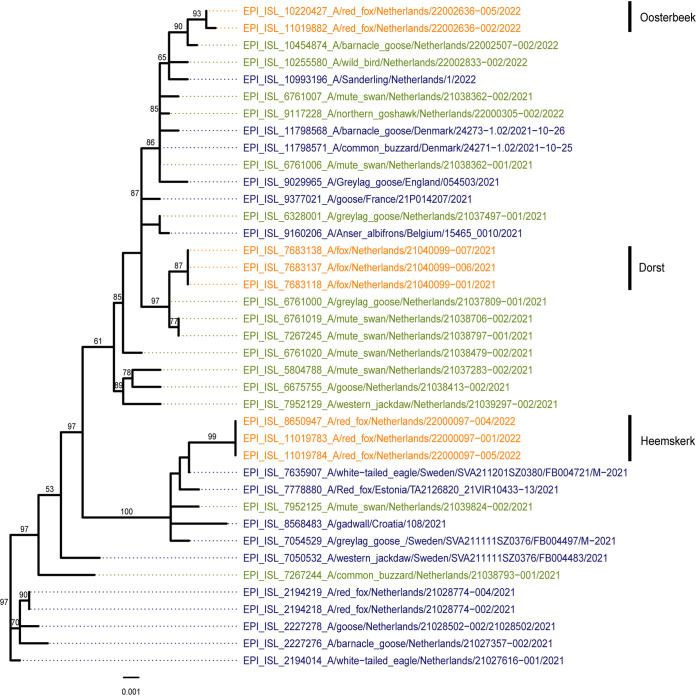
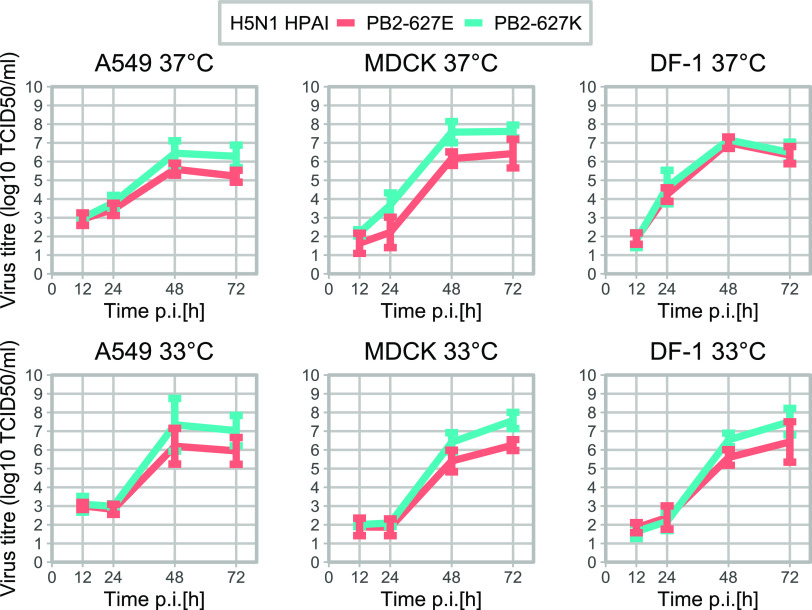
During the 2020 to 2022 epizootic of highly pathogenic avian influenza virus (HPAI), several infections of mammalian species were reported in Europe. In the Netherlands, HPAI H5N1 virus infections were detected in three wild red foxes (Vulpes vulpes) that were submitted with neurological symptoms between December of 2021 and February of 2022. A histopathological analysis demonstrated that the virus was mainly present in the brain, with limited or no detection in the respiratory tract or other organs. Limited or no virus shedding was observed in throat and rectal swabs. A phylogenetic analysis showed that the three fox viruses were not closely related, but they were related to HPAI H5N1 clade 2.3.4.4b viruses that are found in wild birds. This suggests that the virus was not transmitted between the foxes. A genetic analysis demonstrated the presence of the mammalian adaptation E627K in the polymerase basic two (PB2) protein of the two fox viruses. In both foxes, the avian (PB2-627E) and the mammalian (PB2-627K) variants were present as a mixture in the virus population, which suggests that the mutation emerged in these specific animals. The two variant viruses were isolated, and virus replication and passaging experiments were performed. These experiments showed that the mutation PB2-627K increases the replication of the virus in mammalian cell lines, compared to the chicken cell line, and at the lower temperatures of the mammalian upper respiratory tract. This study showed that the HPAI H5N1 virus is capable of adaptation to mammals; however, more adaptive mutations are required to allow for efficient transmission between mammals. Therefore, surveillance in mammals should be expanded to closely monitor the emergence of zoonotic mutations for pandemic preparedness. IMPORTANCE Highly pathogenic avian influenza (HPAI) viruses caused high mortality among wild birds from 2021 to 2022 in the Netherlands. Recently, three wild foxes were found to be infected with HPAI H5N1 viruses, likely due to the foxes feeding on infected birds. Although HPAI is a respiratory virus, in these foxes, the viruses were mostly detected in the brain. Two viruses isolated from the foxes contained a mutation that is associated with adaptation to mammals. We show that the mutant virus replicates better in mammalian cells than in avian cells and at the lower body temperature of mammals. More mutations are required before viruses can transmit between mammals or can be transmitted to humans. However, infections in mammalian species should be closely monitored to swiftly detect mutations that may increase the zoonotic potential of HPAI H5N1 viruses, as these may threaten public health.
Keywords: HPAI H5N1; fox; neurotropism; virology; zoonotic infections.
Conflict of interest statement
The authors declare no conflict of interest.
Figures
References
-
- Floyd T, Banyard AC, Lean FZ, Byrne AM, Fullick E, Whittard E, Mollett BC, Bexton S, Swinson V, Macrelli M. 2021. Encephalitis and death in wild mammals at a rehabilitation center after infection with highly pathogenic avian influenza A (H5N8) virus, United Kingdom. Emerging Infectious Diseases 27:2856. doi: 10.3201/eid2711.211225. - DOI - PMC - PubMed
-
- Rijks JM, Hesselink H, Lollinga P, Wesselman R, Prins P, Weesendorp E, Engelsma M, Heutink R, Harders F, Kik M, Rozendaal H, van den Kerkhof H, Beerens N. 2021. Highly pathogenic avian influenza A (H5N1) virus in wild red foxes, the Netherlands, 2021. Emerg Infect Dis 27:2960–2962. doi: 10.3201/eid2711.211281. - DOI - PMC - PubMed
-
- Postel A, King J, Kaiser FK, Kennedy J, Lombardo MS, Reineking W, de Le Roi M, Harder T, Pohlmann A, Gerlach T, Rimmelzwaan G, Rohner S, Striewe LC, Gross S, Schick LA, Klink JC, Kramer K, Osterhaus ADME, Beer M, Baumgärtner W, Siebert U, Becher P. 2022. Infections with highly pathogenic avian influenza A virus (HPAIV) H5N8 in harbor seals at the German North Sea coast, 2021. Emerg Microbes Infect 11:725–729. doi: 10.1080/22221751.2022.2043726. - DOI - PMC - PubMed
-
- Rimmelzwaan GF, van Riel D, Baars M, Bestebroer TM, van Amerongen G, Fouchier RA, Osterhaus AD, Kuiken T. 2006. Influenza A virus (H5N1) infection in cats causes systemic disease with potential novel routes of virus spread within and between hosts. Am J Pathol 168:176–183; quiz 364. doi: 10.2353/ajpath.2006.050466. - DOI - PMC - PubMed
Publication types
MeSH terms
LinkOut - more resources
Full Text Sources
Medical