


OXIS Contacts and Approximal Caries in Preschool Children: A Prospective Cohort Study
- PMID: 36689939
- PMCID: PMC7614808
- DOI: 10.1159/000529160
OXIS Contacts and Approximal Caries in Preschool Children: A Prospective Cohort Study
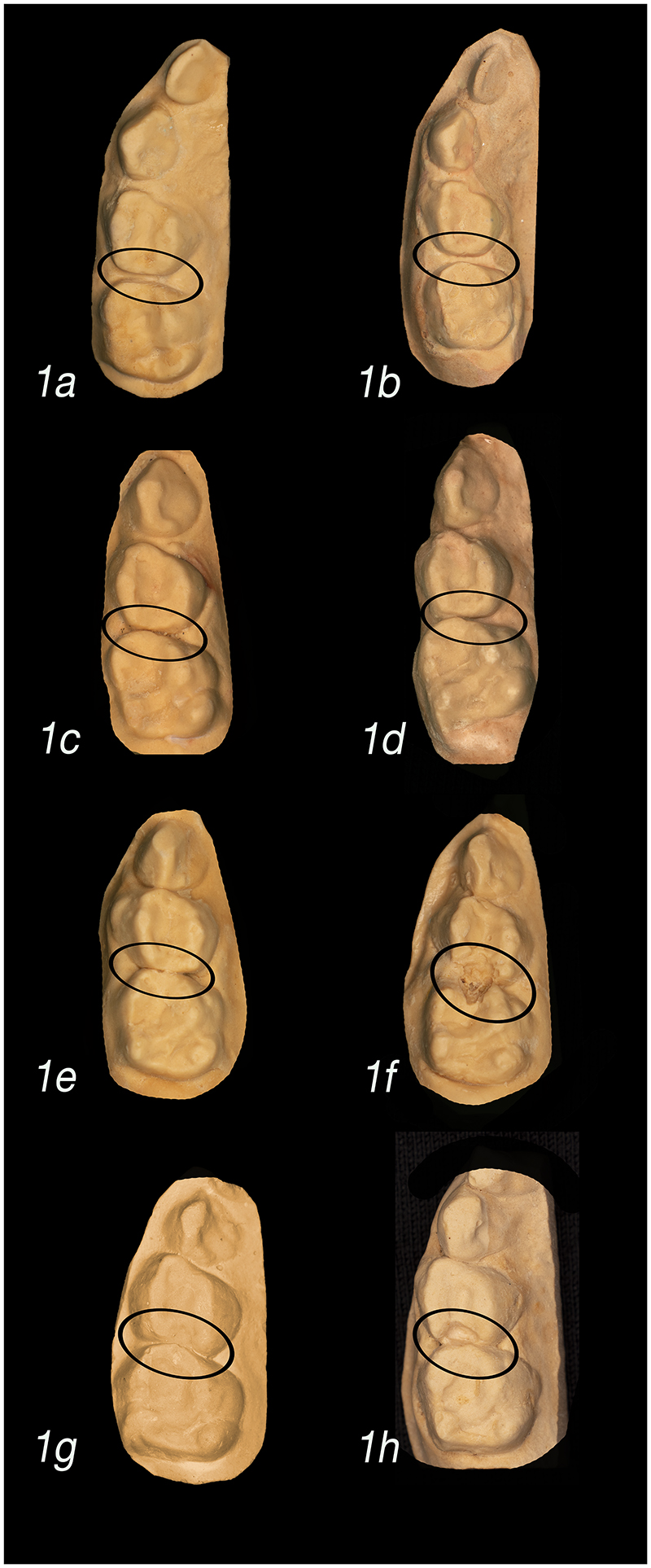
Abstract
The present prospective cohort study was conducted to evaluate the susceptibility of OXIS contact areas, namely, O (open type), X (point type), I (straight type), and S (curved type) in the development of approximal caries. We conducted this study among 953 school children with 3,812 contacts in Puducherry, India. At baseline, the contacts were assessed in accordance with OXIS criteria. At the end of 12 months, two calibrated dentists measured dental caries following the International Caries Detection and Assessment (ICDAS) criteria. Information about feeding practices, diet, and oral hygiene was collected by means of a structured questionnaire from each child's parent. Data were analyzed by unadjusted and adjusted Poisson regression analysis with a multilevel approach. The two levels of analysis were tooth and child. Of 3,812 contacts observed during the follow-up, 127 (3.3%) were observed as carious. Poisson regression analysis revealed a significant association between type of contact and caries prevalence (p < 0.05). The risk ratios for the development of approximal caries in X contacts were 2.4 (0.3-17.2), p value 0.38; in I contacts 4.9 (1.2-19.9), p value 0.027; and in S contacts 8.2 (1.9-34.2), p value 0.004, when compared with the O contacts. Among the child variables, male gender (relative risk [RR] = 2.1; 95% confidence interval [CI], 1.3, 3.5), parental supervision while toothbrushing (RR = 1.6; 95% CI, 1.1, 2.4), and the use of toothpaste (RR = 1.9; 95% CI, 1.3, 3.1) were found to be associated with approximal caries after adjustment for the other variables. Among the OXIS contacts, the S type was most susceptible to approximal caries due to its complex morphology, followed by I, X, and O.
Keywords: Approximal caries; OXIS contact areas; Preschool children; Primary molars.
© 2023 S. Karger AG, Basel.
Conflict of interest statement
The authors have no conflicts of interest to declare.
Figures
References
-
- Allison PJ, Schwartz S. Interproximal contact points and proximal caries in posterior primary teeth. Pediatr Dent. 2003;25(5):334–40. - PubMed
-
- Cortes A, Martignon S, Qvist V, Ekstrand KR. Approximal morphology as predictor of approximal caries in primary molar teeth. Clin Oral Invest. 2018;22(2):951–9. - PubMed
Publication types
MeSH terms
Substances
Grants and funding
LinkOut - more resources
Full Text Sources
Medical
