


Assessment of the influence of ABO blood groups on oral cholera vaccine immunogenicity in a cholera endemic area in Zambia
- PMID: 36690955
- PMCID: PMC9869508
- DOI: 10.1186/s12889-023-15051-w
Assessment of the influence of ABO blood groups on oral cholera vaccine immunogenicity in a cholera endemic area in Zambia
Abstract
Background: Histo-blood group antigens (HBGAs) which include the ABO and Lewis antigen systems have been known for determining predisposition to infections. For instance, blood group O individuals have a higher risk of severe illness due to V. cholerae compared to those with non-blood group O antigens. We set out to determine the influence that these HBGAs have on oral cholera vaccine immunogenicity and seroconversion in individuals residing within a cholera endemic area in Zambia.
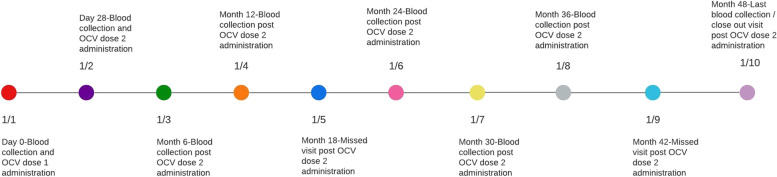
Methodology: We conducted a longitudinal study nested under a clinical trial in which samples from a cohort of 223 adults who were vaccinated with two doses of Shanchol™ and followed up over 4 years were used. We measured serum vibriocidal geometric mean titers (GMTs) at Baseline, Day 28, Months 6, 12, 24, 30, 36 and 48 in response to the vaccine. Saliva obtained at 1 year post vaccination was tested for HBGA phenotypes and secretor status using an enzyme-linked immunosorbent assay (ELISA).
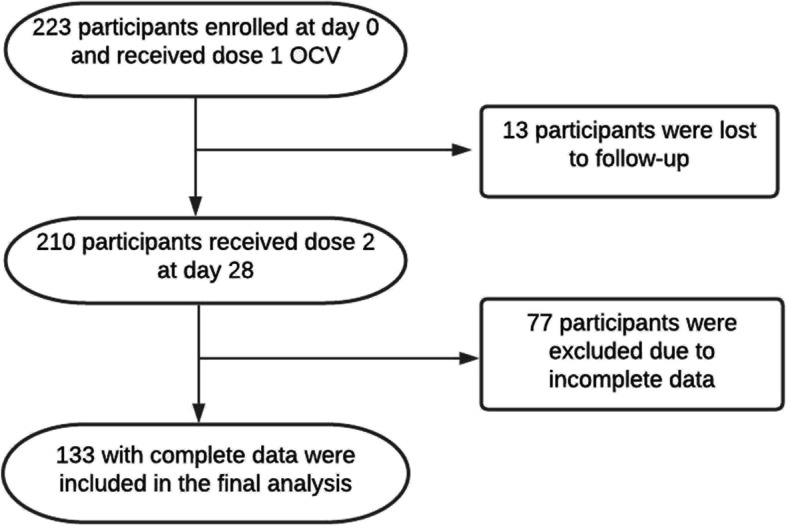
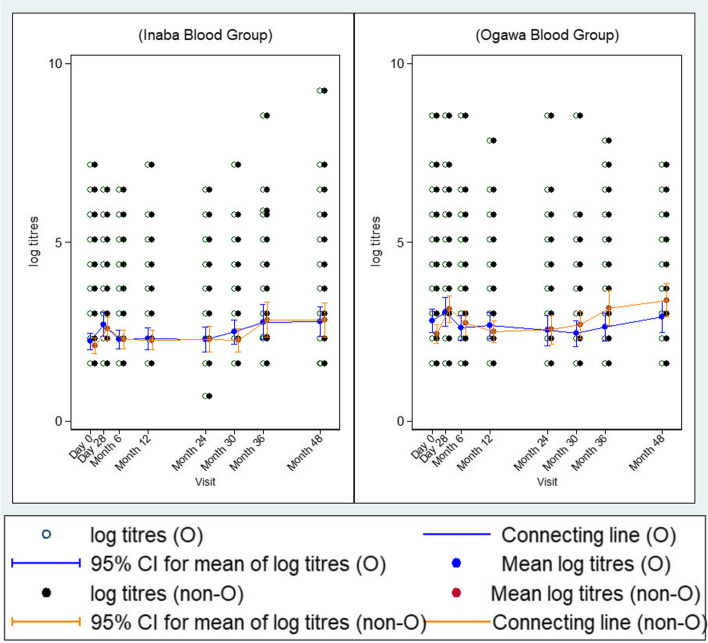
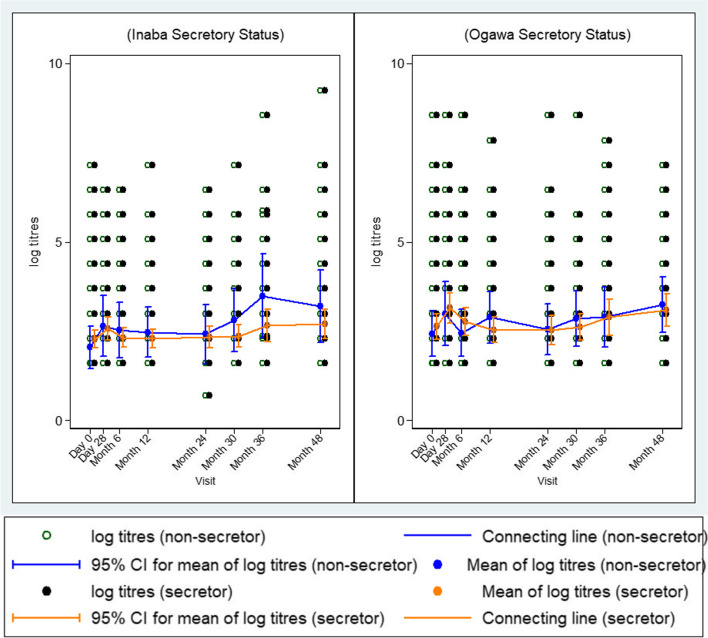
Results: Of the 133/223 participants included in the final analysis, the majority were above 34 years old (58%) and of these, 90% were males. Seroconversion rates to V. cholerae O1 Inaba with non-O (23%) and O (30%) blood types were comparable. The same pattern was observed against O1 Ogawa serotype between non-O (25%) and O (35%). This trend continued over the four-year follow-up period. Similarly, no significant differences were observed in seroconversion rates between the non-secretors (26%) and secretors (36%) against V. cholerae O1 Inaba. The same was observed for O1 Ogawa in non-secretors (22%) and the secretors (36%).
Conclusion: Our results do not support the idea that ABO blood grouping influence vaccine uptake and responses against cholera.
Keywords: Cholera; Histo-blood group antigens; Secretory status; Vaccine response, Zambia.
© 2023. The Author(s).
Conflict of interest statement
Authors declared no competing interests.
Figures
References
-
- Finkelstein RA. In: Medical Microbiology. 4. Baron S, editor. Galveston: University of Texas Medical Branch at Galveston; 1996. - PubMed
Publication types
MeSH terms
Substances
LinkOut - more resources
Full Text Sources
Medical
