


The role of neurofilament light in genetic frontotemporal lobar degeneration
- PMID: 36694576
- PMCID: PMC9866262
- DOI: 10.1093/braincomms/fcac310
The role of neurofilament light in genetic frontotemporal lobar degeneration
Abstract
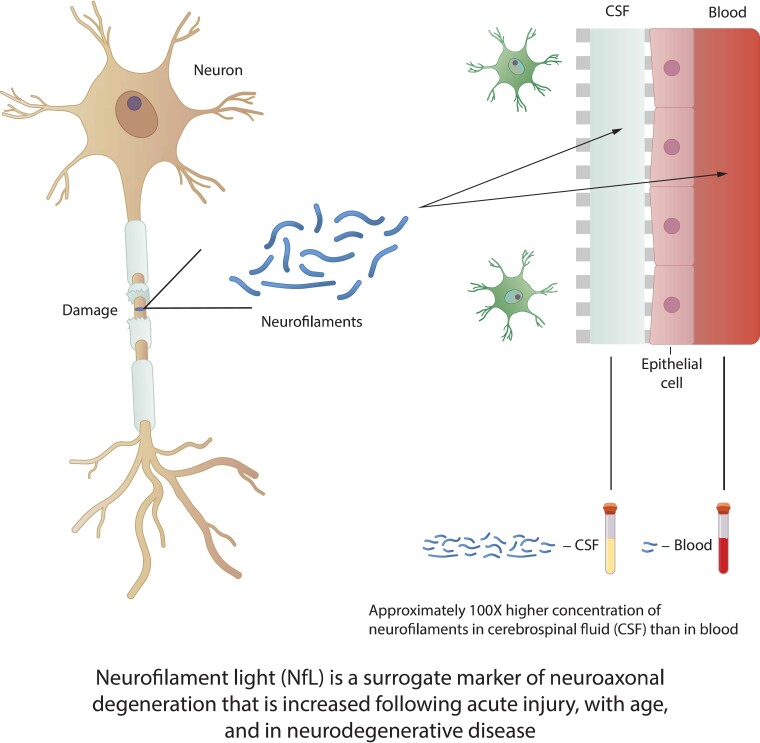
Genetic frontotemporal lobar degeneration caused by autosomal dominant gene mutations provides an opportunity for targeted drug development in a highly complex and clinically heterogeneous dementia. These neurodegenerative disorders can affect adults in their middle years, progress quickly relative to other dementias, are uniformly fatal and have no approved disease-modifying treatments. Frontotemporal dementia, caused by mutations in the GRN gene which encodes the protein progranulin, is an active area of interventional drug trials that are testing multiple strategies to restore progranulin protein deficiency. These and other trials are also examining neurofilament light as a potential biomarker of disease activity and disease progression and as a therapeutic endpoint based on the assumption that cerebrospinal fluid and blood neurofilament light levels are a surrogate for neuroaxonal damage. Reports from genetic frontotemporal dementia longitudinal studies indicate that elevated concentrations of blood neurofilament light reflect disease severity and are associated with faster brain atrophy. To better inform patient stratification and treatment response in current and upcoming clinical trials, a more nuanced interpretation of neurofilament light as a biomarker of neurodegeneration is now required, one that takes into account its relationship to other pathophysiological and topographic biomarkers of disease progression from early presymptomatic to later clinically symptomatic stages.
Keywords: disease progression; frontotemporal dementia; frontotemporal lobar degeneration; neurofilament light; trial stratification.
© The Author(s) 2022. Published by Oxford University Press on behalf of the Guarantors of Brain.
References
-
- Boeve BF, Boxer AL, Kumfor F, Pijnenburg Y, Rohrer JD. Advances and controversies in frontotemporal dementia: Diagnosis, biomarkers, and therapeutic considerations. Lancet Neurol. 2022;21(3):258–272. - PubMed
-
- Wilke C, Reich S, van Swieten JC, et al. Stratifying the presymptomatic phase of genetic frontotemporal dementia by serum NfL and pNfH: A longitudinal multicentre study. Ann Neurol. 2022;91(1):33–47. - PubMed
Publication types
Grants and funding
LinkOut - more resources
Full Text Sources
Miscellaneous