


Exploring telediagnostic procedures in child neuropsychiatry: addressing ADHD diagnosis and autism symptoms through supervised machine learning
- PMID: 36695897
- PMCID: PMC9875192
- DOI: 10.1007/s00787-023-02145-4
Exploring telediagnostic procedures in child neuropsychiatry: addressing ADHD diagnosis and autism symptoms through supervised machine learning
Abstract
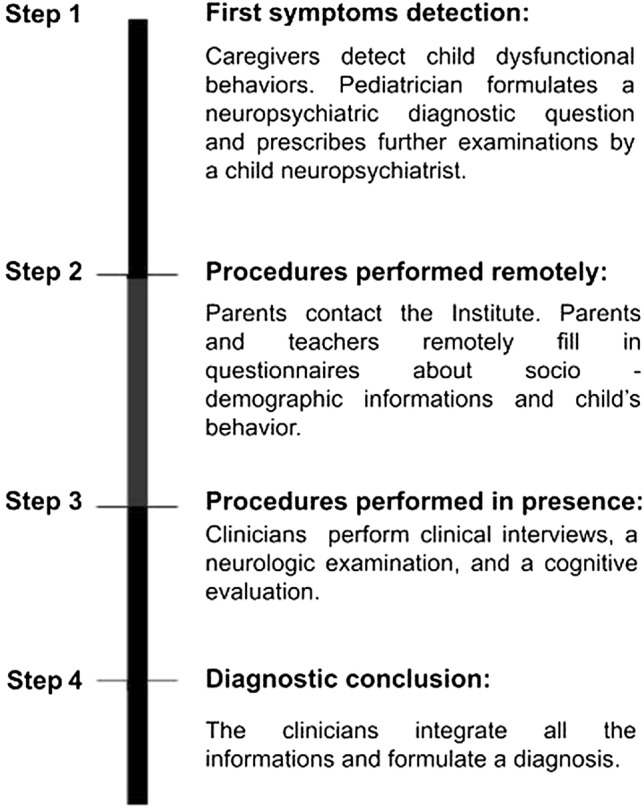
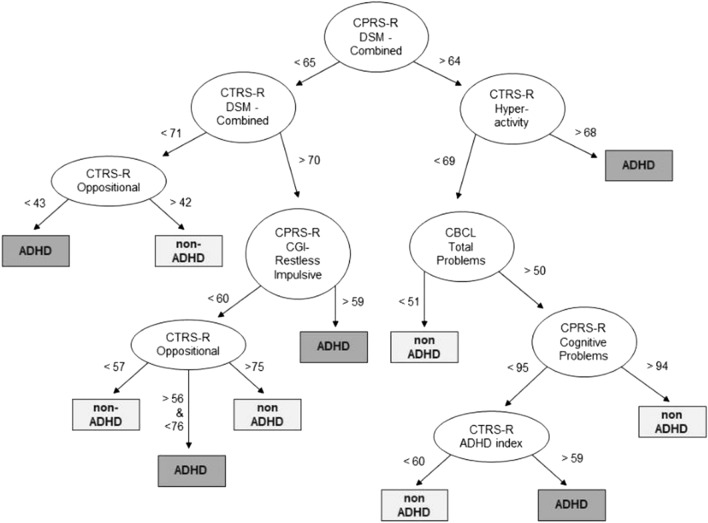
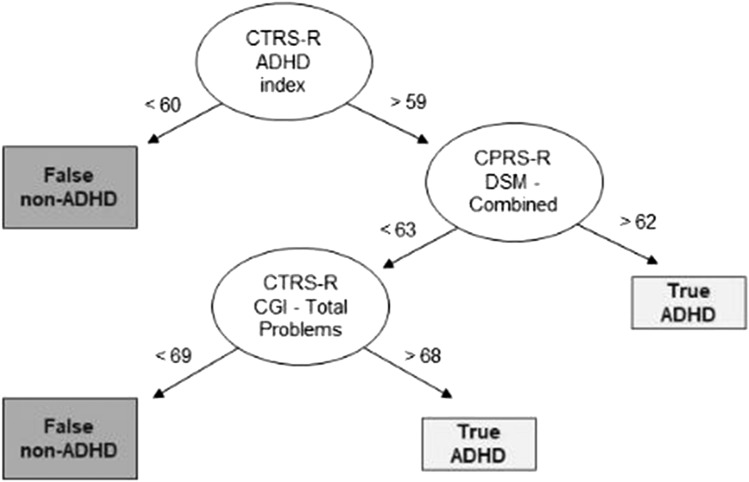
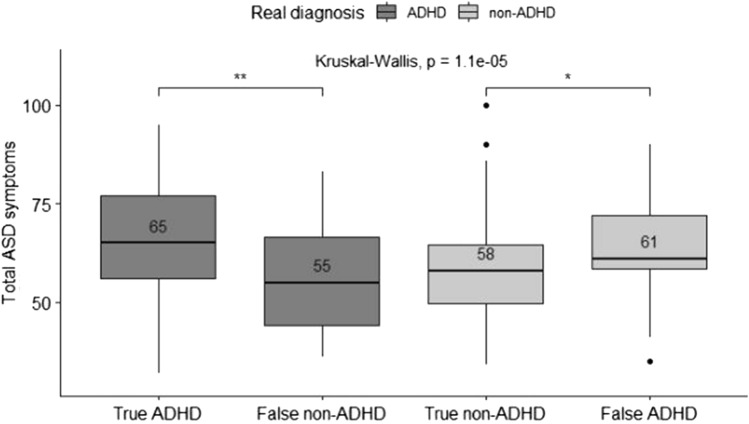
Recently, there has been an increase in telemedicine applied to child neuropsychiatry, such as the use of online platforms to collect remotely case histories and demographic and behavioral information. In the present proof-of-concept study, we aimed to understand to what extent information parents and teachers provide through online questionnaires overlaps with clinicians' diagnostic conclusions on attention-deficit/hyperactivity disorder (ADHD). Moreover, we intended to explore a possible role that autism spectrum disorders (ASD) symptoms played in this process. We examined parent- and teacher-rated questionnaires collected remotely and an on-site evaluation of intelligence quotients from 342 subjects (18% females), aged 3-16 years, and referred for suspected ADHD. An easily interpretable machine learning model-decision tree (DT)-was built to simulate the clinical process of classifying ADHD/non-ADHD based on collected data. Then, we tested the DT model's predictive accuracy through a cross-validation approach. The DT classifier's performance was compared with those that other machine learning models achieved, such as random forest and support vector machines. Differences in ASD symptoms in the DT-identified classes were tested to address their role in performing a diagnostic error using the DT model. The DT identified the decision rules clinicians adopt to classify an ADHD diagnosis with an 82% accuracy rate. Regarding the cross-validation experiment, our DT model reached a predictive accuracy of 74% that was similar to those of other classification algorithms. The caregiver-reported ADHD core symptom severity proved the most discriminative information for clinicians during the diagnostic decision process. However, ASD symptoms were a confounding factor when ADHD severity had to be established. Telehealth procedures proved effective in obtaining an automated output regarding a diagnostic risk, reducing the time delay between symptom detection and diagnosis. However, this should not be considered an alternative to on-site procedures but rather as automated support for clinical practice, enabling clinicians to allocate further resources to the most complex cases.
Keywords: Attention deficit/hyperactivity disorder; Autism spectrum disorders; Diagnostic process; Machine learning; Telehealth.
© 2023. The Author(s).
Conflict of interest statement
The authors declare no competing interests.
All authors certify that they have no affiliations with or involvement in any organization or entity with any financial interest or non-financial interest in the subject matter or materials discussed in this manuscript.
Figures

References
-
- Hewitt KC, Rodgin S, Loring DW. Pritchard AE, Jacobson LA (2020) Transitioning to telehealth neuropsychology service: Considerations across adult and pediatric care settings. Clin Neuropsychol 34:1335-1351. 10.1080/13854046.2020.1811891 - PubMed
MeSH terms
Grants and funding
LinkOut - more resources
Full Text Sources
Medical
